Troubleshooting & Analysis
Standing in the pharmacy aisle, two boxes in my hand
I remember the exact moment. ResMed's own filters for my S10 were sitting there at one price, and a compatible pack — same shape, same "fits S9/S10/AirCurve" stamp on the label — was right next to it for less than half. And I just stood there. Because this isn't a vacuum bag. This is the air I'm breathing eight hours a night, straight into my lungs, while I'm unconscious and can't do anything about it. The cheap box felt like a gamble I wasn't sure I had the right to take.
I bought both. Ran the OEM for a month, then switched to the compatible pack and ran it for the better part of a year, changing every two weeks like you're supposed to. Here's everything I learned, the good and the genuinely annoying.
The price math that started this whole thing
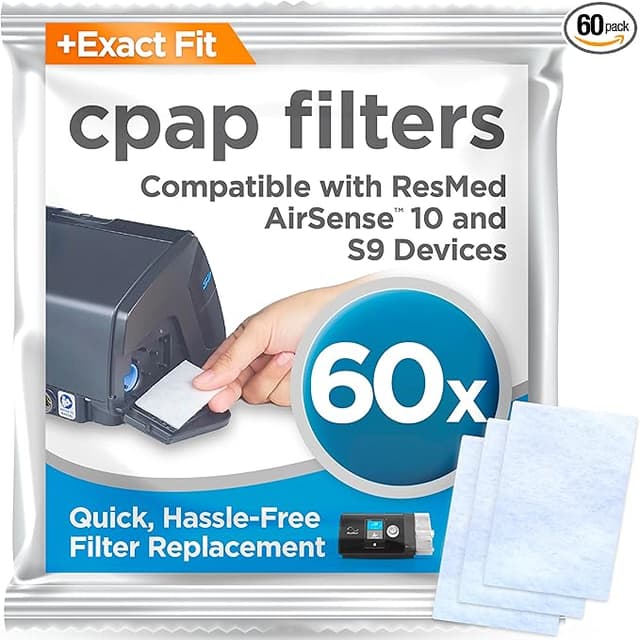
This is what got me. A CPAP filter is a consumable. You replace it every two weeks — call it 26 times a year if you're disciplined, and you should be. Buying ResMed's branded filters at their per-unit cost, that adds up to real money over a year for a piece of foam-and-mesh the size of a postage stamp. The compatible packs come in bulk — I got a year's worth in one box for less than what a few months of OEM would've run me. The gap was something like $30 between a comparable count, and that's $30 you're spending again next year, and the year after. Over the life of the machine you're talking hundreds of dollars on filters alone.
And the thing that nagged at me: the OEM filter and the compatible one are made of the same basic stuff. Hypoallergenic media, designed to catch fine particles, dust, pollen, the junk floating around your bedroom. It's not exotic technology. So why was I paying a premium for the logo?
Fit and install — does it actually seat?
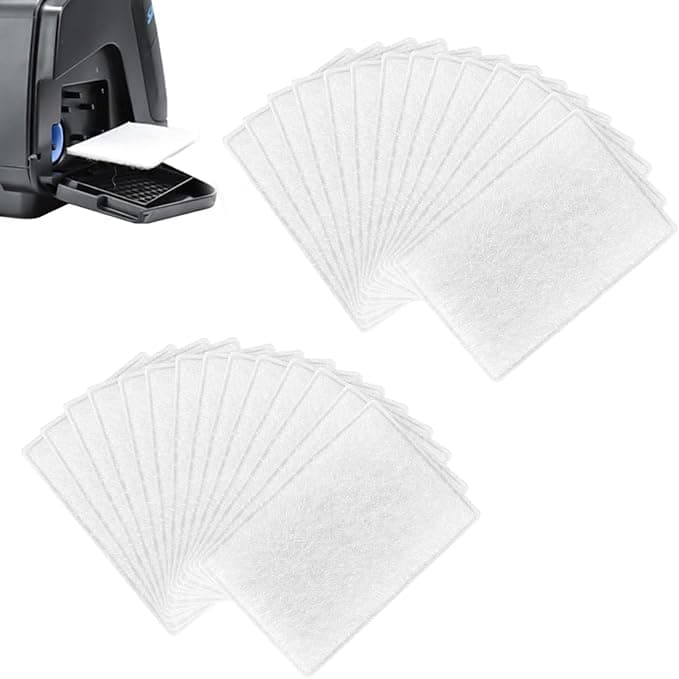
This is where I expected trouble and mostly didn't find it. The drill is simple: find the air intake on the back of the device, pop the flap open, pull the old grey-white filter out, drop the new one in, close it up. Takes ten seconds once you've done it twice.
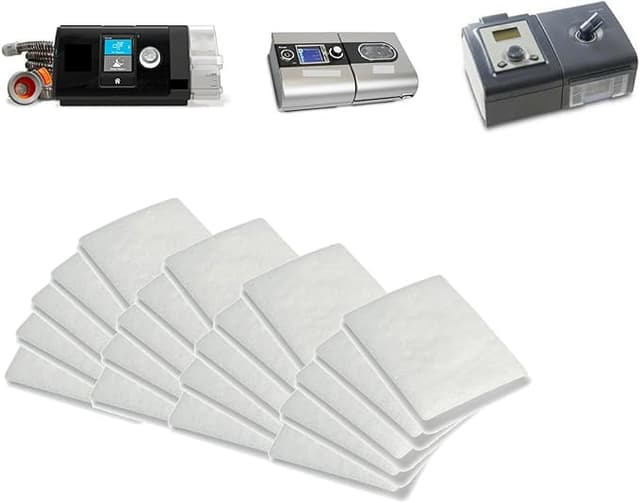
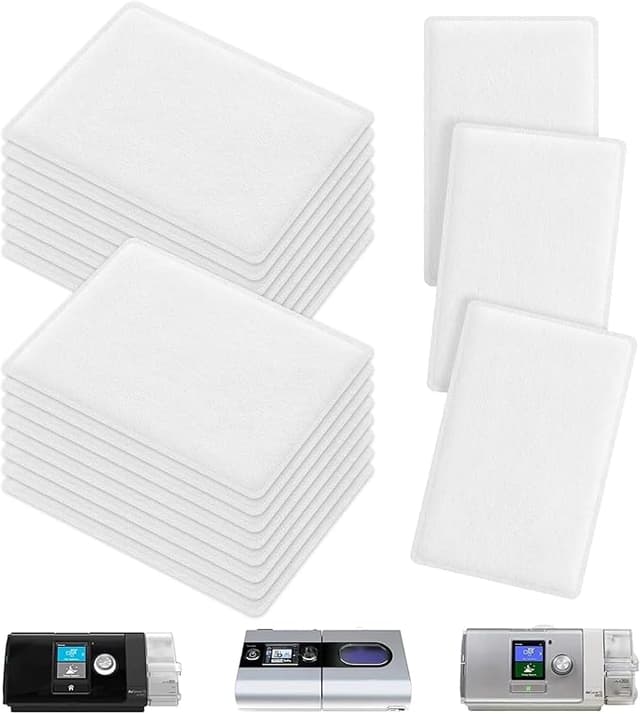
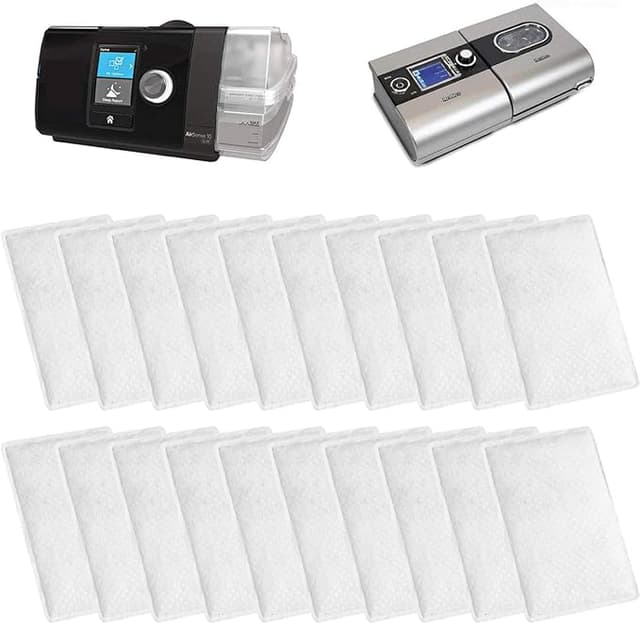
The compatible filters slid into the intake slot on my S10 without fighting me. They're cut to the right dimensions — I checked them against the OEM piece side by side and they were a match within a hair. Honestly, you couldn't tell which was which once they were seated.
But — and here's my first real gripe — the frame on the compatible ones is a touch looser. Not loose enough to fall out or whistle, but where the OEM filter clicks in with this reassuring snugness, the aftermarket one sits a little more relaxed in the slot. The first time I noticed it I pulled it back out and reseated it twice, convinced I'd done something wrong. I hadn't. It just doesn't grip with quite the same authority. After eleven months I never had one shift or come loose, so I stopped worrying about it. But if you're someone who needs that perfect click, you'll feel the difference.
How it actually performed at 3 a.m.
The honest answer: I couldn't tell a difference in therapy. My machine's pressure held steady, no new noises, no change in how I felt waking up. The air didn't taste or smell different coming through the mask once the filter was broken in. For the core job — catching the fine particulate before it gets pulled into the airflow — these did what they were supposed to.
Where they're a touch behind: I think the OEM media is very slightly denser. Toward the end of a two-week run, my compatible filter looked a little dirtier, a little greyer, than the OEM one did at the same age. That could mean it's catching more, or it could mean the weave is marginally coarser. I'm not a lab. But it's why I'd push back hard on anyone who stretches the replacement interval to save money — change these every two weeks, full stop, and the question becomes moot.
The downsides, for real
Let me give you more than one, because you deserve the full picture before you spend.
First, the smell. Out of the package, the compatible filters had a faint plastic-and-foam odor for the first two, maybe three nights. Nothing toxic-smelling, just that new-product scent. With OEM I never noticed it at all. My fix: I'd open the new pack and let the next filter air out on my nightstand for a day before installing it. After that little break-in, the smell was gone and I forgot about it. But if you're sensitive, the first night with a fresh one straight from the bag can be mildly noticeable.
Second, the packaging is cheap. The OEM filters come individually managed; my compatible pack was a stack of filters loose in a plastic sleeve. A couple near the bottom had a slightly crushed corner from shipping. They still worked fine — foam reshapes — but it doesn't inspire the same confidence when you open the box. You're clearly paying less, and the packaging is one of the places they saved.
Third, quality control across a bulk pack isn't perfectly uniform. Out of a big batch, one or two had a marginally uneven cut on the edge. Not enough to affect the seal or the fit, but enough that I noticed when I was looking closely. With OEM, every single one is identical.
Why none of this is something to shrug at
A dirty or saturated CPAP filter isn't a cosmetic problem. When that media clogs, you're either choking your machine's airflow or, worse, pulling allergens and household dust straight past a filter that's given up and into your airway — for hours, every night. That's exactly the stuff a CPAP is supposed to keep out of your lungs. So the real safety variable here was never OEM-versus-compatible. It's whether you actually change the thing on schedule. A fresh compatible filter beats a month-old OEM one every single time. The lower price is what makes changing it every two weeks painless instead of something you put off.
So who should buy what
If your prescription is for something delicate, if you've got a severe respiratory condition, or if your sleep doc specifically told you to run factory parts only — listen to your doctor, not to me, and buy ResMed. The peace of a manufacturer's exact spec is worth the cost in that case. Same if a slightly looser frame or a one-night break-in smell is a dealbreaker for you.
For everyone else — the regular person with a standard S9, S10, or AirCurve setup who's just trying to keep clean air flowing without bleeding money on foam squares — I grab the compatible ones. I have, for almost a year now, and I'm about to reorder. They fit, they filter, they let me change on schedule without flinching at the cost. The frame's a hair looser and the first night smells faintly of plastic. But for the kind of savings that pay for a few nice dinners over a year, doing the exact same job in my machine? I'd buy them again. And I already did.