Troubleshooting & Analysis
$3 a night to breathe? No thanks.
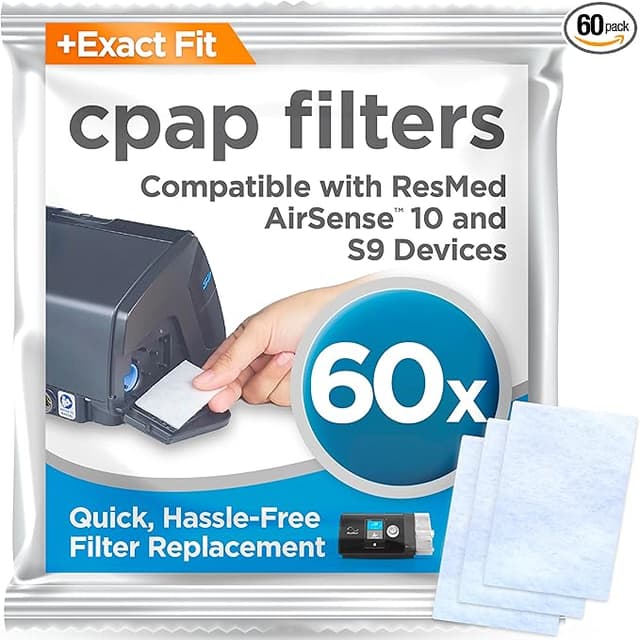
That's basically what the math came out to when I did it on the back of a receipt. A two-pack of genuine ResMed disposable filters for my AirCurve ran me close to $19, and since you're supposed to swap these things every two weeks, a year of OEM filters lands somewhere around $45 to $50 — for a square of pleated paper smaller than a sticky note. The compatible AirSense 10 / AirCurve / S9 filters I switched to? A pack of twelve for about $11. That's not a typo. Roughly $34 a year saved on the exact same disposable part, and I get more of them in the box.
I didn't believe it either at first. A filter is a filter until it isn't — and with a CPAP, the thing you're breathing through eight hours a night, I wanted to be sure the cheap one wasn't just looser paper in a worse frame. So I ran them. Months of nights. Here's the honest version.
Same job, same part — the OEM price is the only real difference
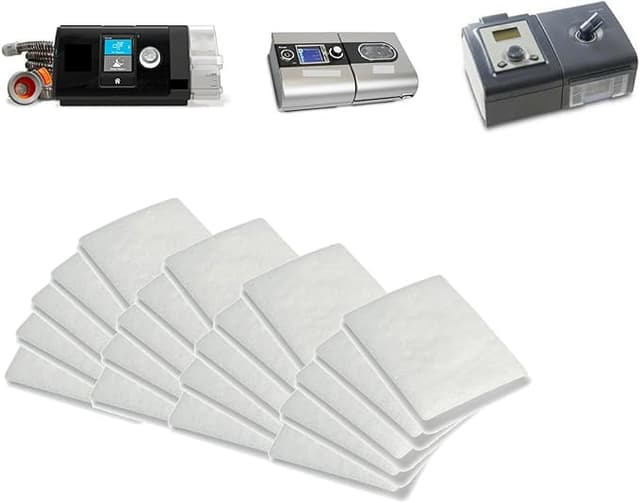
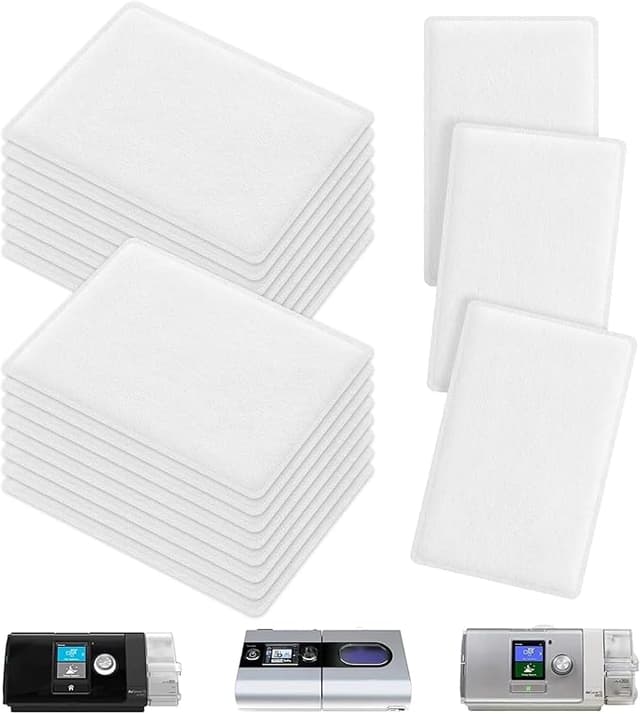
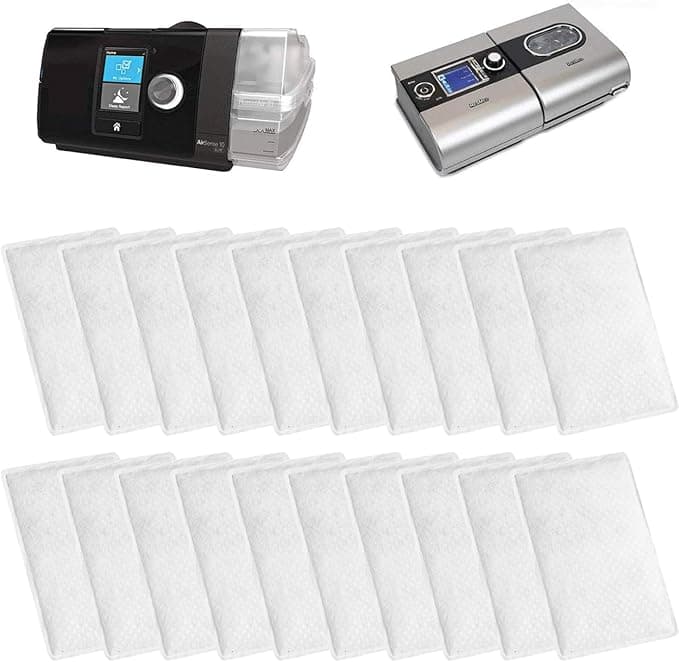
The disposable filter on these ResMed machines isn't some precision-machined component. It's a hypoallergenic pleated insert that drops into the air intake slot on the back of the unit. Its whole job is to catch dust, pet dander, pollen, the fine stuff floating in your bedroom, before the blower pushes air down the tube and into your airway. OEM and compatible are both doing the identical thing: trapping particles so they don't end up in your lungs at 2 a.m.
What you're actually paying the OEM premium for is the ResMed name printed on the cellophane. I'm not being cynical — I genuinely looked for a performance gap and the day-to-day difference just wasn't there for the filtration I could measure with the only instrument that matters: how I felt in the morning and how the machine ran.
Fit and install — and the one thing I had to fiddle with
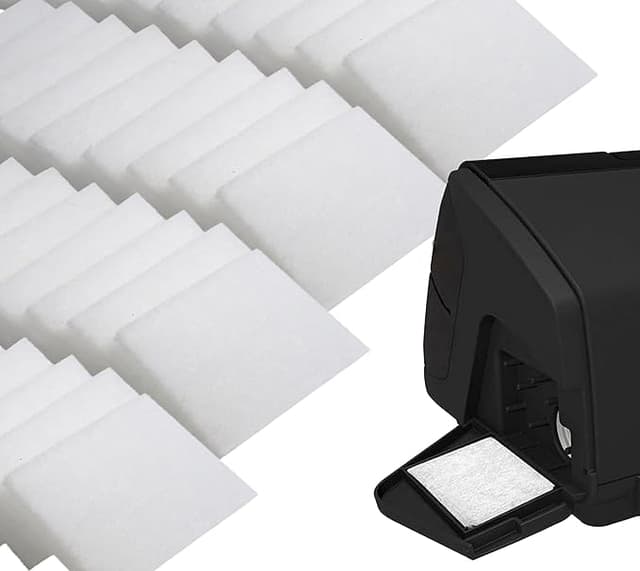
Install is stupid-simple, which is good, because you're doing it twice a month. You pop the small flap on the air intake at the back of the device, slide out the old grey-white filter (it'll be visibly dingy if you've waited the full two weeks — gross in a satisfying way), and drop the fresh one in. Flap closes. Done in under ten seconds.
Here's the honest fit note, though. The OEM filter seats in that slot with zero play. The compatible ones are cut a hair smaller — we're talking a millimeter, maybe less — so the first one I put in had a tiny bit of wiggle before I closed the flap. It didn't whistle, it didn't pull air around the edges that I could detect, and once the flap clicks shut it's held firmly in place. But if you're the type who needs that snug OEM "this is seated perfectly" feeling, you'll notice the difference for about two seconds. I stopped noticing after the second box.
Performance: where it matched, where it didn't
Airflow at the mask never changed. My pressure felt the same night one as it did with the genuine filter, and the machine's own data didn't flag anything — no leak spikes, no weirdness in the numbers. After two weeks each compatible filter was dirty in exactly the way the OEM ones got dirty: that even grey discoloration across the whole pleat, which tells me air was actually passing through the media and not sneaking around it. That's the thing I cared about most, honestly. A filter that stays white after two weeks is a filter that isn't filtering.
The first night with a brand-new compatible filter, there was a faint smell. Not chemical-harsh, more like new-paper-and-a-little-plastic, the kind of thing you get with anything fresh out of sealed packaging. It was gone by the second night, every time. I'd crack the pack open and let a couple breathe on the nightstand for an hour before bed if you're sensitive to that sort of thing — but I stopped bothering after a while because it genuinely faded that fast.
The real downsides — because there are some
Let me actually sit on this part instead of waving it off, because a CPAP filter is not where you want to be surprised.
First, the packaging is cheap. The OEM box is a tidy little thing; the compatible twelve-packs I've bought come in a flimsier sleeve, sometimes with the filters in a single bag rather than individually wrapped. That matters more than it sounds — these are filters, and if they're loose in one bag, the bottom ones can pick up a little dust before you ever install them. I keep mine in a zip bag in the nightstand drawer now. Minor, but real.
Second, quality control is slightly less consistent. Out of one twelve-pack I had a single filter where the pleat was crimped a bit unevenly on one edge. It still worked fine, but with the OEM stuff I never saw that. When you're buying twelve at a time for the price of a genuine two-pack, you can just toss the one oddball and move on — but I want you to know it happens.
Third, and this is the one that actually matters for your health: the cheap price tempts you to stretch the interval. Don't. The whole point of saving money on filters is that you can afford to change them on schedule — every two weeks, like ResMed says. A saturated filter doesn't just stop catching dust; it starts pushing the dust it already caught back into your airstream, and it makes your blower work harder. The savings only count if you keep swapping. If anything, the low price should make you change them more faithfully, not less.
So who should still buy OEM?
If you have severe respiratory issues, a documented allergy where your pulmonologist specified a particular filter, or you simply cannot tolerate a one-night faint smell, buy the genuine ResMed filters and don't think twice. Same goes if you're still inside a warranty window and you're the cautious type — though for the record, a disposable consumable filter is not the kind of part that voids anything.
For everyone else — me included, and I've now gone through a stack of these — the compatible AirSense 10 / AirCurve / S9 filters do the same job, seat well enough once the flap's shut, get dirty the way a working filter should, and cost about a third of what ResMed charges. I save roughly $34 a year, I change them more diligently because they're cheap, and I sleep exactly as well as I did on the OEM ones. I'd buy them again — and I have, three boxes deep now.