Troubleshooting & Analysis
The click is what sold me. I'd been bracing for that flimsy, hollow snap you get from no-name parts — the kind that tells you the flap is just barely catching and air's going to sneak around the edges all night. Instead the intake flap on my AirSense 10 closed with that same firm little resistance the ResMed-branded ones give. Seated. Flush. I held a flashlight to the seam and couldn't see daylight bleeding around the foam. That tiny tactile thing is what made me trust the cheap filter enough to actually breathe through it.
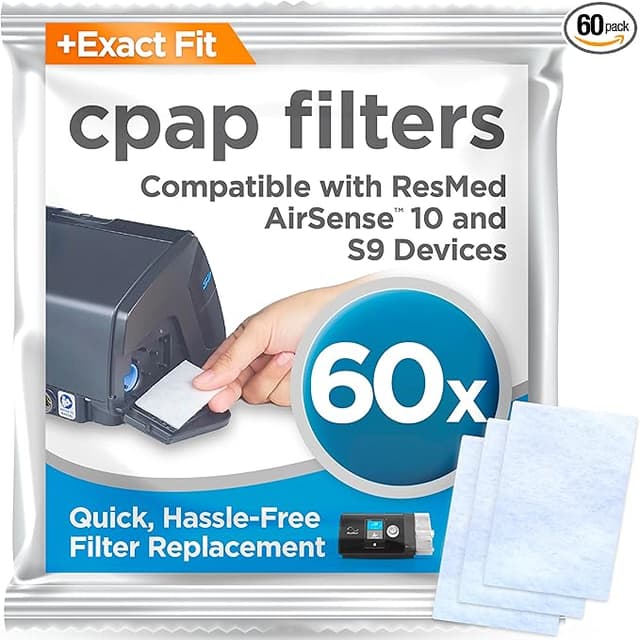
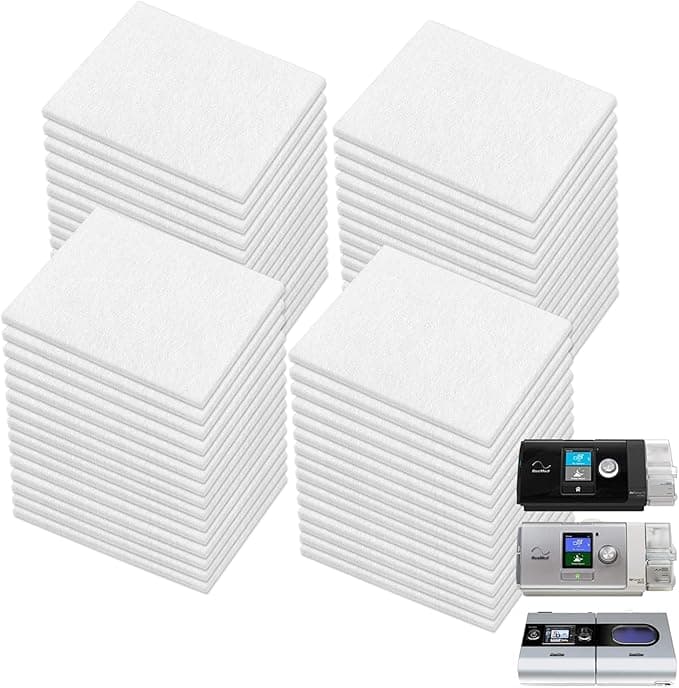
Backstory: I've run a ResMed AirSense 10 every night for a little over two years — same intake the S9 and the AirCurve use, same little grey-white rectangle of media. For the first eight months I bought nothing but OEM filters, because this is the air going straight into my lungs for seven hours while I'm unconscious. That is not the place I wanted to gamble. But the cost wore me down, and one night I finally bought a stack of the compatible AIRSENSE 10 hypoallergenic filters almost on a dare. Then I ran them head to head with the brand ones for a few months. Here's what actually happened.
The price math nobody walks you through
You're supposed to swap a CPAP filter every two weeks. Not "when it looks gross" — every two weeks, because by then it's loaded with the dust, skin, and pollen your bedroom air carries, and a saturated filter doesn't filter. It just sits there pretending. Two weeks means roughly 26 filters a year if you're disciplined.
Run OEM at that pace and you're spending real money on what is, physically, a small foam rectangle. A ResMed four-pack lands somewhere around $20 once shipping's in. The compatible stack I bought cost less than that single brand four-pack and held many times the filters. I worked the annual gap out and it came to somewhere north of $40 in my pocket, sometimes closer to $60 depending on which OEM pack I'd otherwise have grabbed. That's a tank of gas. And the interval is the whole game — a filter you stretch to a month because it hurts to throw money away is worse for you than a cheap one you actually change on time.
Does it fit? The part I worried about most
This was my real fear. The filter seats in the intake slot, and if the frame is even slightly off, air sneaks around it instead of through it — which defeats the entire point. So I paid attention.
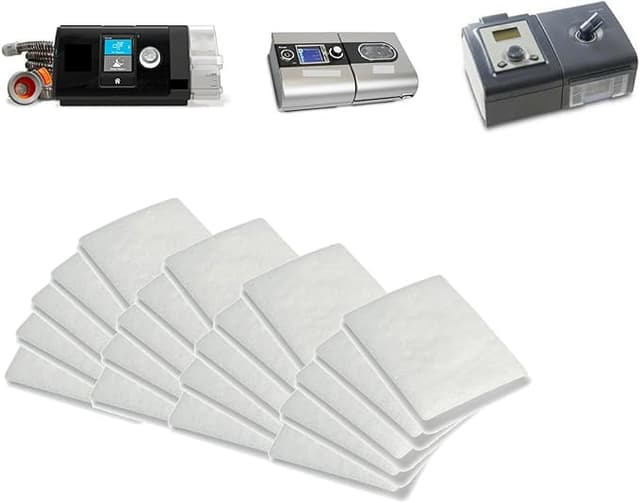
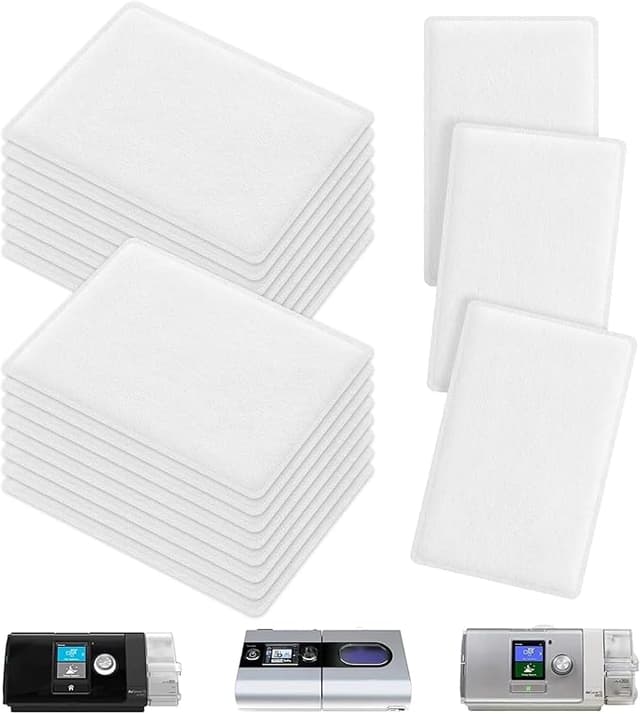
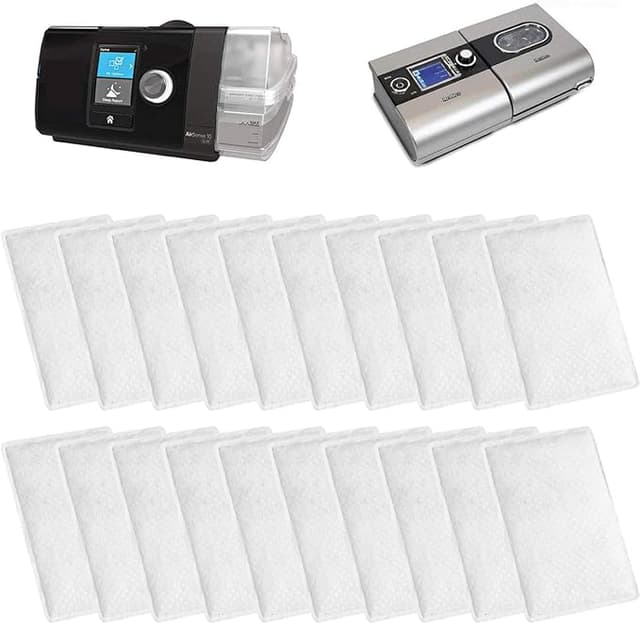
The install is nothing. Find the air intake on the back of the AirSense 10, pop the flap, pull the old grey-white filter out, slide the new one in, snap the flap shut. Thirty seconds, no tools, in the dark if you've done it enough times. The compatible filter went in clean — flush against the housing, flap closing with that proper resistance instead of falling shut. The cut on the foam was true. If you've ever bought a no-name filter for some other machine and had to trim a corner with scissors, you know that's not a given. This one didn't need any of that.
Performance: where it matched, where it didn't
Through the mask, therapy felt identical. Same airflow, same pressure, no whistling, no extra resistance making the machine strain. My morning numbers stayed in the same range they'd lived in on OEM. And when I pulled the first compatible filter after the full two weeks, it had gone from clean white-grey to a dusty tan — exactly the way the brand ones discolor. That gradient is the proof it's doing the work and not just decorating the slot.
Where I'll be straight with you: the consistency between individual filters in the cheap stack isn't quite OEM-perfect. Most were flawless, but one or two had foam that looked a hair less rigid if you really stared. Did it change anything I could measure? No. But the brand ones are uniform every single time, and part of what you pay for is that uniformity. If that bugs you, it's a fair reason to stay OEM.
The real downsides — and there are some
First, the smell. The first night with a fresh compatible filter there was a faint plasticky-foam odor for maybe the first hour. Not chemical, not strong, but present if you're someone who notices. It aired out completely by night two and never came back — the OEM ones didn't have it at all. If you're scent-sensitive, run a new one in the machine for an hour before bed the first time and you'll never catch it.
Second, the packaging is cheap. The filters come loose-ish in a bag rather than nested in a tray, so a couple at the bottom of the stack had slightly squished corners. Foam springs back, so they seated fine — but opening it doesn't feel premium. You're holding a commodity, and it knows it.
Third, and this one actually matters: the burden's on you to swap them on schedule. The danger here isn't the brand on the box — it's a clogged filter, full stop. A saturated CPAP filter pumps the dust and allergens it's supposed to catch straight down into your lungs while you sleep, night after night, and you won't feel it. The whole argument for the affordable pack is that you stop rationing and just change it every two weeks like you should. Buy cheap and then stretch each one to six weeks anyway, and you've made things worse, not better. Set a recurring reminder. Honestly, just do it.
So who should buy what
Buy OEM if your pulmonologist has specifically told you to use brand filters for a documented respiratory condition, or if the faint first-night smell would nag at you, or if you simply sleep better knowing the box says ResMed and the few extra bucks buys that calm. That's legitimate. No judgment.
For everyone else — and that's most of us — the compatible AIRSENSE 10 filter does the same job, seats just as tight, discolors honestly like it's supposed to, and costs little enough that you'll actually change it on schedule instead of guilt-stretching an expensive one. That schedule is the part that protects your lungs. Two years of OEM loyalty, and what converted me wasn't a pitch. It was holding both, testing both, and finding the only real difference was the price. I've been buying the cheap stack ever since — and I'd do it again.