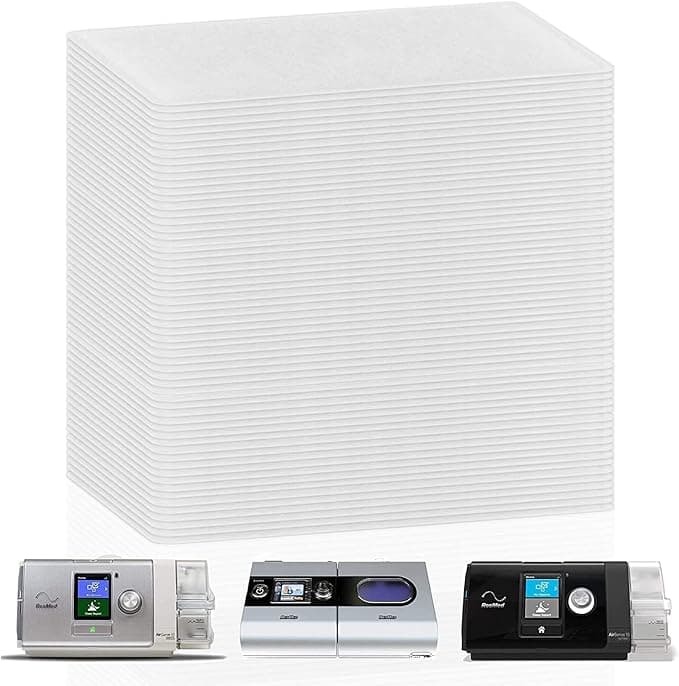
Troubleshooting & Analysis
I didn't believe a $20 filter could be fine either
Here's the thing I kept circling back to, standing in my kitchen with two little gray squares of foam in my hand: one came in a ResMed box and cost me real money, the other came in a bag of twelve for less than what I'd paid for that single OEM one. And my gut said the cheap one was junk. It had to be, right? It's the thing that filters the air going into my lungs eight hours a night. You don't cut corners on that. That was my whole position for about two years.
So I did the dumb-but-honest experiment. I ran the compatible filters in my AirSense 10 for four straight months, swapping every two weeks like you're supposed to, and I paid attention. Smell, fit, how the machine sounded, how I felt waking up. This is what I found, and I'm going to tell you the annoying parts too, because a review that's all thumbs-up is a review you should close.
The price gap is genuinely silly
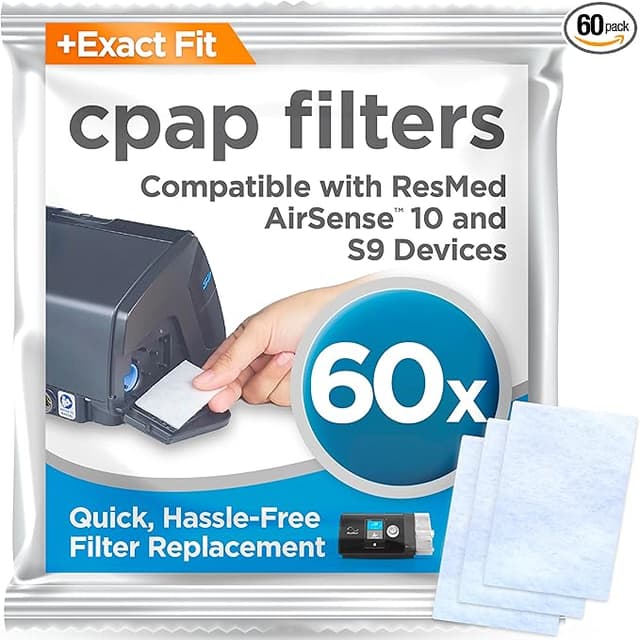
Let's do the math first, because it's the whole reason any of us are here. ResMed's branded disposable filters run you somewhere in the neighborhood of two bucks a filter when you buy them in their official packs — and that's if you can find them at a decent price and not marked up at a sleep-supply counter. The compatible packs I've been buying work out to well under a dollar a piece. We're talking roughly $20 or less for a count that lasts the better part of a year at the two-week swap interval.
Run it out annually. Changing every two weeks is 26 filters a year. At OEM-ish pricing that's a real chunk of money for foam squares. With the compatible packs I'm spending a fraction of that — call it the difference between a nice dinner out and a cup of coffee. For something I throw in the trash twice a month, paying the brand premium started to feel less like caution and more like a habit I never questioned.
Fit: this is where I expected it to fall apart
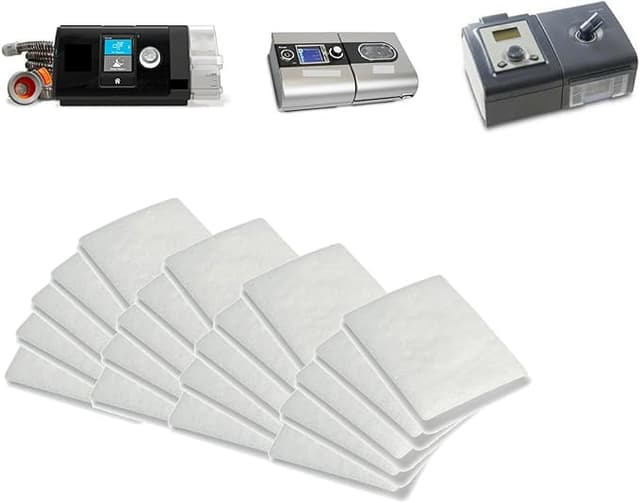
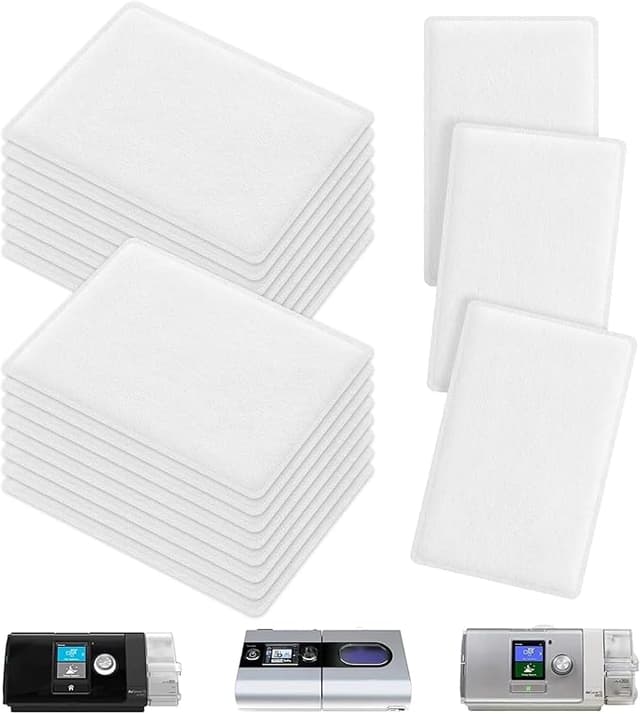
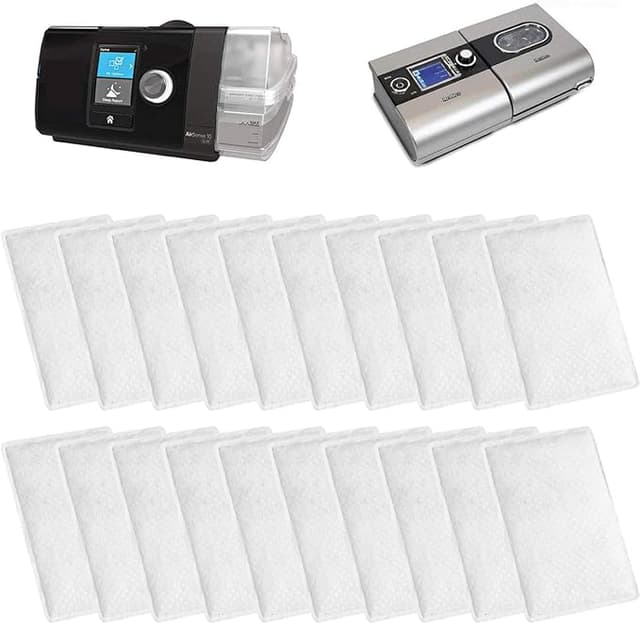
It didn't. The AirSense 10 has that little intake flap on the back, and you pop it open, slide the old gray-white filter out, and drop the new one in. The compatible filters I used seated the same way — same rough footprint, same thickness, flap closes flush over them without bulging or refusing to click shut. I half expected to be wrestling a filter that was a millimeter too wide or so flimsy it'd fold when I pushed it in. Nope. Slid in, flap snapped down, done in about ten seconds.
One honest caveat on fit: a couple of them in the pack were cut a hair less crisp than the OEM piece. Not enough to affect the seal — the foam still fills the slot — but if you're the type who notices a slightly fuzzy edge, you'll notice it. It does not change how the thing works. It just looks a touch less factory-perfect when you're holding it up to the light.
The downside I promised you — the first-night smell
Okay. The real one. The first filter out of a fresh pack had a faint smell. Not chemical-harsh, not "this is toxic," but a light new-foam, slightly-plasticky note the first night I ran it. I'm someone who's sensitive to that stuff and it bugged me for about one night, maybe into the second. By night three it was gone completely and every filter after that broke in faster. If you want to skip even that, here's the trick I now do automatically: pull the next filter out of the bag a day early and let it air out on the windowsill. Smell's gone before it ever goes near the machine.
The other small gripe is packaging. The OEM stuff comes individually slotted, neat. The compatible pack is a plain bag with the filters stacked together. Cheap presentation. It doesn't affect the product at all, but I'm not going to pretend it feels as premium when you open it — it doesn't. You're paying for foam, not for the box, and the box shows it.
Performance, the part that actually matters
Across four months I watched for the things that would tell me it was underperforming: machine working harder, louder motor, that stale or dusty edge to the air, waking up with a dry or scratchy throat. None of it. The AirSense ran exactly as quiet as it always has. Airflow felt identical. And — this is the part I care about — when I pulled each used filter at the two-week mark, it had done its job: gray and loaded with the dust and junk it caught, which is precisely what you want to see. A filter that comes out clean isn't impressive, it's a filter that wasn't filtering. These were catching real particulate.
That's also the whole safety argument in one sentence: a CPAP filter you ignore gets saturated, and a saturated filter stops trapping allergens and dust and instead lets them ride the airflow straight into your lungs while you sleep. The danger with these machines was never the compatible-vs-OEM debate — it's people leaving any filter in for months. Cheap filters you'll actually swap on schedule, because they don't sting to throw away, are safer in practice than an expensive one you stretch to save money. I change mine on time now precisely because it costs me almost nothing to.
So who should still buy OEM?
I'll be straight: if you use the reusable foam filter instead of the disposables, or if your sleep doc or DME has you on a specific spec for a medical reason, follow that — don't improvise with your therapy. And if the few dollars a year genuinely doesn't register for you and the plain packaging would nag at you, buy the branded ones and never think about it. That's a completely fine choice.
But for me — same fit, same airflow, same gray-loaded-with-dust proof that it's working, for a small fraction of the price, on a part I'm throwing away twice a month? I was wrong to distrust it. I've now run these through my AirSense 10 for months, I sleep the same, my throat's fine, and I'd buy the pack again. Honestly, I already have. Air out the first one overnight, swap every two weeks, and you've got clean therapy air for the cost of pocket change.