Troubleshooting & Analysis
The click is how I knew it fit
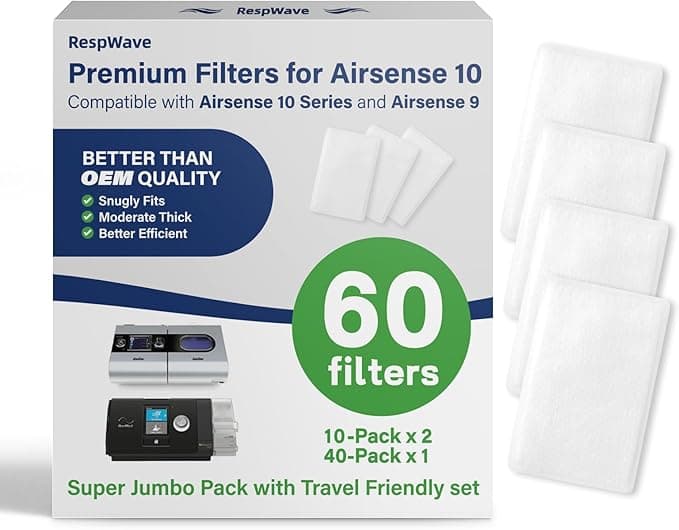
First thing I noticed wasn't the air. It was the sound. That little plastic tick when the filter seats into the intake slot on my AirSense 10 — same satisfying click the ResMed-branded one makes. I'd half-expected the compatible filter to flop in loose, or sit a millimeter proud so the flap wouldn't close flush. It didn't. It snapped home, the flap shut without me wrestling it, and that was the moment my skepticism dropped a notch.
I'll be honest about why I was skeptical in the first place. I've used a CPAP for going on three years now — S9 first, then the AirSense 10 — and I bought into the idea that you don't mess around with the thing you breathe through eight hours a night. So for two years I paid retail for the official filters and never thought twice. Then I actually did the math, got annoyed, and decided to test the cheap ones myself instead of trusting a Reddit thread.
The money, laid out plainly
Here's what pushed me. A pack of OEM AirSense 10 filters runs me around $20 for a handful, and ResMed says swap every two weeks if you want to do it right. I do it every two weeks because I have a cat and the air in my bedroom is not exactly hospital-clean. That's 26 filters a year. The compatible multi-packs I've been buying work out to a couple of bucks a filter — call it a $30 to $40 difference across a full year of swaps, depending on the pack size. Not life-changing money. But it's a tank of gas and a sandwich, every single year, for a part that I throw in the trash 26 times.
And that's the part that gets me: you are throwing these away. This isn't a heat exchanger or a humidifier tub you keep for the life of the machine. It's a disposable square of filter media. Paying a premium to throw something away on a two-week clock started to feel a little silly once I'd actually run the numbers instead of vaguely assuming "medical = must be expensive."
Fit and install — basically idiot-proof
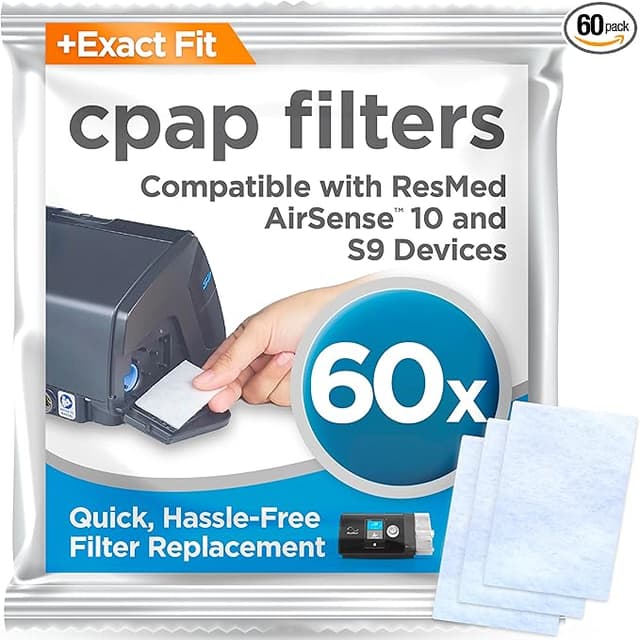
If you've never changed one, it takes about fifteen seconds. You find the air intake on the back of the unit, pop the little flap open, pull the old grey-white filter out (it'll look dingy and that's the point), and drop the new one in. Flap closes. Done. There's no orientation puzzle, no clips, nothing to break.
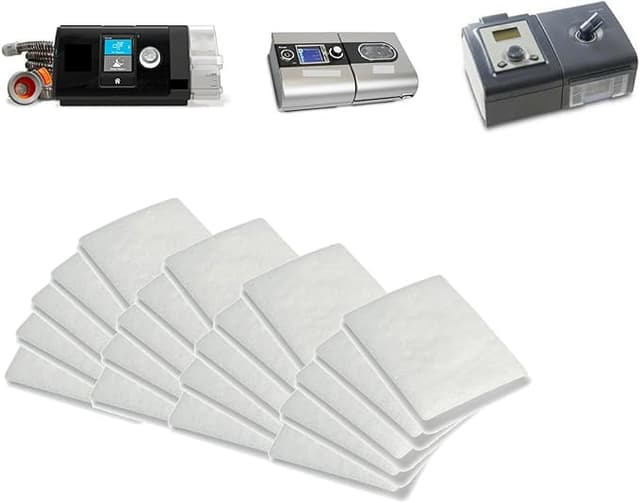
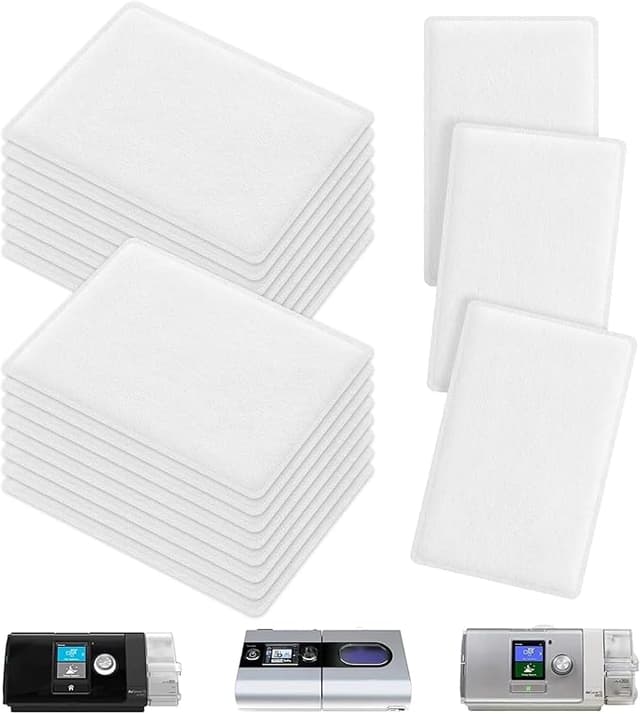
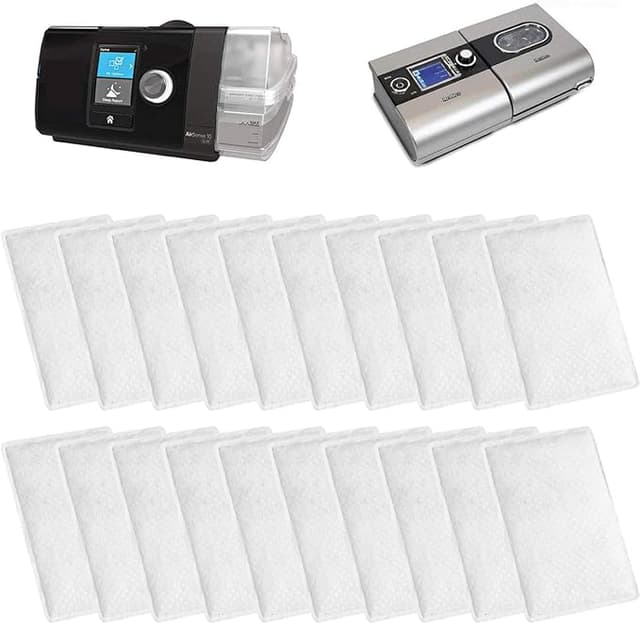
The compatible filter slotted in the same way the OEM does. I will say the cut on the foam edge of mine was very slightly less crisp than ResMed's — like it was punched a hair rougher — but it sat in the channel correctly and the flap held it snug. No gap I could see or feel air sneaking around. If a filter sat loose enough to let unfiltered air bypass it, that would be a dealbreaker for me, and I checked. This one seats tight.
How it actually performs at 3 a.m.
The honest version: I can't tell the difference in my therapy. My AHI numbers on the app didn't budge after I switched — same low single digits I've had for months. The machine didn't throw any errors, didn't get noticeably louder pulling air through it, and my pressure felt identical when I put the mask on. For a hypoallergenic filter whose whole job is catching fine dust and dander before it goes down the tube, "I noticed nothing change" is exactly the result you want. You don't want to feel a filter working. You want clean air and silence.
Where it's a touch behind OEM is just polish and consistency. The packaging is cheap — a thin plastic sleeve versus ResMed's printed box — and across a big multi-pack I found maybe one filter where the media looked a little thinner at one corner than its neighbors. I tossed that one and used the rest. With the genuine packs, every single filter is dead identical. So you're trading a little quality-control consistency for the price. For a disposable item I bin in two weeks, that trade sits fine with me.
The downside I won't gloss over
Two real ones, actually.
First, the smell. The first night with a fresh compatible filter, there was a faint plastic-y, slightly papery smell on the air for the first hour or so. Nothing harsh, nothing that made me cough, and it was gone by morning and never came back for that filter's run. But it's there on night one, and if you've got a sensitive nose you'll catch it. The OEM filters I never noticed any break-in smell at all. So that's a genuine ding.
Second — and this matters more — quality control is on you now. With these you should actually glance at each filter before you load it. Hold it up, make sure the media's even and there are no tears or thin spots. With OEM I never bothered because I trusted the box. With compatible filters, that ten-second eyeball check is the price of admission. Do it, and you're fine. Skip it, and one day you might run a slightly-off filter without realizing.
Because here's the thing nobody likes to say out loud: a CPAP doesn't just blow air past your face. It pressurizes air and pushes it into your airway, all night, every night. A clogged or torn filter means dust, dander, and whatever else is floating in your bedroom going straight to your lungs while you sleep with zero ability to cough it out. That's not marketing fear — it's just what the machine does. Which is exactly why I refuse to skip changes or stretch a filter to a month to save pennies. The filter being cheap is the reason I can afford to change it religiously on schedule.
So who should skip these?
If you've got severe respiratory issues, a transplant, you're immunocompromised, or your sleep doc specifically told you to use only ResMed-spec consumables — buy the OEM. Don't gamble on my anecdote with your lungs, and the few dollars saved isn't worth a second-guess. Same if the night-one plastic smell would genuinely bother you; some people are just sensitive and that's valid.
For everyone else — the ordinary CPAP user with a normal bedroom and a working machine who's just tired of paying a premium to throw away a foam square 26 times a year — yeah, I grab the compatible ones now. Same click, same clean air, same flat AHI, for thirty-plus bucks less a year and a ten-second look at each one before it goes in. I've reordered them twice. That's the most honest endorsement I've got: I spent my own money on them again.