Troubleshooting & Analysis
I figured out my filter was dead the lazy way: I woke up at 4 a.m. with my sinuses packed solid, same as the morning before, and the morning before that. I blamed the season. I blamed the dog. Then I popped the side flap on my AirSense 10 and pulled out the little grey filter, and it wasn't grey anymore — it was this gross tan-brown felt, stiff at the edges, with a faint dusty smell when I held it under my nose. I'd let it ride for maybe seven weeks. The thing was supposed to come out every two. I'd basically been blowing the contents of my bedroom air back into my own lungs all night, pressurized, eight hours a stretch.
That was the morning I stopped being precious about which filter went in there.
What ResMed wants you to pay vs. what I actually pay
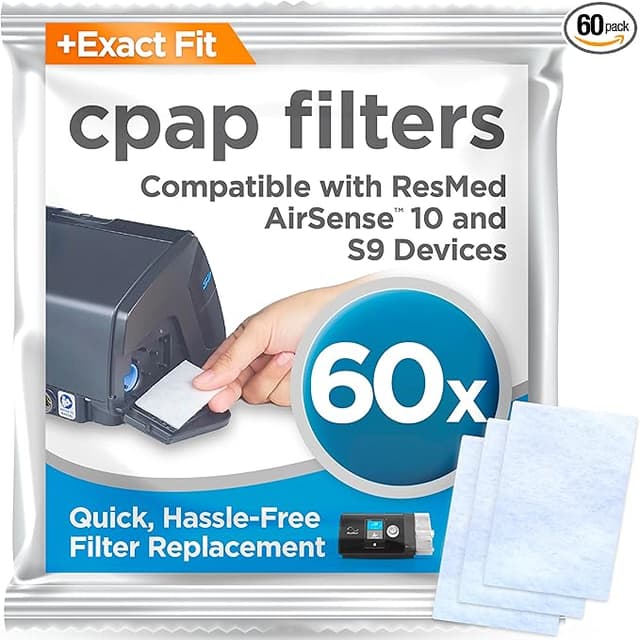
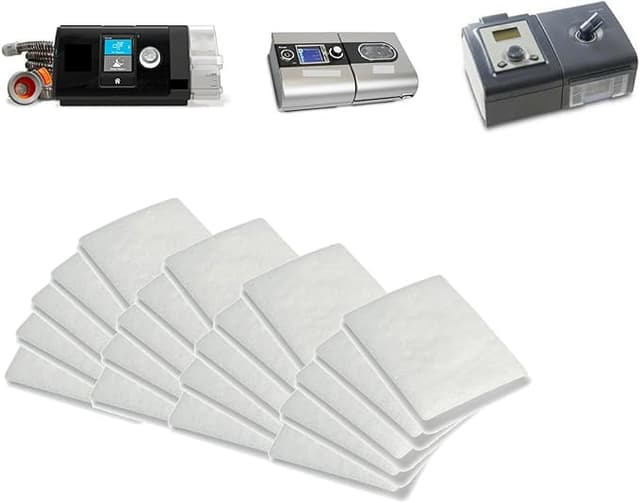
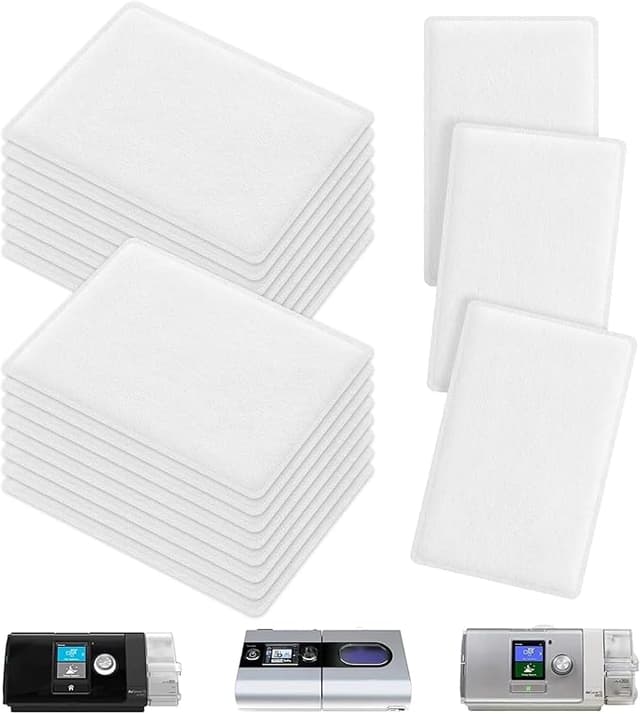
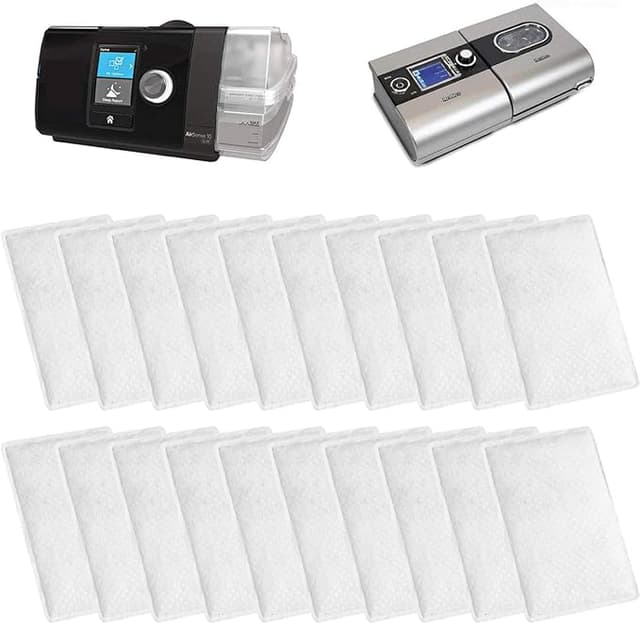
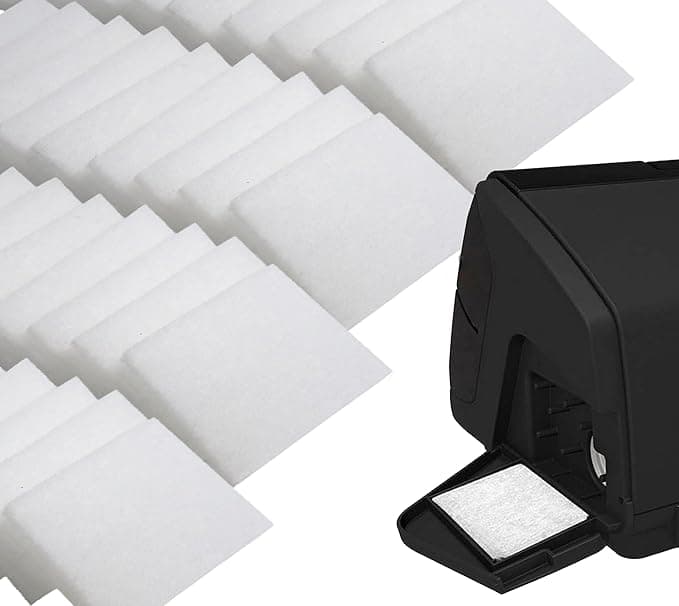
Here's the math that turned me. A two-pack of the genuine ResMed disposable filters runs me right around $19 at the going rate, and that's if I catch them in stock. The compatible hypoallergenic filters that fit the S9, AirCurve, and AirSense 10 — same intake slot, same cut — I buy in a bag of a dozen for about $13. So call it roughly $1.60 a filter for the OEM versus a little over a buck for the compatible. Doesn't sound like much on one filter.
But run the calendar. Change every two weeks like you're told and that's 26 filters a year. The OEM route lands somewhere near $50 annually once you account for buying packs that never divide evenly into 26. The compatible bag-of-twelve route gets me through a full year for under $30, and I usually have spares left over for the travel bag. That gap — twenty-plus dollars a year, every year, for a part you throw in the trash — is the whole reason aftermarket filters exist. It's not a luxury part. It's a piece of fluffy fabric in a plastic frame.
Does it actually seat right?
This was my worry going in. A CPAP isn't a coffee maker — if the filter doesn't sit flush, you get unfiltered air sneaking around the edge, which defeats the entire point. So I paid attention the first time.
You open the flap on the side of the device, pull the old one straight out, and slide the new filter in. With the AirSense 10 the filter is keyed so the flat edge faces out and the slightly tapered edge tucks in first. The compatible filters I've used drop in the same orientation and the flap closes with that same small click you get from the genuine part. No gap I could see or feel. No air whistling past the seam. I'll be honest — on one batch the frame felt a hair softer than ResMed's, just barely flimsier between my fingers, but once it was seated and the flap latched, it didn't matter. It wasn't going anywhere mid-night.
How it performs — and where it's a touch behind
Therapy-wise, I cannot tell the difference at the mask. Same airflow, same quiet. My AHI numbers on the myAir readout didn't budge after I switched — still sitting where they always sit. The filtration does the job it's there to do: catching the fine dust, the pollen, the cat dander that I am apparently surrounded by, before any of it gets pressurized into my airway. For a hypoallergenic-rated filter at a third of the price, that's the part that genuinely surprised me.
Where's it behind? Marginally, in the felt density. Hold a fresh OEM filter and a fresh compatible one up to a window and the genuine one is a touch thicker, a touch more uniform in the weave. In practice I deal with that by being honest about the calendar instead of pretending a $1 filter lasts as long as it doesn't. Which brings me to the actual downside.
The real downside (read this part)
The compatible filters load up a little faster. Not dramatically — but where I could probably stretch a genuine ResMed filter to its two-week mark and a few days past without much guilt, the cheaper ones look dingy by day twelve or thirteen if I'm running the machine in a dusty room. The cellulose just packs with debris a bit sooner. So the "savings" only hold if you don't treat the cheap filter like it's premium and leave it in for a month. You can't. That's exactly the mistake I made that woke me up at 4 a.m. with a swollen face.
The fix is stupidly easy, though, and it's the second reason I'm fine with these: because they come twelve to a bag, I'm no longer rationing them. When a filter looks tired, it goes in the trash and a fresh one goes in, no mental cost-benefit calculation because each one is pocket change. I actually change them more often now than I did when I was babying $1.60 OEM filters. The cheap part made me a better patient. Funny how that works.
Other small gripes: the packaging is nothing — a plain resealable bag, no individual wrapping, so keep the bag sealed or they'll catch household dust on the shelf before they ever reach your machine. And the very first filter out of a new bag had the faintest clean-cotton smell for about a day. Gone by night two. Nothing chemical, nothing that bothered my breathing.
Why a dead filter is genuinely worth caring about
I don't want to fear-monger, but the thing I learned the hard way is real: a saturated CPAP filter doesn't just stop helping, it starts hurting. Once that felt is packed, it can't catch new particles, and the pressure your machine generates pushes whatever's accumulated — dust, allergens, whatever's floating in your bedroom — straight down the hose and into you, all night. That's the morning-sinus-headache mechanism I lived through. A clean filter is the cheap insurance that keeps your therapy doing what your sleep doc prescribed it for instead of quietly working against you.
So who should buy what
If you're immunocompromised, or your pulmonologist has you on a specific ResMed-spec consumable and told you not to deviate, buy the genuine filters and don't think twice — that's a conversation with your doctor, not with me. Same if you simply hate restocking and want the absolute longest interval per filter; the OEM density buys you a few extra days of grace.
For everyone else with an AirSense 10, AirCurve, or the older S9 who's staring at the price gap and feeling nervous — I was you. The compatible hypoallergenic filters fit right, breathe right, and filter the stuff that matters, and the bulk pack quietly fixes the one behavior (skipping changes) that actually endangers you. I've gone through I-don't-know-how-many bags at this point. For twenty-some bucks saved a year on a part I'm meant to throw away anyway, I grab these. And I sleep better for an unrelated reason: I'm finally changing the filter when I should.