Troubleshooting & Analysis
The night I figured out my filter was the problem
I woke up at 3 a.m. with my nose completely blocked and a faint dusty taste at the back of my throat — the kind you get after sweeping a room that hasn't been touched in a year. My AirSense 10 was humming along fine. Pressure felt normal. So I lay there blaming the season, the cat, the open window. Took me another two foggy nights to actually pull the back of the machine open and look.
The filter was gray. Not the light gray it ships as — a dark, felted, packed-down gray, with a little fuzz of lint around the edge where it meets the intake. I'd been running it something like five or six weeks. Way past where I should have swapped it. That dusty taste? That was my machine pulling air through a clogged mat and pushing whatever it couldn't catch straight down the hose into my lungs, eight hours a night. Honestly, that was the moment I stopped being casual about these little foam squares.
And it was also the moment I did the math on what ResMed wanted me to pay to keep doing this right.
The price gap nobody warns you about
Here's the thing about CPAP filters: they're cheap to make and you go through a lot of them. The hypoallergenic ones — the fine-particle ones you actually want if you've got allergies or a dusty bedroom — get swapped about every two weeks. That's 26 filters a year if you're disciplined.
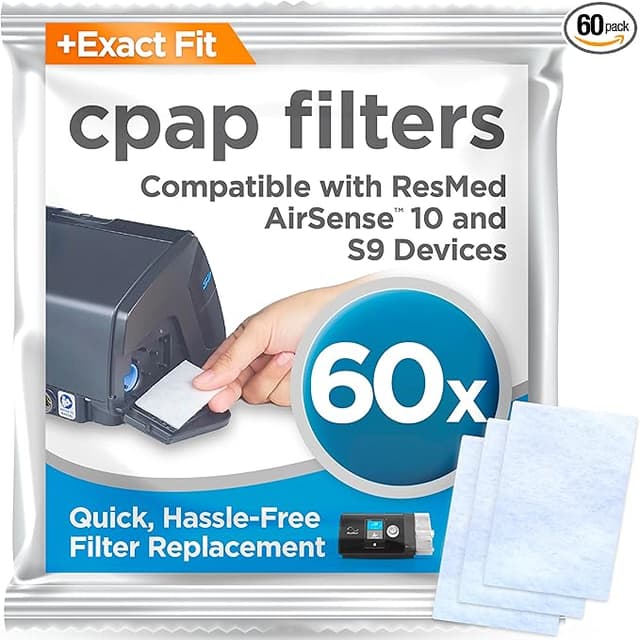
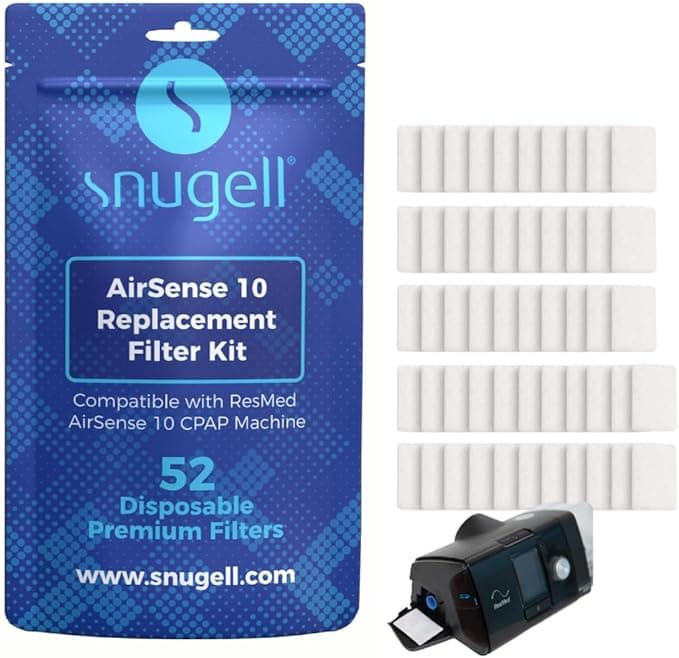
A ResMed-branded hypoallergenic pack runs me around $25 for two at the places I trust. Do that math across a year and you're looking at roughly $300+ just to breathe clean air through a machine you already paid a thousand-plus dollars for. The compatible packs I switched to? A 12-pack of the hypoallergenic style for about $15 — so call it a buck twenty-five a filter instead of twelve-fifty. Over a year that's the difference between $300 and maybe $40. That's not a rounding error. That's a tank of gas every couple months for, as far as my nose can tell, the identical job.
I didn't trust that gap at first. Cheap medical-adjacent stuff makes me nervous — I assumed you got what you paid for and the savings hid somewhere I'd regret. So I bought one compatible pack to test against my last two OEM filters, and ran them head to head.
Fit and install — the part I was most worried about
This is where compatible filters live or die, because a CPAP intake isn't forgiving. Air finds the gap. If the foam is cut a hair small, unfiltered room air sneaks around the edge and the whole point is gone.
On the AirSense 10 the routine is dead simple: there's a little flap on the back over the air intake, you pop it open, slide the old gray filter out, slide the new one in, snap the flap shut. Took me longer to find my reading glasses than to do the swap.
The compatible filter seated right. I want to be specific here because it matters — the foam was cut to the same footprint as the ResMed one, and when I closed the flap I felt it press flat against the frame the way it's supposed to. No corner poking up, no gap I could slide a fingernail into. I actually ran my finger around the whole edge with the machine on, feeling for a draft of unfiltered air sneaking past. Nothing. It pulled through the filter, not around it.
Was it a perfect match? Almost. The compatible foam is a touch — a hair — less rigid than the ResMed. The OEM one has a little more snap to it when you flex it. With the cheaper one I just made sure it laid flat before closing the flap, and after that it stayed put for the full two weeks. Small thing. Worth knowing.
How it actually performed
Two weeks in, I pulled it and compared it side by side with where my OEM filters had been at the same age. Same loading pattern. Same even gray creeping in from the air-side face. It was catching dust at basically the same rate — which is what you'd hope, since "hypoallergenic" here just means a denser foam that grabs finer particles, and the compatible one is built to the same density.
My nose agreed. No 3 a.m. dust taste. No morning congestion that I could pin on the machine. I sleep in a room with hardwood and a dog who is not allowed on the bed but believes otherwise, so there's real particulate in my air, and the filter handled it.
The real downsides — because there are some
I said I'm not a marketer, so here's the honest list.
First: there's a faint smell out of the bag. Not chemical-harsh, but a mild plasticky-foam smell for the first night, maybe two. It aired out fast and I never tasted it through the therapy air, but if you're sensitive, crack the bag open in the morning and let the filter breathe on the nightstand before you load it that night. By bedtime it's gone.
Second: the packaging is nothing. The OEM filters come individually nestled; these came stacked loose in a plain bag. Doesn't affect the filter, but a couple at the bottom had slightly squished corners. They still seated fine — foam springs back — but it looks cheaper, and it is cheaper, and you should know that going in.
Third, the one that actually matters: a 12-pack is a lot of filters sitting in a drawer, and the discipline problem doesn't go away because they're cheap. The whole reason I had a gray clogged mat in my machine was that I forgot. Buying the big cheap pack doesn't fix forgetting — it just makes it affordable to do the right thing once you remember. I now keep the next filter sitting on top of the machine so I literally can't miss it.
Who should still buy OEM — and who shouldn't
If your equipment is under a warranty that explicitly demands ResMed-branded consumables, or if you're in a clinical setup where someone else makes the rules, buy the OEM and don't overthink it. The peace it buys you is procedural, not performance.
For everyone else — someone at home, paying out of pocket, staring at a $25 two-pack next to a $15 twelve-pack — I'll tell you what I did. I switched. I've run compatible hypoallergenic filters in my AirSense 10 for months now, swapping every two weeks like I should've been doing all along, and the only difference I can find is the number on my card statement and the fact that I no longer wince when one looks dirty and needs tossing.
A clogged filter is a genuine problem — it's allergens and dust going somewhere you really don't want them. The fix isn't paying triple. The fix is changing the thing on schedule, and these make it cheap enough that I finally do.