Troubleshooting & Analysis
The night my CPAP started smelling like a basement
I knew the filter was gone before I ever pulled it out. About four months into a stretch where I'd gotten lazy about maintenance, I woke up around 3 a.m. with that dry, dusty feeling in the back of my throat — the kind you get cleaning out a closet that's been shut for a year. My AirSense 10 was running like always, the little blue display glowing, the ramp doing its thing. But the air coming through the mask had this faint, stale, almost-mildew edge to it. Not strong. Just wrong.
So I popped the flap on the back, slid the filter out, and — yeah. The thing was gray-brown, packed solid with dust, basically a felt pad that had given up. I'd been breathing through that for who knows how long, pushing room air through a clogged screen straight into my lungs for seven hours a night. That's the part nobody tells you about a dead CPAP filter: it doesn't fail loud. It just quietly stops protecting you while you sleep, and you're the last to know.
That morning is the reason I started buying compatible filters by the dozen instead of letting the ResMed-branded ones run me dry.
The price math that actually made me switch
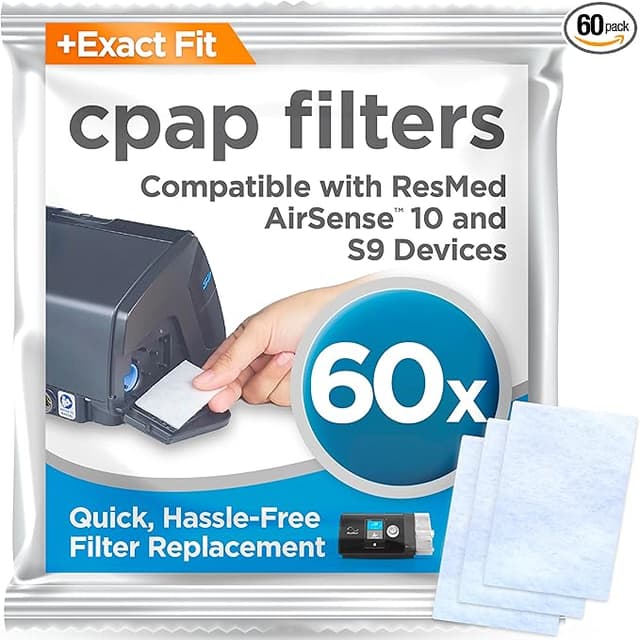
Here's what bugged me. The AirSense 10 (and the AirCurve, same intake, same filter) eats a filter every two weeks if you're doing it right. Twenty-six filters a year. ResMed's own branded ones run you something like $24 for a small pack, and once you do the annual math on the genuine ones you're looking at real money for what is, functionally, a die-cut piece of hypoallergenic media in a plastic frame.
The compatible packs I buy now come out to a fraction of that — I've paid around $13 for a stack that lasts me the better part of a year. Call it a $20–$30 swing annually depending on the pack. That's not life-changing money on any single filter. But it's the difference between "ugh, I'll order more next month" and "I have a drawer full, change it on schedule, never think about it." And changing on schedule is the whole point. A cheap filter you actually replace beats a premium one you stretch to six weeks because you don't want to spend $24 again.
Do they actually fit? Honestly — yes
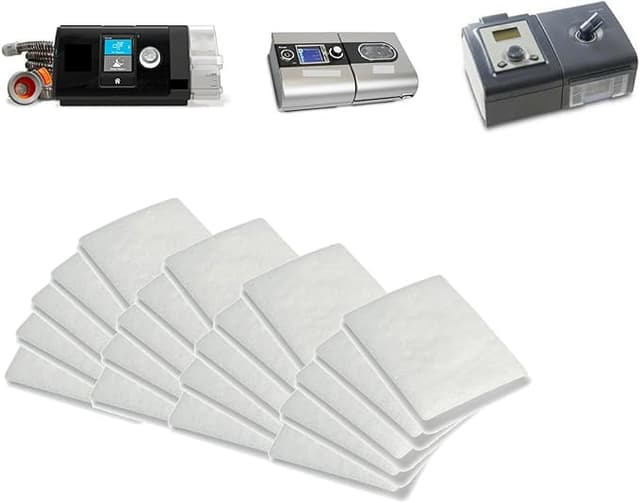
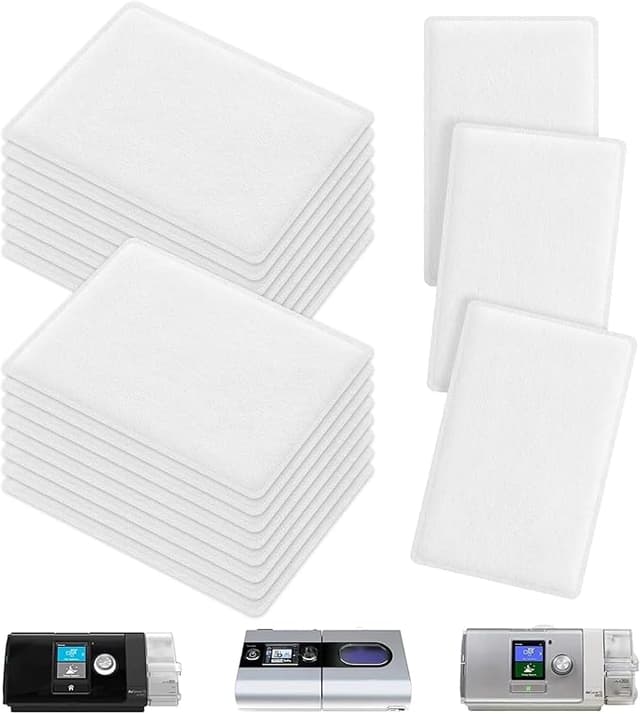
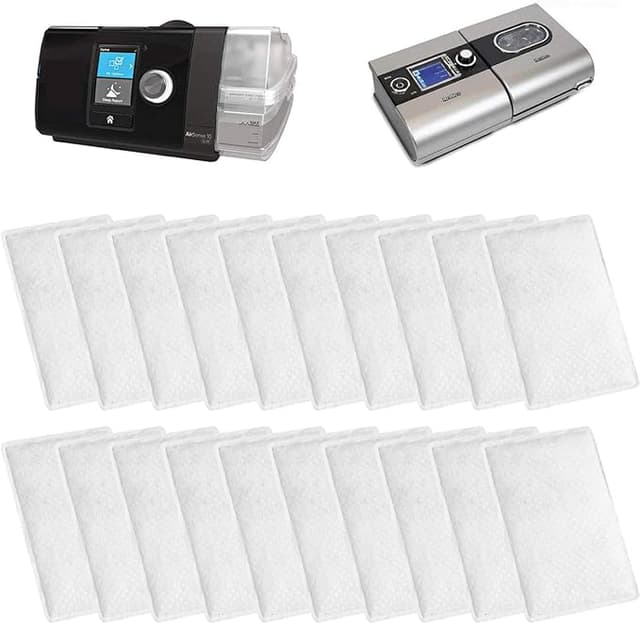
This was my worry too. CPAP is medical gear, the seal matters, and I figured a third-party filter would be a hair off and rattle around or leak air past the edge. The install is dead simple either way: find the air intake on the back of the unit, open the flap, pull the spent gray/white filter, drop the new one in, snap the flap shut. Ten seconds.
The compatible ones I've run seat right into the AirSense 10's intake with no gap I could find or feel. The flap closes flush. No whistling, no air sneaking around the frame. I'll be straight with you on the one fit quirk: a couple of the cheaper brands cut the foam a touch thinner than the genuine ResMed pad, so the very first one I installed felt slightly loose going in — like it didn't grab the housing the way the original did. It still sat flat and sealed fine once the flap was down. But if you're the type who needs that snug "it's locked in" feeling, you'll notice the difference for about half a second before you stop caring.
How they actually perform overnight
Particle-wise, I genuinely can't tell the difference at the mask. The hypoallergenic media catches the fine stuff — dust, pollen, the dander from a dog who is not allowed on the bed and sleeps on the bed anyway — and the air through the mask reads clean. My throat stopped doing the 3 a.m. dust thing the moment I got back on a real two-week swap cycle, and the compatible filters have held that. After about two weeks each one is visibly grayed-up, which is exactly what you want to see: it means the thing is doing its job and pulling junk out of the air before it reaches you.
Where it's a touch behind OEM? Two honest things.
One — the break-in smell. The first night on a fresh compatible filter, there's a faint new-plastic, slightly chemical smell for the first couple of hours. It's mild and it's gone by morning, completely gone by night two. The genuine ResMed ones don't really do this. If you're scent-sensitive, crack the filter out of its wrapper an hour before bed and let it air on the nightstand. Problem solved.
Two — the packaging is cheap. The genuine ones come individually wrapped, tidy. The compatible multi-packs I get are often just stacked loose in a bag, and once or twice a frame had a slightly squished corner from shipping. Cosmetic only — the media was intact and it sealed fine — but it doesn't feel as "medical" out of the box. If a crushed corner looks like it'd actually let air bypass the media, toss that one. They're cheap enough that you can afford to be picky.
Why I won't let mine lapse again
The reason I went down this whole rabbit hole isn't to save twenty bucks. It's that a saturated filter is a genuine health problem you're sleeping through. CPAP forces air into your airway under pressure — that's the therapy. When the filter's clogged and degraded, you're force-feeding yourself whatever dust and allergens have packed into that pad for hours every single night. That's how a maintenance habit I'd let slide turned into a scratchy throat and that basement smell. The fix was never a fancier filter. It was a cheap enough filter that I'd actually swap it every two weeks without flinching.
Who should buy OEM — and who should grab these
If you're under warranty and worried about the fine print, or you're chemically sensitive enough that a mild first-night plastic smell is a dealbreaker, buy the genuine ResMed filters and don't think twice. Same if you only change a filter twice a year anyway — at that volume the savings are tiny and not worth a moment's doubt.
But for me? I run a compatible hypoallergenic filter in my AirSense 10, I change it every two weeks like clockwork because it's cheap enough that I never hesitate, and four months of clean nights later I'd buy them again — and I have, twice. The honest knock is a faint break-in smell and packaging that won't win awards. The honest win is clean air at the mask, a real fit, and roughly $20–$30 a year back in my pocket. For a piece of filter media doing the exact same job, that's an easy call.