Troubleshooting & Analysis
I didn't believe a $20 box of filters could be fine either
Look, I'll just say it up front: the first time I bought a compatible filter pack for my AirSense 10 instead of the ResMed-branded ones, I half-expected to ruin a machine I'd paid the better part of a grand for. You don't gamble on the thing that's pushing air into your lungs eight hours a night. That was my logic, and for two years it kept me handing ResMed money for little gray-and-white rectangles of foam.
Then I did the math one night while half-asleep, and it annoyed me enough to write this.
The actual price gap, written out
A ResMed-branded hypoallergenic filter, the genuine one, runs me about $2 each when I buy the small official packs — and because you're supposed to swap these every two weeks, that's roughly 26 filters a year. Call it $50-something a year just on disposable foam, sometimes more once shipping gets tacked on for the tiny boxes.
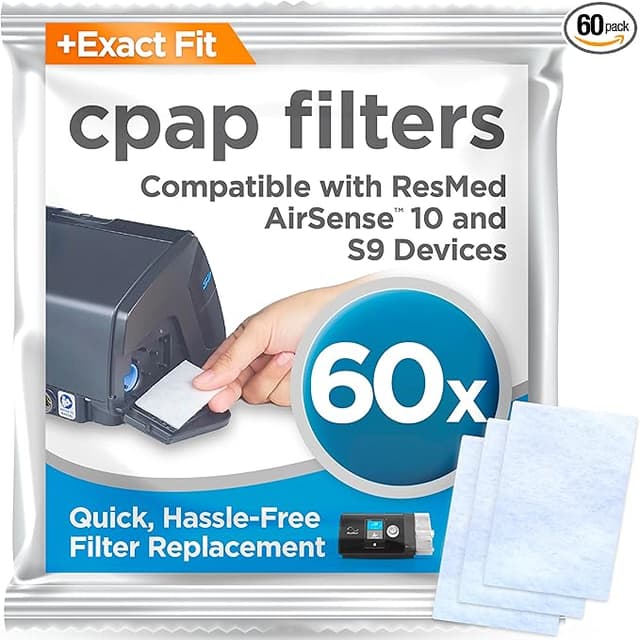
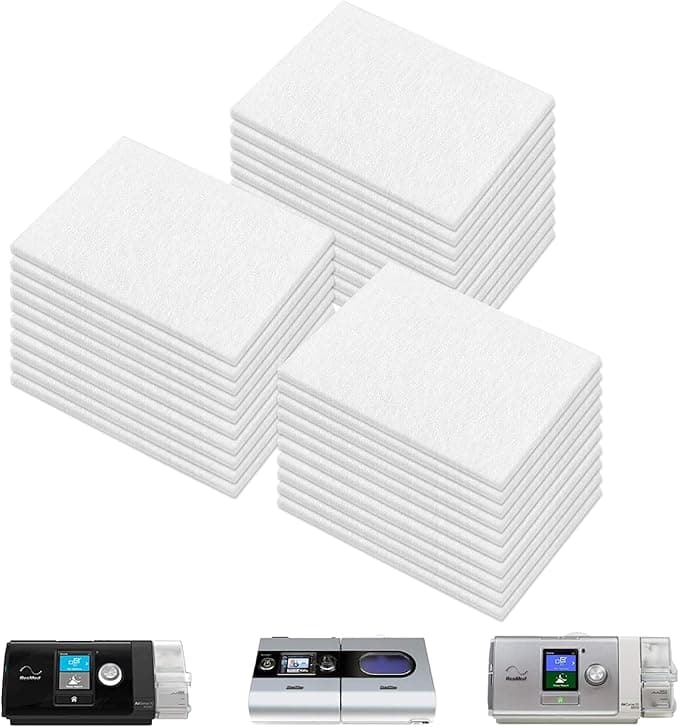
The compatible pack I switched to was a bag of 60 filters for around $15. Sixty. That's a two-plus-year supply for less than a third of one year of OEM. Per filter we're talking somewhere near a quarter versus two bucks. I sat there doing the arithmetic — $50 a year against maybe $6 or $7 a year — and felt a little dumb for not switching sooner. Same job. Same flimsy piece of foam. One of them just has a logo printed on the bag.
Do they actually fit the AirSense 10?
This was my real worry, more than the price. A filter that doesn't sit flush is worse than no upgrade at all, because then you've got unfiltered air sneaking around the edges and dust getting pulled straight through.
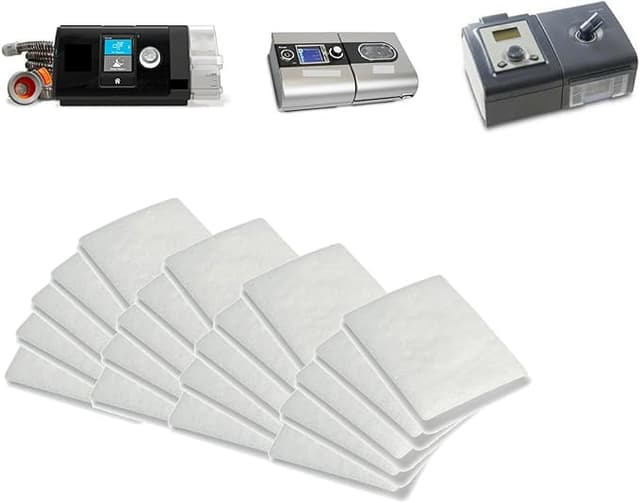
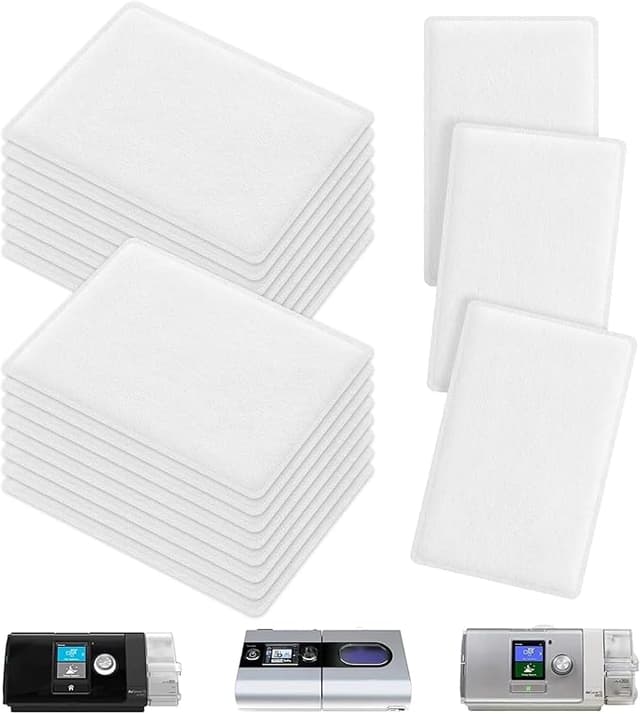
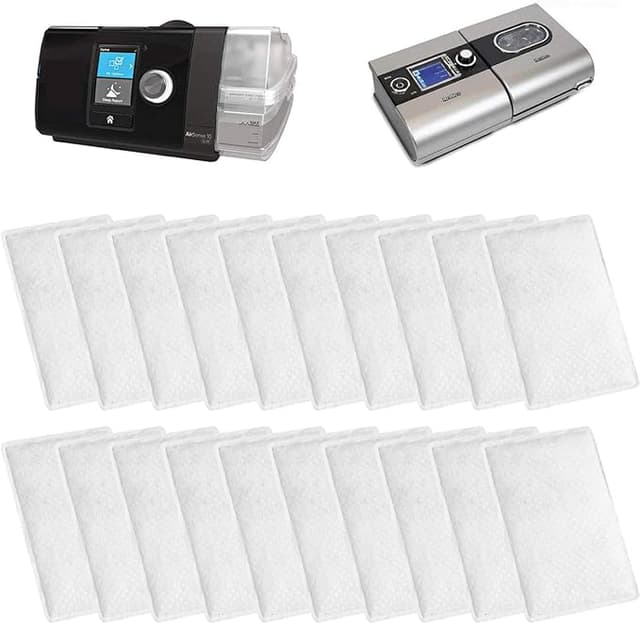
The intake on the AirSense 10 (and the AirCurve, same body) is that little slot on the back — you flip the flap open, the old filter slides out, the new one drops in, flap clicks shut. With the compatible ones, the install was identical. They slid into the same recess, the flap closed with the same soft snap, no bulging, no folding a corner over to make it fit. If I'm being picky — and I am — the foam is cut maybe a hair less precisely than ResMed's. On a couple filters out of the bag the edge was very slightly rough, not a clean factory line. But seated in the slot? You could not tell. The flap holds them snug against the intake exactly like the originals.
I've now run these through the back half of a year, two-week swaps like clockwork, and not one has shifted, sagged, or gotten sucked inward. The fit nerve I had on night one was gone by night three.
How it actually performs at 3 a.m.
Here's the honest part. Filtration-wise, on a CPAP, the foam is doing a fairly humble job — catching dust, pollen, the gray fuzz your bedroom air carries. It is not a HEPA medical miracle on either the OEM or the compatible side; anyone selling you that story is selling. What I care about is: does it pull that gunk out before it reaches me, and does it stay quiet doing it?
It does. Airflow felt exactly the same — no extra whistle, no change in the pressure my machine reported, no drop in how the therapy felt when I woke up. After two weeks I'd pull the used one and it was the same dingy gray as the ResMed ones used to be, loaded with the same junk it was supposed to grab. That's the tell. A filter that comes out clean isn't gentle, it's not working. These come out dirty, which means they did their two weeks honestly.
The downside I won't pretend away
So here's the real one. The first night with a fresh compatible filter, there was a faint new-foam smell — a light plastic-y note for the first few minutes after I switched it. With ResMed's I never noticed that. It's mild, it aired out fast, and by the time I'd actually drifted off it was gone, but I'm not going to tell you it wasn't there. If you're scent-sensitive, pull the filter out of the bag a day early and let it sit on the nightstand to breathe before you install it. Problem solved, but it's a step OEM didn't make me take.
The other gripe is packaging, plain and simple. ResMed's filters come individually sleeved, neat. The compatible bag is just 60 filters loose in one resealable pouch. Cheap. Slightly annoying to keep clean and dust-free in a bathroom drawer — I ended up dropping the bag into a zip-top container so the spares don't catch lint before they ever reach the machine. Minor. But real, and worth knowing before the bag shows up looking like exactly the $15 it cost.
And one thing I'll say plainly because it's your health: whichever brand you land on, do not stretch the two-week interval to save money. A saturated CPAP filter stops catching and starts feeding allergens and dust back into the airstream — the exact thing you bought the machine to avoid, blown straight at your face all night. The whole point of going cheap-per-filter is that you can afford to change them on schedule without flinching at the cost. Use that. Swap on time.
Who should still buy OEM — and what I actually do
If you're inside your ResMed warranty window and the paperwork makes you nervous, or you're the kind of person who simply will not sleep wondering whether the off-brand foam is "right," buy the branded ones. The peace that comes from not second-guessing is worth $50 a year to some people, and that's a fair trade. No judgment.
But me? After half a year of two-week swaps, identical fit, identical airflow, and filters that come out just as filthy as the name-brand ones did, I keep the $15 bag of 60 in the drawer. It does the same humble job for a fraction of the price, and the only costs are a faint first-minute smell and a cheaper baggie. I've reordered it once already, and I'll do it again when this supply runs out — which, at 60 filters a bag, won't be for a long while.