Troubleshooting & Analysis
Six dollars a filter, or sixty a year — that's the math nobody tells you
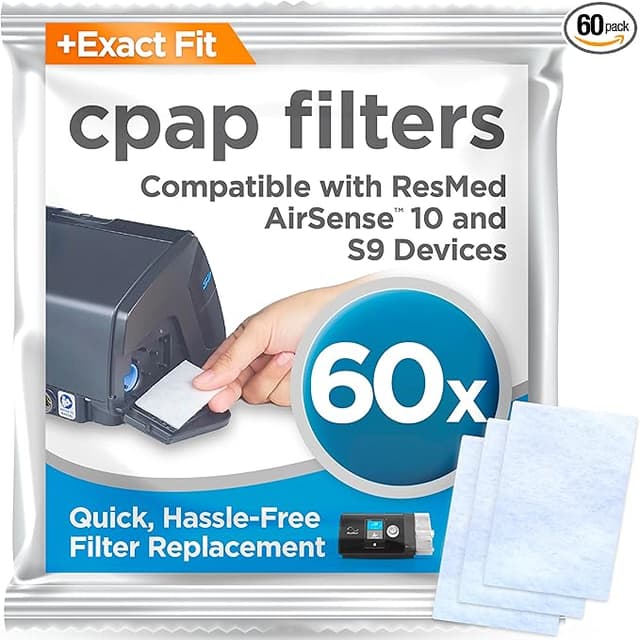
I did the receipt math one night because I was annoyed. I'd been changing the filter on my AirSense 10 every two weeks like the manual says, buying the ResMed-branded hypoallergenic ones a few at a time, and they were running me somewhere north of $4 a piece in the small packs — call it five bucks once you count the shipping nibble. Two weeks each. That's 26 filters a year. Do the arithmetic and you're looking at well over $100 annually to keep a clean square of pleated foam in front of a machine that already cost a small fortune. For a consumable. For paper, basically.
The compatible packs I switched to? I paid right around $15 for a box of a couple dozen. That's roughly 60 cents a filter against ResMed's four-or-five-dollar ask. Same job. I'll get to whether they're actually the same — because that's the real question, and I was skeptical too — but the price gap alone made me sit up. We're not talking a couple bucks. We're talking the difference between $25 a year and well over a hundred.
I didn't trust them either, so here's what I actually found
My honest fear going in wasn't the money. It was: am I about to breathe drywall dust and pollen all night because I cheaped out on the one part standing between my lungs and the room air? That's not paranoia. A CPAP pulls a lot of air, and it pushes whatever it pulls straight into your airway under pressure for seven hours. A clogged or junky filter is a genuine problem — you're not just losing airflow, you're potentially funneling allergens past the one barrier that's supposed to catch them. So I wasn't casual about this swap.
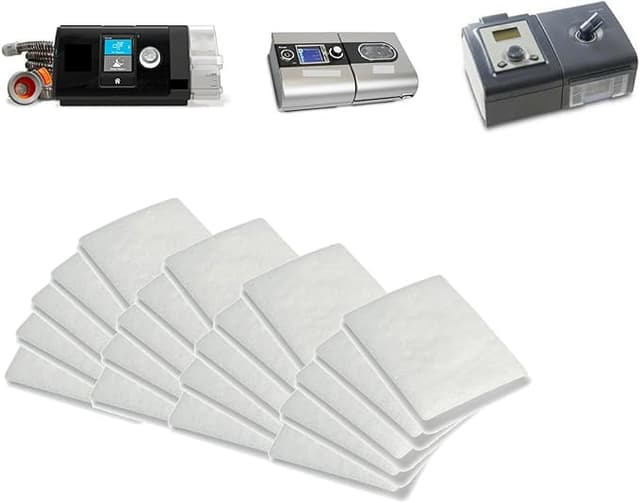
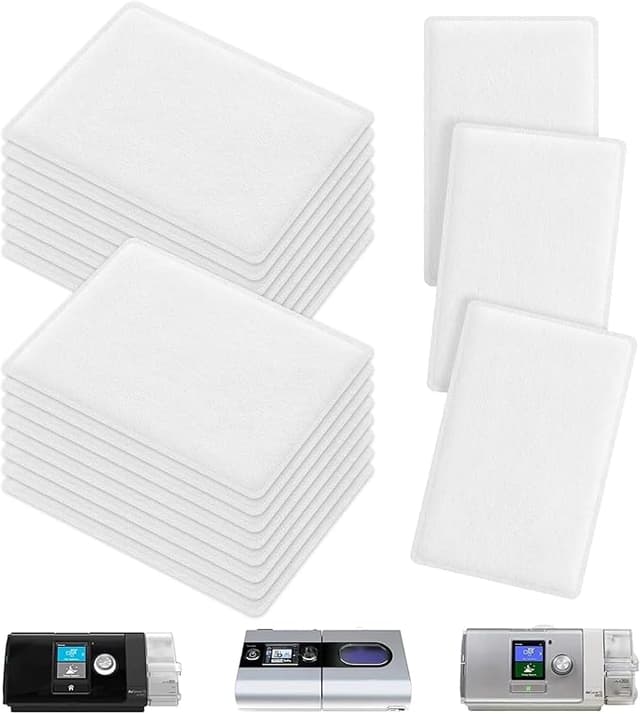
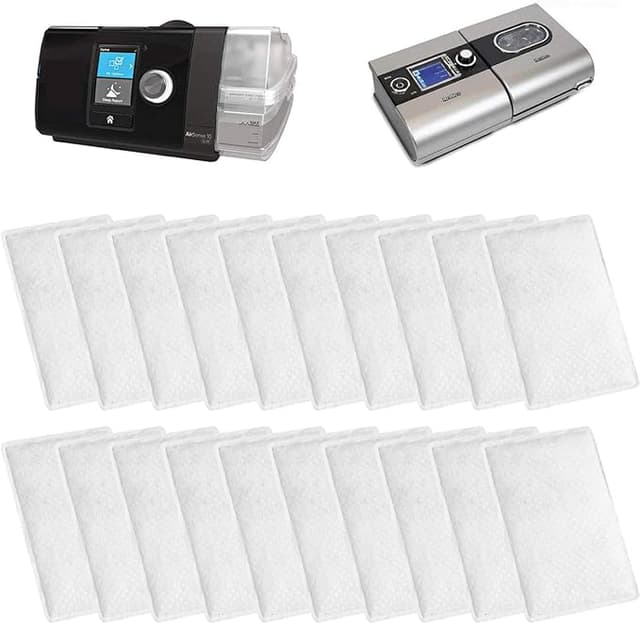
What I found, after running compatibles in my bedside AirSense 10 for the better part of a year, is that the foam itself is the easy part to get right. These are hypoallergenic-style fine-particle filters and they look and feel the part — the same charcoal-grey-to-white pleat, the same density when you pinch them. The intake on the back pulls the same, the machine doesn't complain, and I haven't noticed a lick of difference in how my therapy feels or how my AHI numbers read on the app in the morning. If a compatible filter were choking airflow, you'd feel it as a weaker push or hear the motor working. I don't.
The install is genuinely idiot-proof — and that matters here
This is part of why I'm comfortable telling people to go third-party on this specific part. There's no fitment lottery. You find the air intake on the back of the unit, pop the little flap, slide the old grey filter out, drop the new one in, snap the flap shut. That's it. It seats flat against the housing — there's no gasket, no click-to-lock mechanism that a slightly-off aftermarket part could fail to engage. It's a square sitting in a square recess held by a flap. As long as the cut size is right, and on every pack I've used it has been, a compatible filter sits exactly the way the OEM one does. No fiddling, no trimming, no "does this actually seal" anxiety. Thirty seconds, lights out.
One small real-world note: do the swap with the machine unplugged or off, and pop the flap fully open before you pull the old one — I've torn a couple of saturated old filters trying to yank them through a half-open flap. That's a me problem, not a filter problem, but it'll save you picking grey crumbs out of the intake.
Now the downsides — because there are real ones
I'm not going to pretend these are flawless, because they aren't, and the differences are exactly where you'd expect a cheaper product to show its seams.
First: the cut precision is a hair less consistent than ResMed's. Out of a box of two dozen I'll usually find one or two where the edge is very slightly less crisp, or the foam is a touch thinner at one corner. They still fit and still work — the recess holds them fine — but if you're the kind of person who notices that the OEM ones are machined to look identical, you'll see the variance. It's cosmetic ninety-five percent of the time. The one time it isn't is if you get a piece that's noticeably undersized; that one I toss, and I've maybe tossed two in a year of using them.
Second, and this is the one I'd actually flag: quality control varies by seller, not just by "OEM vs compatible." The good packs are genuinely indistinguishable in use. But the compatible market has cheap operators in it, and a bad batch can mean filters that shed a little foam fuzz or that feel flimsier than they should. The fix is boring but it works — buy from a listing with a real volume of reviews, and when a new box arrives, eyeball and pinch the first couple before you trust them. Thirty seconds of QC on your end covers the gap that the lower price leaves open.
Third, the packaging is nothing. A plain poly bag or a flimsy box, no individual wrapping, no satisfying branded sleeve. Doesn't affect the filter at all — but if part of what you were paying ResMed for was the feeling that this is a Medical Device, the compatibles will not give you that feeling. They give you a baggie of foam squares. Which is, accurately, what a CPAP filter is.
So who should still buy OEM?
If your machine is still under a warranty you're worried about voiding, or your DME supplier provides filters through insurance at no out-of-pocket cost to you, there's genuinely no reason to switch — let someone else pay. And if you're someone who will lie awake second-guessing a non-branded part regardless of evidence, the OEM premium is buying you sleep, and sleep is the whole point of the machine. Pay it. No judgment.
The verdict
For everyone else — for me — this is the easiest aftermarket swap I've made on any device I own. The part is a flat square of filter foam in a flapped recess, the install can't go wrong, the airflow and my numbers haven't budged, and I'm spending a fraction of what I was. The downsides are real but small and self-correctable: inspect the first couple out of each box, buy from a seller with a track record, toss the rare dud. Do that and you're getting OEM performance for roughly a fifth of the annual cost. I changed mine on schedule all year, never once felt shortchanged at 3 a.m., and I'd buy these again. I already have — twice.