Troubleshooting & Analysis
I bought the $20 filters mostly to prove a point
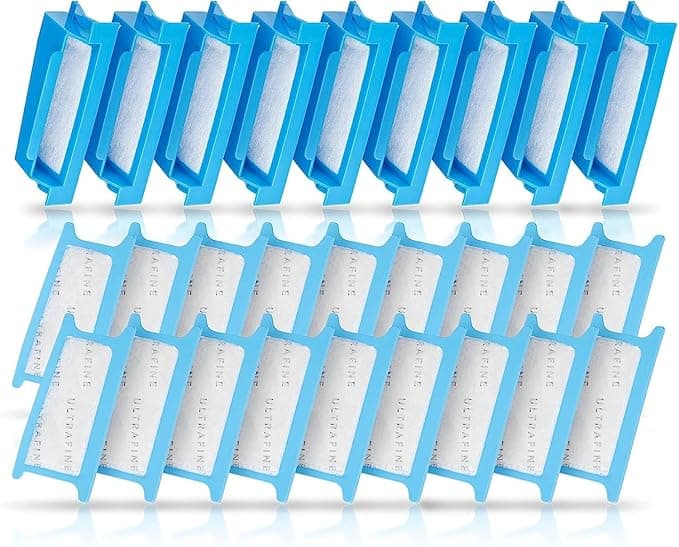
I didn't believe them. A two-week consumable for a medical device — the thing that filters the air going straight into my lungs every night — and the compatible version was a fraction of what Philips wanted for the branded pack. My gut said cheap, my gut said corner-cut, my gut said you get what you pay for and what you're paying for here is your own breathing. So I ordered a multipack of the generic DreamStation filters expecting to write them off as a dumb experiment. That was a long time ago now. I'm still using them.
Here's the honest setup. I run a Philips Respironics DreamStation — the standard model, the one a few million people have on their nightstand — and I go through the disposable ultra-fine filters fast because I keep the unit in a bedroom that is, let's say, not a clean room. Dust, a dog that is not allowed on the bed but believes otherwise, the works. So filters are not a once-a-year thing for me. They're a running cost, and that running cost is exactly why the price gap stopped being abstract and started being annoying.
The actual money, not the vibe
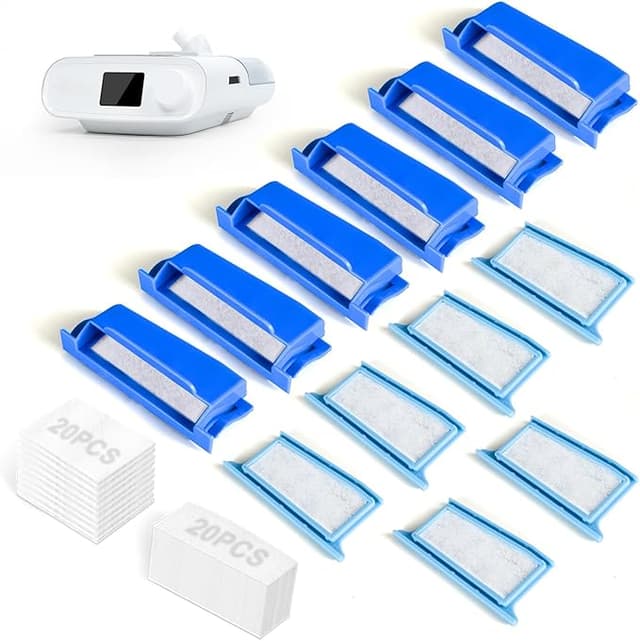
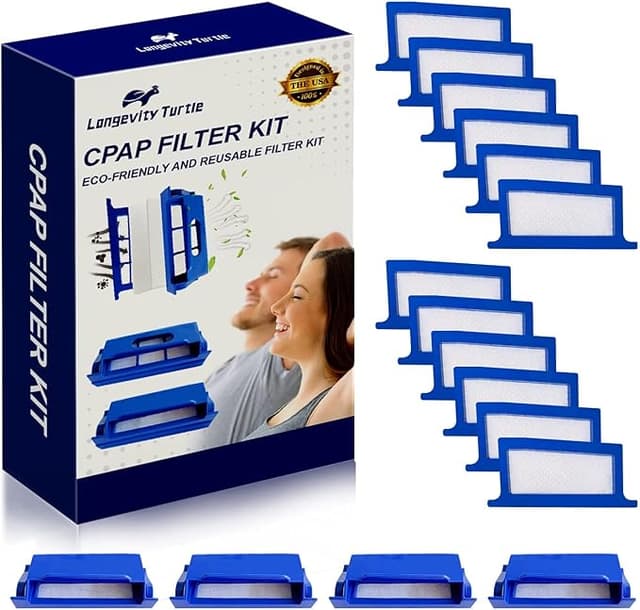
Buying the genuine Philips disposable filters, I was looking at roughly $1.50 to $2 per filter once you do the math on a small branded pack. The compatible multipack I switched to works out to somewhere around $0.40 a filter — call it a $20 box that lasts the better part of a year at a two-week swap. On a single filter that gap looks like nothing. Who cares about a dollar. But I'm changing these every two weeks, sometimes sooner, and over a year that's twenty-some filters. The branded route was quietly costing me $40-something a year for what is, functionally, a folded rectangle of fine media. The compatible route is closer to $20 for the same year of clean air. That's not life-changing money. It is, however, the kind of slow drip you notice once you start paying attention, and it's the entire reason I ran the test in the first place.
Do they actually fit?
This was my real worry. CPAP filters aren't all standardized, and a filter that's a hair off seats loose, lets unfiltered air sneak around the edge, or buzzes. So the first night I paid attention to the install instead of doing it half-asleep. Found the air intake on the back of the DreamStation, popped the little flap, pulled the old grey filter, and slid the new one in. It seated. Flap closed flush. No gap I could see, no whistle, no rattle when the blower spun up. Fit was honestly indistinguishable from the branded one — same footprint, same snug press into the slot. If anything the compatible media felt a touch denser between my fingers, though I wouldn't swear to that meaning anything.
One small fiddling note: on a couple of filters in the box, one corner was very slightly soft from being packed tight, so I had to press it square before it sat right. Five seconds of fuss. Not a dealbreaker, but it's real, and it's the kind of thing the branded pack doesn't make you do.
How they breathe — the part that matters
Performance is where I expected the cheap ones to fall apart, and where they mostly didn't. Airflow felt the same. My therapy pressure didn't feel labored or weak, no sense of sucking through a denser straw, and the machine wasn't ramping or struggling to hit pressure. Over the first months I tracked the obvious tell — how grey and loaded the filter got — and it darkened on the same schedule the branded ones did. Same job, same loading rate, same two-week tap-out. For something pulling allergens, dust, and dander out of the air before it hits your mask, "indistinguishable in daily use" is the whole bar, and it cleared it.
The safety angle isn't marketing fluff, by the way, and it's the one place I want to be careful. A CPAP doesn't just blow ambient air — it pressurizes it and drives it into your airway for hours. A saturated, neglected filter stops catching the fine stuff and starts being the fine stuff, pushing trapped dust right past the point of no return. So the filter being cheap is fine. The filter being neglected is not. The flip side of a $20 box is that there's zero financial excuse to stretch a filter past two weeks, and honestly that's made me better about changing them on time than I was when each swap felt like burning money.
The downsides, and there are real ones
I told you I'd be straight, so here's the catch list. The packaging is cheap — a flimsy bag, filters loose inside, none of the individually-wrapped, neatly-stacked presentation the branded box gives you. It feels like a commodity because it is one. Doesn't affect the air, but if you want to feel reassured by the box, this box won't do it.
Second, the first night or two with a fresh one, I caught a faint smell. Not chemical-harsh, more of a clean-paper, slightly-new scent that faded by night three and was gone after that. I noticed it because I was looking for it; my partner didn't clock it at all. Still, it's there, and if you're sensitive to new smells you'll want to crack a fresh filter and let it air out for a few hours before bed instead of installing it right out of the bag.
Third, batch consistency. Across a couple of boxes, the vast majority were perfect, but I hit the occasional one with a slightly frayed edge or that soft corner I mentioned. The branded filters were uniform every single time. With the compatible ones you're trading a little quality-control polish for the price. I just eyeball each one before it goes in — takes a second — and toss any that look off. Out of dozens, I've thrown out maybe two.
So who should skip these?
If you're someone who needs the documentation, the exact branded spec for an insurance or supplier requirement, or you simply will not sleep easy unless the box says Philips — buy OEM. That peace is worth two-and-a-half thousand cents to some people and I won't argue. Same if you have a known severe respiratory condition and your provider specified a particular filter; follow them, not me.
For everyone else with a standard DreamStation who's just tired of paying branded prices for a disposable rectangle — I went in trying to debunk these and ended up restocking them. The fit is right, the air is clean, the downsides are a flimsy bag and a smell that's gone by Tuesday. For roughly half the annual cost, doing the same job, I'd buy them again. I have. Twice.