Troubleshooting & Analysis
About a year into running my DreamStation, I woke up one morning with a headache and that scratchy, dusty feeling in the back of my throat — like I'd slept in a room nobody had cleaned in months. I blamed allergies for a few days. Then I popped the flap on the air intake and pulled the filter. It was gray going on brown, fuzzed over with a felt of dust, and one corner had collapsed inward where the foam had basically given up. That little square had been quietly pushing my bedroom air straight into my lungs for who knows how long past its date. That was my wake-up call about CPAP filters. Literally.
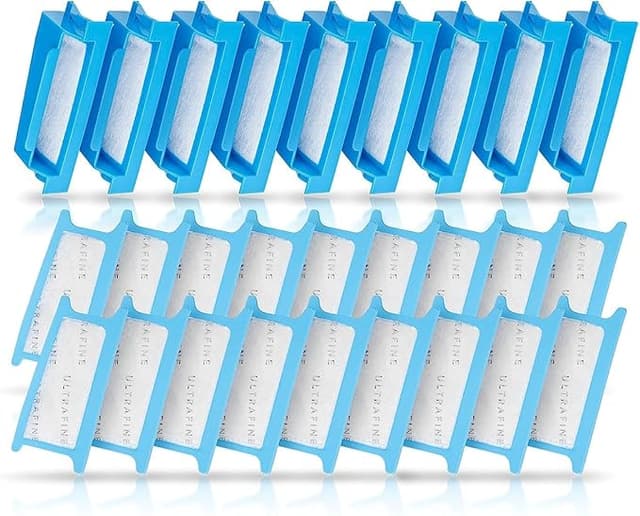
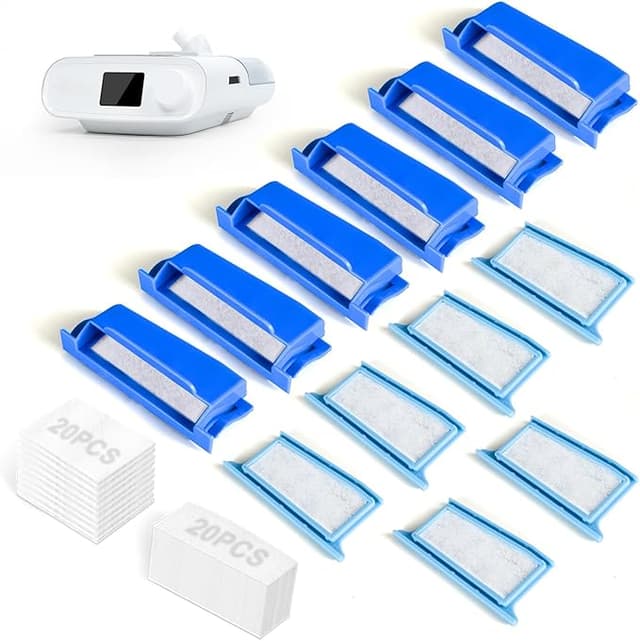
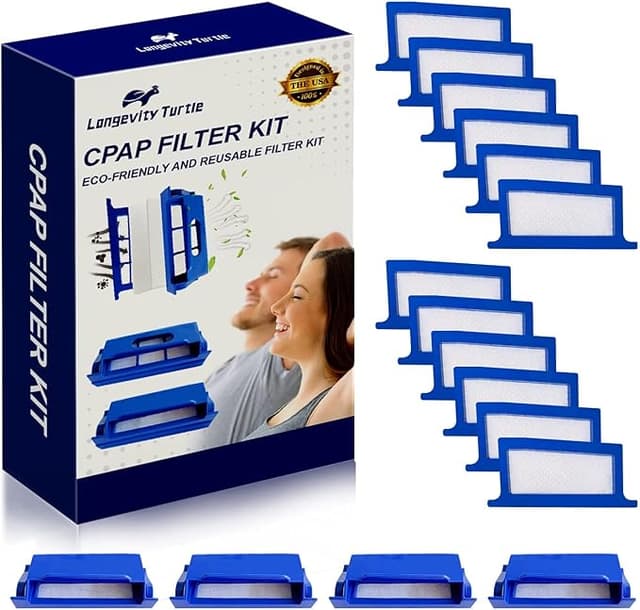
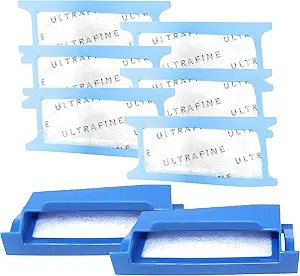
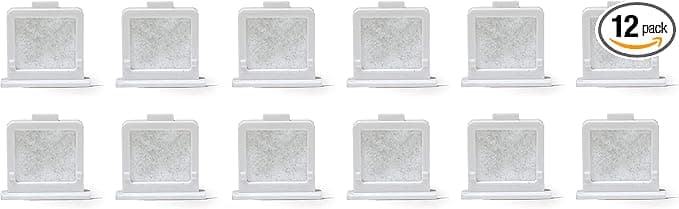
Here's the thing nobody tells you when the sleep clinic hands you the machine: the filters are a recurring tax. Philips Respironics sells the official DreamStation pollen filters in those tidy branded packs, and once you do the math on changing them every couple weeks, the OEM route adds up to real money over a year. The generic medical-grade hypoallergenic filters that fit the same intake? A fraction of that. I've been buying the compatible ones for a while now, and I want to actually tell you whether the cheap route is fine — or whether you're gambling with the one machine that's supposed to keep you breathing at night.
The price gap is the whole reason we're here
Let me put numbers on it. A name-brand multipack from Respironics tends to land around $20 for a small box once you account for shipping and the "it has the logo on it" markup. The compatible hypoallergenic filters — same dimensions, same disposable foam-and-pollen-layer construction — routinely come in packs that work out to a couple bucks for a multi-month supply. Call it a savings of fifteen, twenty dollars per box, and remember you're rebuying these things roughly twice a month. Over a year that's not nothing. That's a few restaurant dinners you're handing to a logo.
And the job these things do is genuinely simple. A CPAP intake filter is a passive particulate barrier. It is not a precision-machined part. It's foam and pollen media catching dust, pet dander, and lint before the blower pushes air down the hose. No firmware, no sensor, no calibration. Which is exactly why a compatible one can match the original — there's not much to get wrong.
Fit and install: does it actually seat?
This is the part people get nervous about, and fairly. On the DreamStation the intake is on the side — you flip open the little flap, slide the old gray/white filter out, drop the new one in, close it back up. The OEM filters seat with a snug, no-thought fit. The compatibles I've used fit too, but I'll be honest: the cut is a hair less precise. A couple times I've had to nudge a filter so it sat flush instead of cocked slightly in the slot. Not a fight — a two-second adjustment. Once it's in and the flap is closed, it holds fine, and I've never had one rattle loose or get sucked toward the blower. If you can change a filter at all, you can change these. Swap every two weeks, same as the original — and don't try to stretch them to save money, because stretching a filter is exactly the mistake that started this whole story.
The honest performance take
Day to day, I cannot tell the difference in my therapy. Pressure feels identical, the machine isn't laboring, and that morning throat-dryness that tipped me off to my old clogged filter went away the moment I went back to a fresh one — generic or not. The hypoallergenic media on the better compatibles is genuinely fine-particle rated, so for dust and pollen it does what the original does.
Where's it a touch behind? Two places, and I'll name them. First, the foam on some compatible filters feels a little less dense than the Respironics version — it still filters, but I change them right on the two-week mark rather than pushing past it, because I trust the OEM foam to survive a bit more abuse. Second, batch consistency isn't as tight. With OEM, every filter is identical. With generics, I've opened a pack where one or two were cut a millimeter off or had a slightly ragged edge. Out of a big multipack, maybe one was cosmetically rough. None were unusable — but it's the kind of thing you just don't see with the branded box.
The real downsides — let's not pretend
The packaging is cheap. Thin plastic sleeve, sometimes no individual wrapping, occasionally a faint plastic-y smell on a brand-new filter the first night. It airs out within a day and I've never had it touch my therapy, but if you're sensitive to smells, run the machine for ten minutes before bed the first night with a new one in. The other downside is trust-by-brand: these aren't the exact part your equipment supplier "approved," and if you're the type who needs the manufacturer's blessing for total confidence, that nagging feeling might bug you. I get it. But a pollen filter is a pollen filter. It is not the pressure-regulating heart of the machine.
One more thing from actually living with these: buy a pack big enough that there's always a spare in the drawer. The single biggest threat to your lungs isn't a generic filter — it's running a dirty old one too long because you ran out and didn't reorder. The cheap multipacks make you more likely to swap on schedule, which is the part that actually protects you. My clogged-filter morning happened because I'd been rationing expensive OEM filters, telling myself one more week was fine. Going generic, I stopped rationing.
Who should buy OEM instead — and who should grab these
If your insurance or DME supplier fully covers your filters and you pay nothing out of pocket, just take the branded ones — there's no reason to pay more when free is on the table. And if you have a serious respiratory condition where your doctor specified an exact filter, follow that to the letter and don't improvise.
But for the rest of us paying cash for a consumable foam square every two weeks? I grab the compatible hypoallergenic filters, and I have, over and over. They fit my DreamStation, they keep my air clean, they cost a fraction of the logo version, and the small downsides — a slightly looser cut, a day of plastic smell, plainer packaging — are exactly the kind of thing I'll trade fifteen-plus dollars a box to live with. The filter that actually hurt me wasn't a cheap one. It was an old one I kept too long to save money. Buy enough of the affordable ones that you never make that mistake again.