Troubleshooting & Analysis
I bought the $20 one fully expecting to regret it
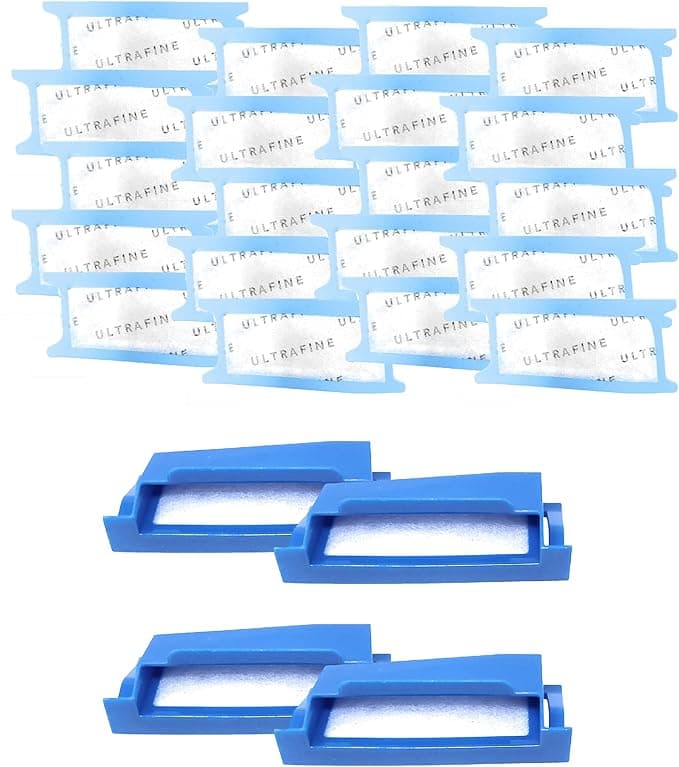
Let me be honest about where I started. I did not believe a generic CPAP filter could be fine. I'd been running a Philips Respironics DreamStation for about two years, dutifully buying the branded disposable filters, and somewhere in my head I'd decided that the marked-up price was the cost of not waking up with gunk in my lungs. That's the story the box wants you to believe. So when I saw a third-party hypoallergenic filter for my DreamStation sitting at around $20 for a multi-pack — versus the steady drip of OEM money I'd been handing over — my gut said "that's a trap." Cheap medical stuff scares people, and it scared me.
I bought a pack anyway, mostly to prove myself right. Four months later I'm still using them, and I want to walk you through exactly what I found, the good and the genuinely annoying, because you're probably standing where I was — staring at the price gap, nervous.
The actual money, not the marketing math
Here's the part nobody frames clearly. CPAP filters aren't a once-a-year purchase. The DreamStation guidance — and my own experience — puts you at swapping the disposable fine filter roughly every two weeks if you want it doing its job. That's around 26 filters a year, give or take, if you're consistent.
When you're buying branded, that cadence adds up fast. A multi-pack of the compatible hypoallergenic filters ran me about $20 and covered months of swaps. Run the annual math on replacing every two weeks and the gap between OEM and generic isn't pocket change — it's the difference between a filter being a minor recurring cost and a filter being something you start "stretching" to four or six weeks because you don't want to pay. And stretching a CPAP filter is the actual danger here, way more than the brand on the package. A filter you replace on time because it's cheap beats a premium one you guilt yourself into reusing.
Does it actually seat in the machine?
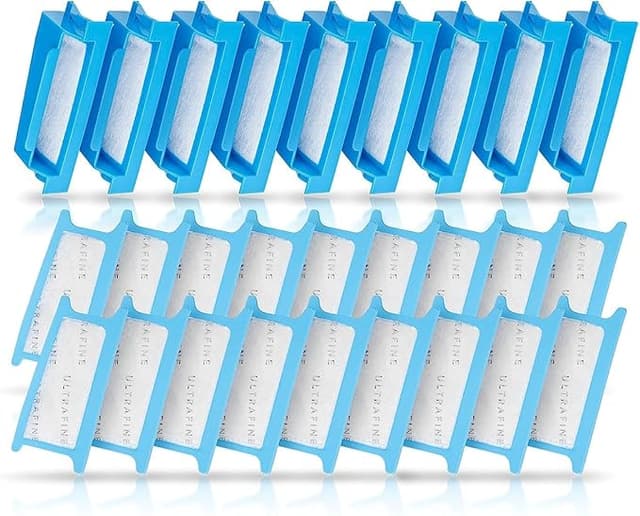
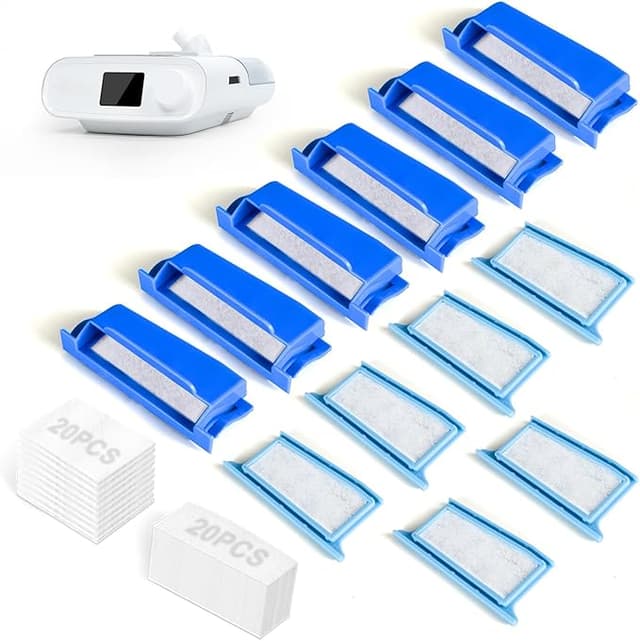
This was my first real test, because a CPAP filter that fits loose is worthless — air just routes around it. On the DreamStation the intake is on the side, behind a little flap. You pop the flap, pull the old grey-white filter out, drop the new one in, close it up. Took me longer to find my reading glasses than to do the swap.
The compatible filter went in clean. It's cut to the same footprint as the factory one, sits flush in the recess, and the flap closed with that small resistance that tells you it's seated against something, not floating. I'll give you one honest caveat: the foam on these is a hair less rigid than the branded version. The first one I installed, I pressed it in a touch too casually and it sat slightly proud — easy fix, I just reseated it and it dropped in flush. So pay attention on install. It's not loose, but it doesn't have quite the same stiff "click into place" feel, so you confirm with your eyes instead of by feel.
How it actually performs at 2 a.m.
The thing I cared about most: does the air feel different, and does the machine behave? On both counts, no. My DreamStation's airflow felt identical — no extra whistle, no struggling-motor sound, no change in pressure that I could detect through the mask. I sleep with the unit maybe two feet from my head and I'm a light sleeper; I'd have noticed a new noise. There wasn't one.
On the filtering itself, the hypoallergenic version did what I needed in a dusty old bedroom with a cat who does not respect closed doors. I wasn't waking up with the dry, scratchy throat I sometimes get when a filter's overdue. Pulled one at the two-week mark to inspect it and it had the grey loading you'd expect — it was catching the fine stuff, not just sitting there decorative.
The downsides — and there are real ones
I told you I'd be straight, so here's where the generic shows its price tag.
First, the smell. The first night with a fresh one, there was a faint plastic-foam odor for the first hour or two. Not chemical-harsh, not headache-inducing — more like new packaging. It faded by the time I was actually asleep, and by night two it was gone entirely. But if you're sensitive to smells, run the machine for ten minutes before bed the first night and let it air out. I do that now out of habit.
Second, the packaging and consistency. The OEM filters come individually sealed and identical down to the millimeter. These come in a bulk pack, and across the batch I noticed minor variation — one or two had foam cut a touch unevenly at the edge. None of them failed to fit, but it's clearly a less obsessive production line. You're trading some quality-control polish for the price.
Third — and this matters — these are the fine particulate filters, not a replacement for the structural integrity of the machine itself. They block fine particles and allergens, which is the whole job, but a generic filter is not a license to skip cleaning your humidifier chamber or your tubing. The filter is one layer. Treat it as one layer.
Why a dead filter is the thing to actually fear
I want to be clear about the real risk, because it's not "generic vs branded." A saturated, overdue CPAP filter is a problem no matter whose logo is on it. You're pulling room air across that foam and breathing it directly into your airway for seven or eight hours while you're unconscious. Let it clog and load up with dust, and you're either choking the airflow your therapy depends on or pushing allergens straight into your lungs. That's the actual health hazard — not the brand. Which is exactly why a filter cheap enough that you'll happily swap it every two weeks is, to me, the safer choice in practice.
So who should skip these?
If you have a severe documented reaction to a specific allergen and your sleep doc spec'd an exact filter, follow that — don't freelance your medical care to save twenty bucks. And if the first-night plastic smell is a dealbreaker for you, the branded ones are slightly more neutral out of the gate.
For everyone else — for the version of me four months ago who assumed cheap meant unsafe — I was wrong. The compatible DreamStation filter fit, filtered, ran quiet, and cost a fraction of what I'd been paying. The downsides are real but small: a faint break-in smell, slightly looser foam, less perfect packaging. Against a price low enough that I'll never again be tempted to stretch a dirty filter, I'd buy these again. Honestly, I already reordered.