Troubleshooting & Analysis
Two boxes on the pharmacy counter, and me doing math in my head
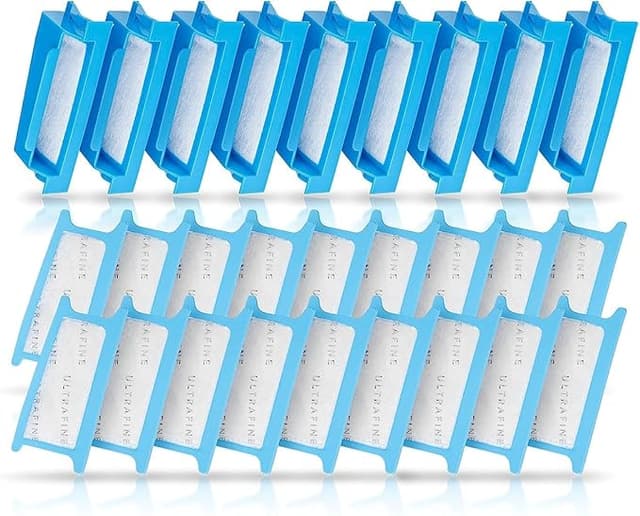
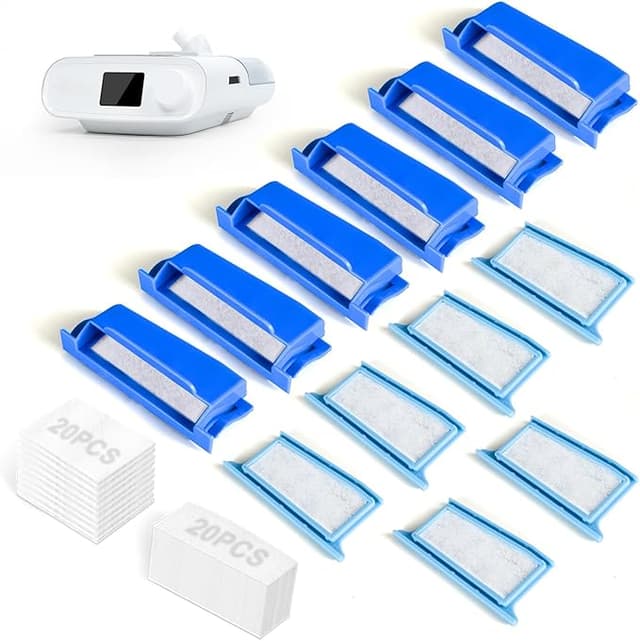
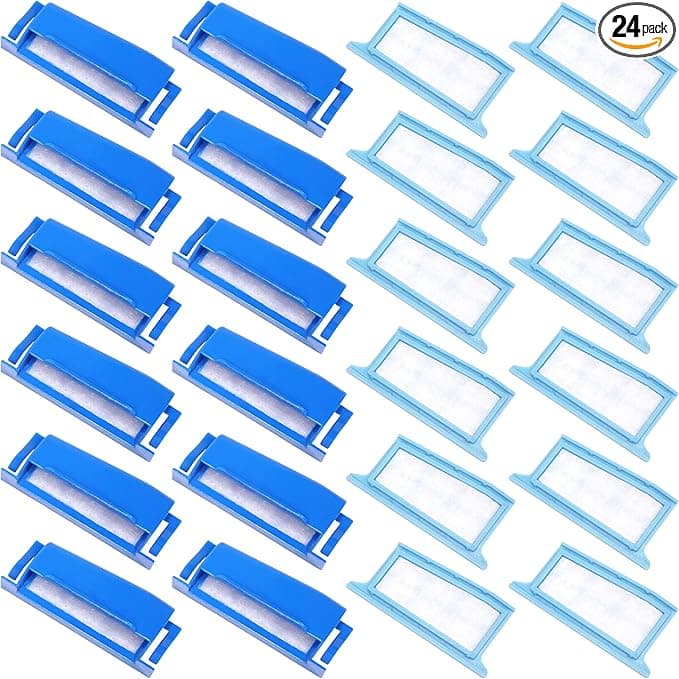
I had the Philips OEM box in one hand and a generic compatible pack in the other, standing there longer than a grown man should stand in front of CPAP supplies. The OEM disposable ultra-fine filters — the little white ones for the DreamStation — were running me about $18 for a six-pack at the time. Six. That's roughly $3 a filter, and the manual says swap them every two weeks if you've got allergies or pets, which I do, both. The generic pack next to it? Thirty filters for around $14. Do that math. The OEM works out to something like $78 a year. The compatible ran me under $25 for the same year of changes. Same job. Same slot.
I didn't trust it. I'll be honest about that up front. This is the air going straight into my lungs for seven hours a night — not a vacuum, not a fridge. If a cheap filter was going to dump dust into my airway or choke the blower, I wanted to know before I bought a brick of thirty of them. So I bought one small pack first and ran it like a test.
What the OEM costs you, spelled out
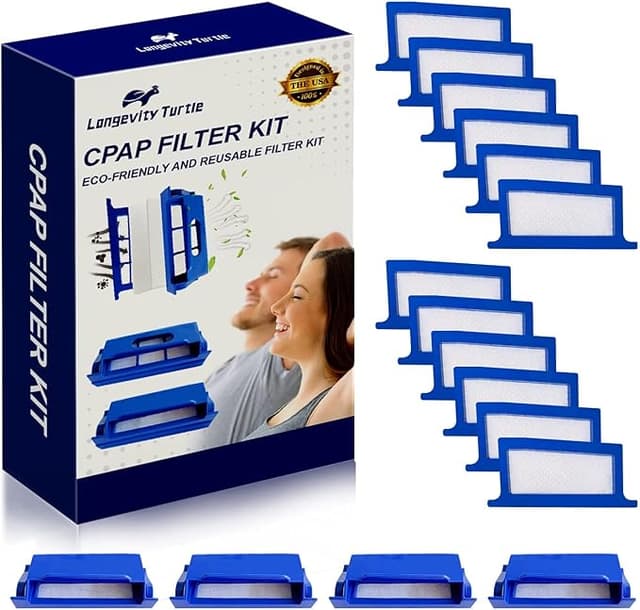
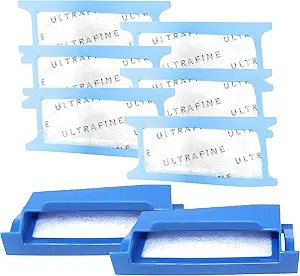
Here's the part nobody at the supply counter says out loud. The DreamStation takes two different filters, and the one you replace constantly is the cheap disposable — the flat white ultra-fine pad. Philips wants premium money for what is, structurally, a pleated paper-and-poly pad. At $3 a pop, changing every two weeks, you're looking at roughly $78 over a year just to keep the intake clean. The compatible ones I landed on were close enough to free by comparison that I kept double-checking the listing thinking I'd misread it. Around forty-five cents a filter. For a part you throw away.
The savings gap here isn't a rounding error. It's the difference between treating your filter schedule like a chore you actually keep up with versus stretching a dirty filter an extra three weeks because the replacement stings to buy. And a stretched, gray, saturated filter is the real health problem — more on that below.
Does it actually seat right?
This was my first worry and it turned out to be the easy part. The install is exactly what the device wants: pop the flap on the air intake, slide the old gray-white pad out, drop the new one in, close it. The compatible filter sat in the recess the same way the Philips one did. No trimming, no folding a corner to make it fit, no gap around the edge where unfiltered air could sneak past. It sits flush.
I will give you one honest nitpick. The OEM filter has a slightly stiffer frame to the pad, so it holds its shape when you pinch it to pull it out. The generic is a touch floppier — the material is a hair thinner at the border. The first time I went to remove one after two weeks, it wanted to bend instead of sliding clean. Not a dealbreaker, just a "huh" moment. Once it's in the slot and the flap is shut, it doesn't matter at all; the housing holds it where it needs to be.
The honest performance take
Four months in now. Here's where it matches the OEM and where it doesn't.
Matches: airflow. My therapy pressure feels identical. The DreamStation didn't throw any flow-restriction complaints, my mask pressure is steady, and when I pull a two-week-old generic out it's appropriately gray with the same dust-and-dander film the OEM caught. It's doing the filtration work. I sleep the same. That was the whole question, and the answer is yes.
Where it's a touch behind: the OEM pad feels marginally denser when you hold the two side by side up to a light. The Philips one is a little more opaque. Does that translate to a real-world difference in what reaches my airway? In four months I couldn't tell you it did — no extra dust on the mask cushion, no morning stuffiness that changed. But I'm not going to pretend the materials are identical when they aren't. The OEM is built a small notch nicer. You're paying $78 a year for that notch.
The genuine downsides — and there are a couple
First: the smell. Out of the bag, a couple of the filters had a faint plastic-and-cardboard odor — that cheap-packaging smell. With a filter that's literally upstream of your breathing, that gave me pause the first night. I let the first one air out on the nightstand for a day before installing it and the smell was gone. By filter number three I stopped bothering; it airs out within a few hours in the machine before you ever sleep on it. Still, it's real, and if you've got a sensitive nose you'll notice it. The OEM filters never did that to me.
Second: quality control across a thirty-pack isn't perfectly even. Out of my first batch, two filters had a slightly frayed edge on the pad — loose fibers along one side. I tossed those two and didn't think twice, because at forty-five cents each, throwing two away costs me ninety cents and I still came out hundreds ahead. But if you're the type who needs every single unit to be flawless, the OEM consistency is genuinely better. You're buying a more uniform product. With the generic, you're occasionally culling one. That's the trade.
Third, smaller: the packaging is flimsy. The OEM box keeps the filters flat and protected. My generic pack was a thin poly bag and a few filters near the bottom had a slight bend to them. Didn't affect the fit once installed — they flatten in the slot — but it doesn't feel premium. You'll know you bought the cheap option every time you open the bag.
Why a dead filter is the thing that actually matters
Here's what changed my whole framing. The danger with CPAP isn't a slightly-less-dense filter material. It's a saturated one. A gray, clogged filter you've left in for six weeks is straining the blower and, worse, it's loaded with dust and dander that the airflow can start pulling past it and pushing toward your mask. That's allergens headed for your lungs while you sleep and can't do anything about it. The single best thing you can do for your respiratory health here is change the filter on schedule — every two weeks, like the manual says. And the brutal truth is that people change filters more often when the filters are cheap. The $78-a-year OEM tab is exactly what tempts you to stretch a dirty one. The generic removed that excuse for me. I change them on time now because it costs nothing to.
So who should buy what?
Buy the OEM if you have a known reaction to off-gassing plastics, if you can't tolerate airing a filter out for a few hours before use, or if uniform quality with zero culls is worth $50-plus a year to you. Some people genuinely need that, and there's no shame in it — this is therapy equipment.
For everyone else: I run the compatible filters in my own DreamStation, next to my own bed, every single night. They seat right, they filter, they let me actually keep my two-week schedule instead of rationing. The frame's a little floppier, one in fifteen needs tossing, and the bag smells cheap for a day. I know all that — and for something like fifty bucks a year saved, doing the same job, I bought another pack last month. I'd do it again.