Troubleshooting & Analysis
The night I figured out my filter had quit on me
I knew something was off before I knew what it was. Three or four nights in a row I woke up around 4 a.m. with that dry, scratchy throat and a faint headache, the kind you get from breathing recycled dust all night. My DreamStation was running fine — humidifier full, mask sealed, pressure normal. So I ignored it. Then one morning I popped the intake flap to look, and the little grey filter that's supposed to be, you know, grey-white, was this dingy brownish mat packed solid with gunk. It had been months. I'd been pulling all that back into my lungs at 12 cm of pressure, eight hours a night.
That's the thing nobody tells you about CPAP filters. They don't fail with a warning light. They just quietly turn into a sponge for everything in your bedroom air, and the machine keeps pushing through it, only now it's pushing the trapped stuff back at you too. A saturated filter isn't a maintenance nag — it's a small health problem you're sleeping next to.
What sent me to the compatible ones in the first place
So I went to reorder. The Respironics branded DreamStation filters, the disposable ultra-fine ones, run something like $20 for a pack that lasts you a couple months if you change them every two weeks like you're supposed to. Do that math across a year and you're looking at $100-plus a year just to filter air. For a strip of foam and a pleated paper insert. I remember sitting there thinking, this cannot possibly be a $20 piece of engineering.
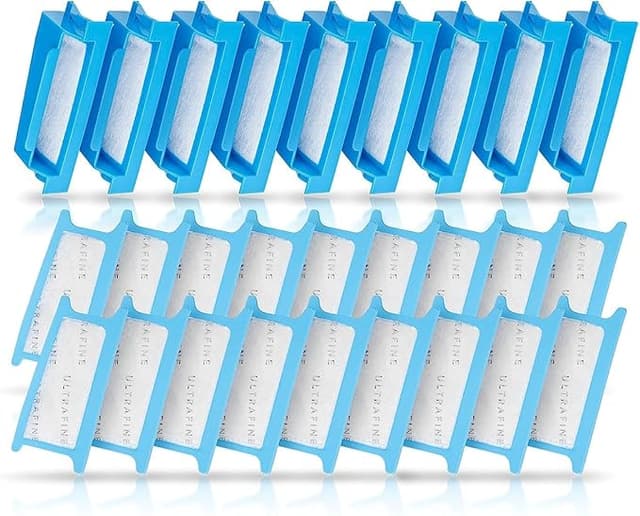
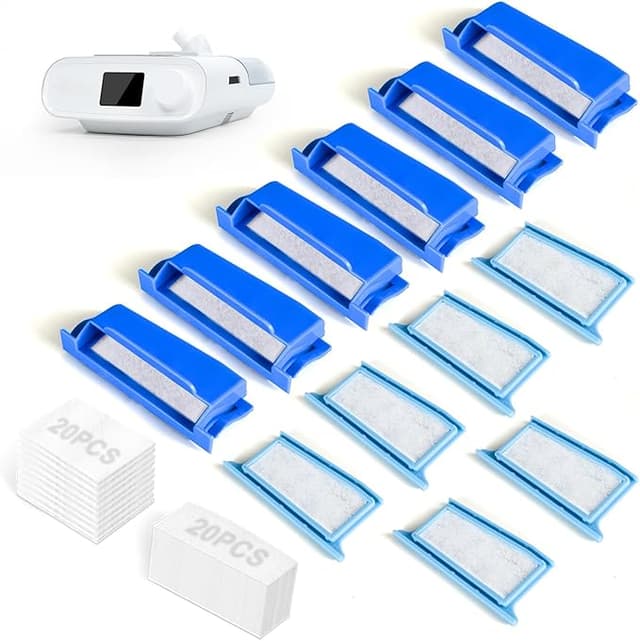
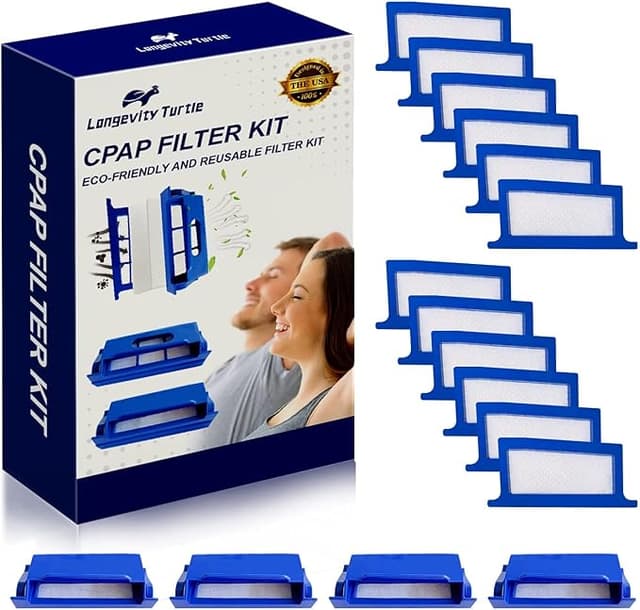
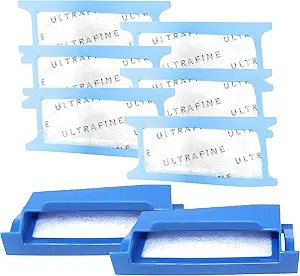
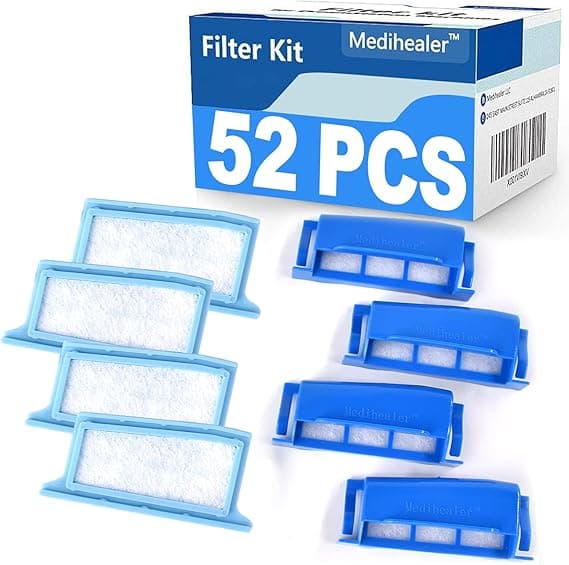
It isn't. I bought a generic multi-pack of compatible DreamStation filters — the medical-grade hypoallergenic kind that cover both the reusable foam pollen filter and the disposable ultra-fine ones — and the per-filter cost dropped to a few cents each instead of a couple dollars. A year of changes for less than the price of one OEM box. That's the whole pitch, honestly. Same job, fraction of the money.
Do they actually fit the DreamStation?
This was my worry. CPAP intakes aren't forgiving — if the filter's a hair too big it bows and the flap won't close flush, and if it's too small air sneaks around the edge unfiltered, which defeats the entire point. I've had that happen with a cheap fridge filter and I wasn't about to gamble it on the thing I breathe through.
Install is genuinely a non-event. You find the air intake on the back of the DreamStation, flip the little flap open, pull the old grey/white filter out — it slides right out, no tool — and press the new one in until it sits flush against the housing. Close the flap. That's it, maybe ten seconds. The compatible ones I got seated snug, no bowing, flap clicked shut like normal. If anything the cut was clean and consistent across the whole pack, which surprised me for the price.
One real note: the foam pollen filters in these generic packs are usually cut just a touch tighter than the Respironics foam. The first one I installed I had to nudge into the corner of the slot with a fingernail to get it to lie flat. Not hard, just not the effortless drop-in the OEM foam is. After that I knew the trick and it was fine.
How they actually perform
I've been running these in my bedroom unit for going on five months now, swapping every two weeks. The honest read: for filtering, I can't tell them apart from OEM. The throat-scratchiness that tipped me off in the first place is gone. When I pull a two-week-old compatible filter it's appropriately dingy — meaning it's catching the dust and dander it's supposed to, same as the branded one did. My allergies haven't flared. The machine's airflow feels identical; no extra whine from the motor working harder, which is the thing you'd worry about if the media were too dense.
Where they're a touch behind OEM? Two places, and I'll be straight about both.
The downsides — and they're real
First, the smell. The first compatible filter I put in had a faint new-foam, slightly plasticky odor for the first two or three nights. It's not strong and it airs out completely by night four, but if you've got a sensitive nose you'll catch it, and on a device whose entire job is delivering you clean air, a new smell is unsettling the first time. I'd pull a fresh one out of the bag a day before I needed it and let it sit on the nightstand to off-gas, and that killed it entirely. Cheap fix, but you have to know to do it.
Second, the packaging and consistency. The OEM filters come individually thought-out; these came loose in a bag, and one or two in my first pack had a slightly fuzzy edge where the cut wasn't perfectly clean. None bad enough to toss — I just trimmed a stray whisker of foam off one with scissors — but it tells you these aren't made to the same finish. You're trading a little polish for a lot of money. There was also one filter in a 30-pack that was noticeably thinner than its siblings; I set that one aside and didn't use it. When you're buying in bulk, eyeball each one before it goes in the machine. Thirty seconds of QC on your end.
That's the trade, laid bare: a faint break-in smell, cheaper packaging, and the occasional dud you have to spot yourself. In exchange you stop paying a hundred bucks a year to breathe.
Who should just buy OEM
If you've got a serious respiratory condition where any new-foam off-gassing is a non-starter, or you simply will not do the ten-second visual check on each filter before installing it, buy the Respironics ones and don't think about it. Some people want the guarantee that every single unit came off Philips' line, and for them the premium is worth the zero-thought peace of it. No judgment.
But for me? I change these on a calendar reminder every two weeks, I let a fresh one breathe overnight before it goes in, and I glance at each one as I install it. For that tiny bit of attention I save more than the price of the device's worth of OEM filters every year, and my throat stopped waking me up at 4 a.m. I've reordered the compatible packs twice now. I'll do it again. The only mistake I made was the one that started this — letting a filter go way too long. Don't do that, whichever brand you buy.