Troubleshooting & Analysis
The first thing I noticed was how quiet the click wasn't
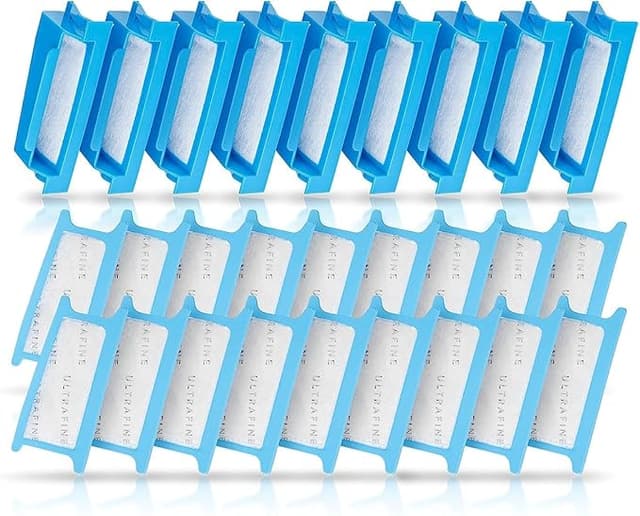
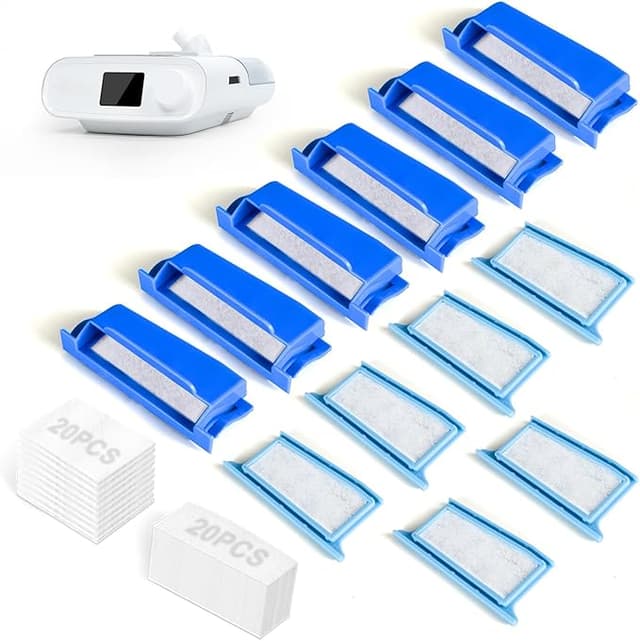
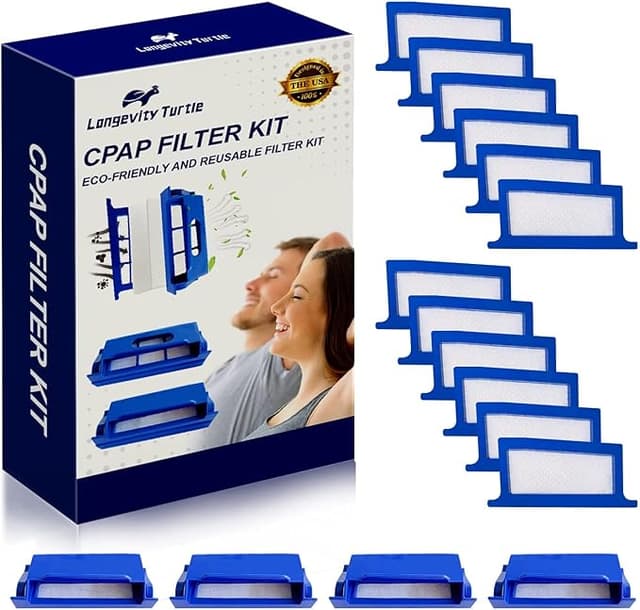
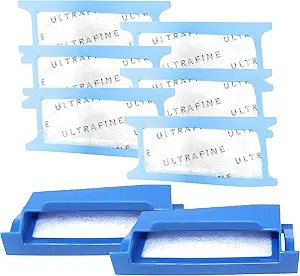
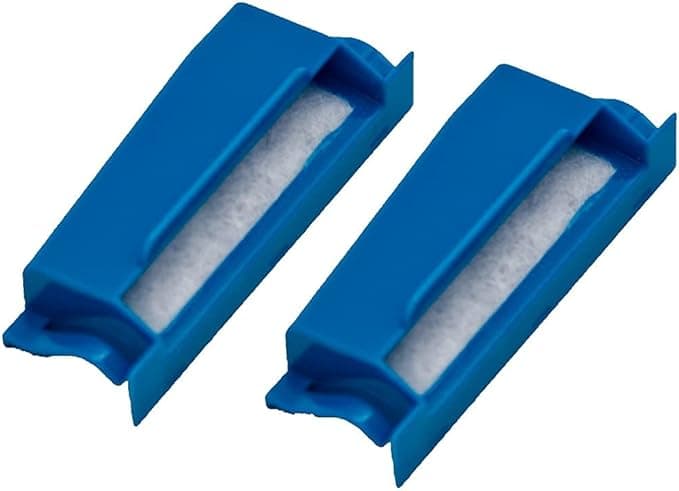
OEM filters seat with this confident little snap. The first generic DreamStation filter I dropped in — a $14 pack of twelve versus the Philips box that ran me close to $25 for six — didn't click at all. It just kind of sat there in the intake bay, flush enough, but quieter than I expected. I pressed it a second time with my thumbnail to make sure. And honestly that half-second of doubt is the whole reason I'm writing this, because I bet that's exactly where you are right now: filter in hand, lid open, wondering if the cheap one is about to cost you a good night's sleep or worse.
I've been running a DreamStation in my bedroom for going on three years. I went through the OEM disposables for the first year and a half — the grey-white ultra-fine ones — and then did the math one night when I was reordering at 1 a.m. and felt vaguely robbed.
The math that made me switch
Philips wants you swapping these every two weeks. Two weeks. That's 26 filters a year if you're being honest with yourself, and most of us aren't — we stretch it because the OEM price stings. A six-pack of genuine Philips disposables hovers around $24, which works out to roughly $4 a filter, call it $100+ a year if you actually replace on schedule. The generic 12-pack I bought was $14. That's about $1.16 a filter. Replace every two weeks like you're supposed to and you're spending maybe $30 a year instead of over a hundred.
Here's the part that actually changed my behavior: when each filter costs a buck instead of four, I stopped rationing. I swap on time now. The cheap filter made me a better CPAP user, which is a sentence I did not expect to write.
Fit and install — does it actually seat?
The install is the same three moves you already know. Find the intake on the back of the unit, flip the little flap open, pull the old grey filter out, slide the new one in. On the DreamStation the filter sits in a shallow recessed pocket and the flap holds it down — that's what matters here. Even though my generic didn't give me that satisfying OEM click, once the flap closed it was held firm. I tugged the unit around on my nightstand, flipped it to check, ran it a full night. The filter didn't shift, didn't bunch, didn't get sucked toward the intake. It seated fine. The "click" I was missing turned out to be a tolerance thing on the foam edge, not a fit failure.
That said — and this is the kind of thing the product photos never tell you — the generic foam is cut maybe a hair smaller than the Philips piece. With the OEM one there's zero gap at the edges. With the generic there's a faint, barely-there seam of light if you hold it up. Did it leak unfiltered air in any way I could measure? No. But if you're the type who wants the foam jammed wall-to-wall, you'll notice it, and I'd be lying if I said I didn't.
The honest performance take
For what a CPAP intake filter actually does — catching dust, pet dander, the fine stuff floating around your bedroom before it gets pulled into the airflow and pushed into your lungs all night — the generic does the job. I checked the old filter at the two-week mark and it had the same grey-brown loading on the surface as the OEM ones used to, the visible proof it's catching what it should. Airflow felt identical. My pressure didn't change, the machine didn't ramp or strain, no new noise from the blower working harder against a too-dense filter.
Where it's a touch behind: the OEM foam feels denser and a little more uniform when you pinch it. I suspect over the full two weeks the Philips one filters marginally finer in the back half of its life. For most bedrooms that difference is academic. If you're running this in a dusty workshop apartment or you've got three cats, I'd lean OEM or just swap the cheap one weekly — at a dollar each you can afford to.
The real downside, said plainly
Two things. First, the smell. The first night with a fresh generic there was a faint plastic-foam odor on the air — not chemical-harsh, more like a new pool float. It was gone by the second night, basically undetectable by night three, and I never noticed it after the break-in. But it's there, and if you're sensitive to smells when you're trying to fall asleep, run the machine for ten minutes before bed the first night to air it out. With the OEM filters I never smelled anything. So that's a genuine point against the generic.
Second, the packaging and consistency. The Philips box is tidy, every filter identical. My generic pack had one filter out of twelve with a slightly ragged foam edge — usable, I trimmed nothing, just tucked it in and it worked, but it told me the quality control isn't OEM-tight. Out of a twelve-pack, one slightly ugly one. I can live with that at this price. You might not want to.
Why this isn't a corner worth cutting carelessly
A CPAP filter isn't decorative. A clogged or skipped filter means you're breathing whatever's been accumulating — dust, allergens, dander — pushed at pressure straight into your airway for six, seven hours a night. That's the actual reason the two-week interval exists. The danger isn't the generic filter; the danger is an old filter, OEM or not. And the quiet truth is that an affordable filter you'll actually replace on schedule protects you better than a premium one you stretch to six weeks because reordering hurts. That's not a justification I reached for — it's just what happened to my own habits.
So who should buy what
Buy OEM if you've got a heavy-allergy household, a dusty environment, or you simply sleep better knowing it's the exact Philips part — that peace is worth $70 a year to some people and I won't argue. Buy OEM, too, if the faint first-night smell is a dealbreaker for you.
For everyone else — the person standing where I stood, holding a $24 OEM six-pack and a $14 generic twelve-pack — I grab the generic. I've gone through three packs now. It seats, it filters, it loads up grey like it's supposed to, and it costs me about a quarter of what Philips charges. The looser edge and the one-night smell are real, and I told you about them so you'd believe the rest. For roughly $70 saved a year, doing the same job in my machine every night, I buy it again. And I have.