Troubleshooting & Analysis
I found out the hard way what a dead CPAP filter does
About a year into running my DreamStation, I started waking up with a scratchy throat and that gross feeling like I'd been breathing through a dusty vent all night. Took me almost two weeks to connect it to the machine. Then one morning I pulled the little flap on the air intake and looked at the filter — that grey-white foam pad — and honestly, it was the color of a used coffee filter. Dark, kind of greasy around the edges, packed with whatever my bedroom air had been throwing at it. I'd been pulling all of that straight into my lungs, eight hours a night, for who knows how long.
That was my wake-up call about how often these things actually need swapping. Philips says every two weeks for the disposable ultra-fine ones, and I'd been treating it like an every-few-months thing. So the real question wasn't OEM versus compatible. It was: if I'm going through these every two weeks like I'm supposed to, am I really going to keep paying brand-name prices forever?
The price math is what got me
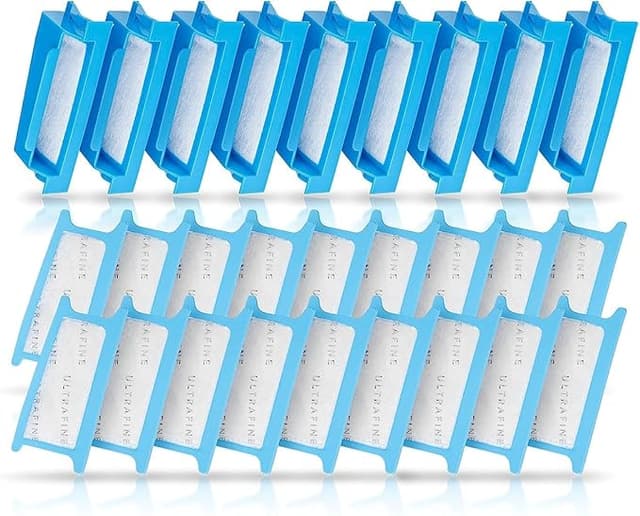
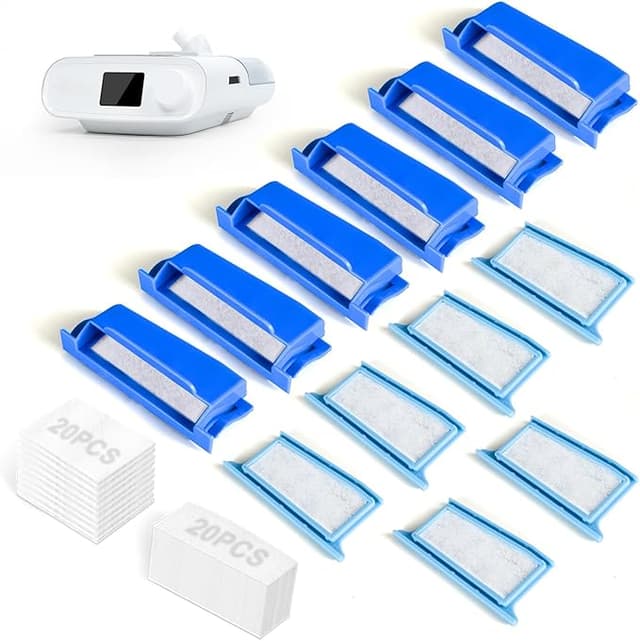
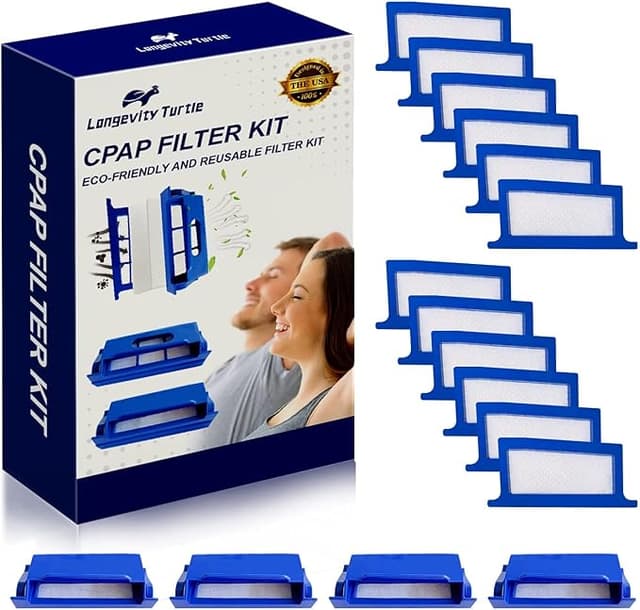
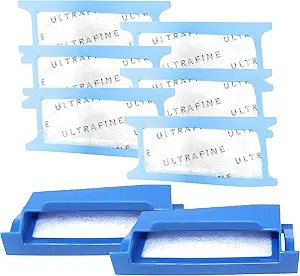
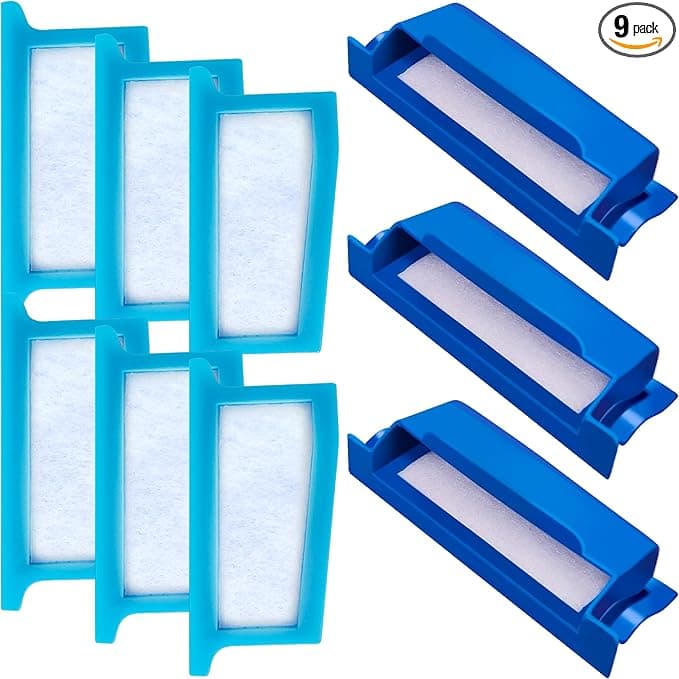
Here's where it stings. A genuine Philips Respironics pack runs me around $24 for a count that, at every-two-weeks, doesn't last all that long. The compatible generic pack I switched to was about $13 for a noticeably bigger count — enough filters to get me through the better part of a year of proper swaps. When you're actually changing them on schedule instead of running one into the ground like I was, the OEM cost adds up fast. The compatible ones cut my yearly filter spend by more than half. We're talking the difference between a forgettable line on a card statement and something you actually notice.
And look — for a foam pad whose entire job is to sit in front of an air intake and catch dust, I had a hard time understanding what eleven extra dollars a pack was buying me. So I bought one generic pack to test it. Skeptically. Fully expecting to write it off as a cheap mistake.
Does it actually fit the DreamStation?
This was my big worry. CPAP machines aren't a place I want to gamble on a sloppy fit, because a gap means unfiltered air sneaking around the side. The install itself is dead simple either way — find the intake on the side of the device, pop the flap, pull the old grey/white filter, drop the new one in, close it. Thirty seconds.
The generic filter seated fine. It went into the slot, the flap closed flush, no bulging, no corner sticking out. I'll be straight with you though: the cut on the foam is a hair less precise than the Philips. On the OEM filter the edges are clean and uniform; on a couple of the generics the foam was very slightly uneven along one edge. Not enough to leave a gap — once it's in the slot and the flap is shut it's held snug — but if you're the type who notices that kind of thing, you'll notice it. I pressed on the flap to confirm it was seated and it was. No air whistling around the edge, no rattle when the blower spun up.
The honest performance take
After four months of running the generics and swapping them every two weeks like an adult this time, here's the truth: I cannot tell a difference in how I sleep or how the air feels. None. The scratchy-throat mornings are gone — but that's because I'm changing filters on schedule now, not because of which brand I buy. A clean compatible filter and a clean OEM filter do the same job in front of that intake. The air going into the humidifier chamber feels the same. The machine's pressure delivery never changed.
Where the OEM is genuinely a touch ahead: consistency. Every Philips filter in the box is identical. With the generics there's a little more pack-to-pack variation — that uneven edge I mentioned, and one or two pads that felt marginally less dense than the others. None of them failed or fit wrong. But the OEM is the more uniform product, and if you value that, that's what your extra money is buying.
The real downsides — and there are a few
Let me not oversell this. First, the smell. The first generic filter I opened had a faint plastic-foam odor for the first night or two — not strong, but with your face strapped to a mask all night you do catch it. It aired out completely by the third day and the later packs barely had it, but it was there. With Philips I never noticed any smell at all.
Second, the packaging is cheap. The OEM filters come individually sorted and crisp; the generic pack showed up in a thin plastic sleeve, filters loose together, one slightly compressed in the corner. It bounced back fine once it was out, but it doesn't inspire confidence when you first open it.
Third — and this matters — quality control is on you. Because there's more variation, you should actually look at each filter before you install it. Give it a quick once-over for a clean even surface, make sure it's not crushed, confirm it sits flush when you close the flap. With OEM I'd just grab one without thinking. With generics I take five seconds to eyeball it. That's a small tax, but it's a real one, and it's the price of the savings.
Why none of this is something to shrug at
I want to be careful here, because this is a medical device pushing air into your lungs while you're unconscious. The whole point of the filter is to stop dust, dander, and allergens from getting blown into your airway. A saturated, neglected filter — the coffee-colored thing I pulled out a year ago — stops catching anything and just becomes a place for gunk to sit. That's a respiratory problem you're inviting, and it's exactly why the two-week interval exists. The brand on the filter matters far, far less than whether you actually change it on time. A cheap filter swapped every two weeks beats a premium one left in for three months, every single time.
So who should buy what
If you've got serious respiratory sensitivities, or you just want the reassurance of a perfectly uniform medical-grade product with zero break-in smell, buy the genuine Philips. That consistency is real and for some people it's worth the premium. No argument from me.
But for me? I'm a guy who needs to keep a clean filter in this machine every two weeks for years. The generics fit my DreamStation right, filter the air just as well in daily use, and cost me less than half. The trade is a faint first-night smell, cheaper packaging, and a five-second look before I install each one. For roughly eleven bucks saved per pack, doing the identical job, that's a trade I'll take — and I've taken it four months running with zero regrets and better sleep than I had on the brand-name ones I was neglecting. I'd buy the compatible pack again. I already have.