Troubleshooting & Analysis
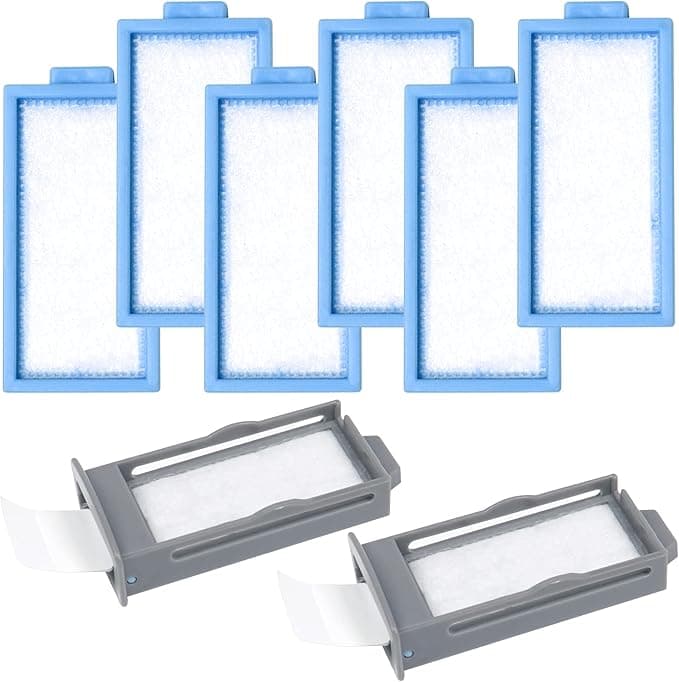
There I was at midnight, machine humming on the nightstand, holding two little baggies of CPAP filters. One was the Philips-branded set — the kind the supply company auto-ships me at a price that makes me wince every refill. The other was a generic 8-pack I'd thrown in my cart on a hunch, costing me about a quarter as much per filter. I needed to swap one in before bed, and I genuinely stood there for a second deciding which one to trust with my lungs for the next two weeks. Spoiler: I went with the cheap one. Here's the honest story of how that's gone.
The price thing, because that's why you're here
Let's just put the money on the table. A name-brand multi-pack of these disposable intake filters runs me somewhere in the $20s once you factor in the per-filter math — and these things are consumable. You're meant to swap them every two weeks. Do that math: 26 filters a year. At OEM-ish pricing that's real money for what is, structurally, a die-cut rectangle of filter media. This generic 8-pack landed for a few bucks total, which works out to well under a dollar a filter. Even being conservative, I'm saving north of $30 a year on a part I throw in the trash twice a month.
That gap is exactly what makes people nervous, and I get it. When something is one-fourth the price, your gut says there has to be a catch. So I went looking for the catch.
Does it actually fit the intake?
This was my first worry. CPAP intakes aren't standardized the way you'd hope — there's a flap, there's a recess, and the filter has to sit flush or you get whistling and unfiltered air sneaking around the edges. I popped the flap on my device, pulled the old grey-white filter out, and dropped one of these in.
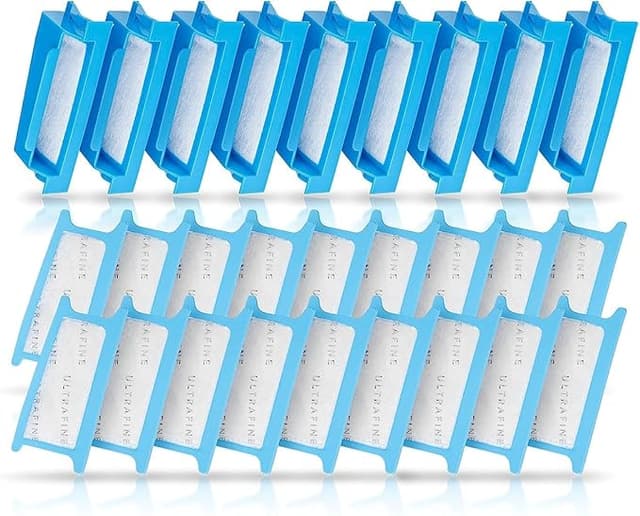
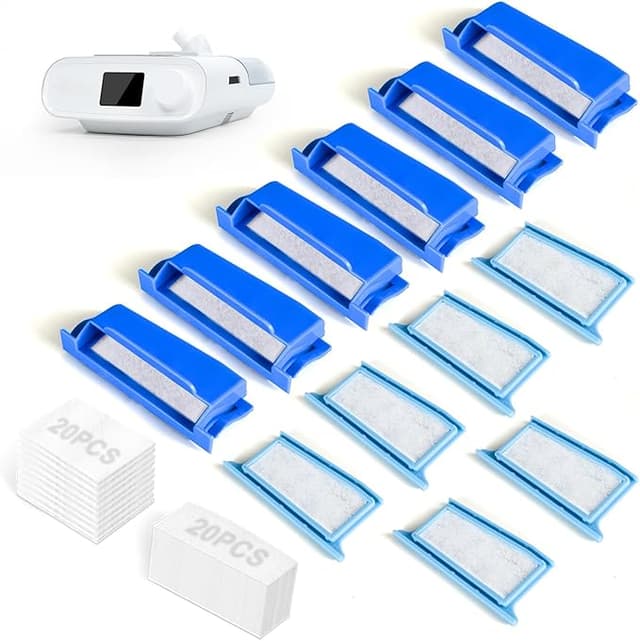
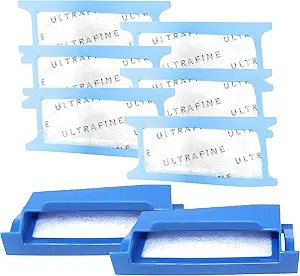
It seated. Cleanly. The flap closed with that same little resistance it has with the branded one — not loose, not forced. If I'm being picky, the foam on the generic is cut a hair less crisply at the corners; under good light you can see the edges aren't quite as surgical as the OEM. But it sits in the recess the same way and the flap holds it down the same way, so functionally? No gap, no whistle, no air leaking past it. I've now done this swap maybe a dozen times across the pack and every single one has dropped in without fuss.
How it performs while I'm actually asleep
Here's the part that matters. A CPAP intake filter has one job: catch dust, dander, and the general bedroom grime before the machine pressurizes it and sends it down the hose into you. For the first week I paid attention to two things — airflow and smell.
Airflow: no change I could detect. The machine didn't strain, the pressure felt identical, and my own breathing through the mask was the same as ever. A too-dense knockoff filter can make the blower work harder; this one didn't. Filtration: after two weeks I pulled it to inspect, and it had visibly done its job — that grey dusting on the intake side that tells you it caught what it was supposed to. That's the tell I trust more than any spec sheet. It loaded up with gunk like a filter should.
Where it's a touch behind OEM, if I'm honest: the media feels slightly thinner in hand. I don't think that hurt performance over a two-week run — these are disposable, not a six-month HEPA — but I wouldn't push one of these past its window thinking the extra thickness will save you. It won't, because there isn't extra thickness.
The downsides — and there are a couple of real ones
I promised honesty, so. Two things genuinely bugged me.
First, the smell. The first night I ran a fresh one, there was a faint new-foam smell for maybe the first ten minutes of therapy — not chemical-harsh, more like the inside of a new shoe box. It faded fast and was gone by morning, and it was gone entirely by the second night. But if you're sensitive to smells, air the filter out for a few minutes before you install it. The branded ones don't really do this. Small thing, but it's a difference and you should know about it.
Second, the packaging is cheap and a little annoying. The eight filters come loose-ish in a thin bag rather than individually nested, so a couple of mine had slightly compressed corners from shipping. Didn't affect the fit — foam springs back — but it doesn't inspire the same confidence as the tidy branded packaging when you first open it. If you're the type who judges a product by its unboxing, this'll bother you for about four seconds.
And a third, smaller one: there's no printed reminder or color cue on these the way some OEM packs do. You're on your own for tracking the two-week interval. I set a recurring phone reminder. Problem solved, but worth mentioning.
Why I don't slack on this — the part nobody likes to think about
Quick reality check, because it's the thing that keeps me honest about replacing these on schedule. The whole reason this filter exists is that a CPAP doesn't just move air, it pressurizes it and drives it straight into your airway for hours while you can't react. A saturated, clogged intake filter stops doing its job and starts being the problem — it lets dust and allergens through, and a really gunked one makes the machine pull harder for air. You're effectively breathing your bedroom through a dirty sock. That's not a scare line, it's just the mechanism. Which, honestly, is the strongest argument for the cheap pack: when filters are under a dollar each, you actually change them on time instead of stretching a pricey one to four weeks to save a buck. The affordable option made me a more disciplined user, not a lazier one.
So who should buy what
If you're under warranty paranoia, or your sleep doc has you on a very specific regimen and you don't want a single variable changed — buy the branded filters and don't think twice. The same goes if you've got a known reaction to new-foam off-gassing; that faint first-night smell, mild as it is, isn't worth the gamble for you.
But for the rest of us? I stood there at midnight and picked the generic 8-pack, and after weeks of running it two filters deep into the set, I'd make the same call without hesitating. It fits, it catches the dust, it doesn't choke the airflow, and it costs me roughly a quarter of what the branded ones do across a year. The downsides are a brief smell and ugly packaging — neither of which is in my airway. For something I throw away every two weeks, paying four times more for crisper foam corners and a nicer bag never made sense to me. I've reordered. That's the most honest verdict I can give you: I bought it again with my own money.
I also saved a copy to `drafts/philips-respironics-8pcs-cpap-filters.html`. Want me to delete that, or is the drafts folder where these are meant to land?