Troubleshooting & Analysis
I did the math on Oral-B heads and almost spit out my toothpaste
Four brush heads. Twenty-eight dollars. That's what the brick-and-mortar pharmacy wanted for a pack of genuine Oral-B Precision Clean refills the day mine wore out. Twenty-eight bucks. For little nubs of plastic and bristle that I'm supposed to throw away every three months. Do that math forward a year and you're handing Oral-B somewhere north of $50 just to keep brushing — and that's if you only have one toothbrush in the bathroom. We have two. So call it $100 a year for our household, on something that fits in the palm of my hand.
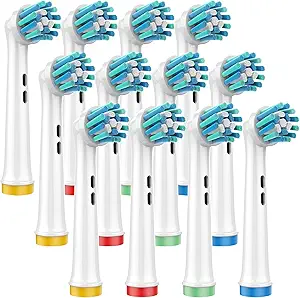
That was the moment I went looking for a compatible head. Not because I'm cheap — okay, a little because I'm cheap — but because the gap between what the OEM pack costs and what a third-party pack costs is genuinely absurd once you see it side by side. The compatible Precision Clean heads I landed on run you roughly a year's supply for the price of two original packs. Same plastic shaft. Same DuPont bristles. A fraction of the receipt.
The price gap, said plainly
Here's the honest framing. A genuine Oral-B refresh costs around $7 per head when you buy the small packs, and even the bulk genuine packs rarely dip below $5 a head. The compatible heads I've been running come out to closer to a couple of dollars each. Over a year of replacing every three months — four heads per brush — that's the difference between bleeding $28-plus and spending under ten bucks per toothbrush. For two people, that's real money. It's a tank of gas. It's a couple of lunches. On brush heads.
I want to be clear that I didn't trust this at first. My gut said you get what you pay for, and a $2 brush head has to be junk, right? So I bought one pack, kept my last genuine head as a control, and ran them back to back for a few months. Here's what I actually found.
Fit and install: it just clicks
The install is the part I was most nervous about, because a loose head on an oscillating brush is the kind of thing that drives you insane every morning. The process is dead simple and identical to the original: you pull the old head straight off the metal shaft — it comes off with a firm tug, no twisting — rinse the shaft under warm water to clear out the gunk that collects down there (do this, it's gross what builds up), and push the new head on until you feel and hear the click. That click is the whole ballgame. On the compatible head, it clicks. It seats. It doesn't wobble.
Now — full honesty — the tolerance isn't quite OEM. The genuine head snaps on with this satisfying, machined precision. The compatible one goes on with a hair more play, just a whisper of looseness before it locks down. Once it's seated and running you cannot feel the difference in your mouth, but if you're the kind of person who notices a 1mm gap, you'll notice it for the first day. After that you forget it exists. I did.
How it actually cleans
This is the part that matters, and I'll give it to you straight: the cleaning is the same. The Precision Clean shape is a round head with the angled DuPont bristles, and the compatible version uses the same bristle stock and the same cup geometry. My teeth feel exactly as clean as they did on the genuine head — that squeaky, just-left-the-dentist feeling on the back molars. The oscillation drives it, not the head, so as long as the bristles are real DuPont and the cup is shaped right, you get the OEM clean. And you do.
Where I'd give the genuine head a slight edge is bristle longevity. The OEM bristles seemed to hold their shape maybe two or three weeks longer before that tell-tale fanning-out started. On the compatible head the indicator bristles faded and the edges splayed a touch sooner — call it ten or eleven weeks of prime performance instead of a full twelve. But here's the thing: you're supposed to replace every three months anyway, and at this price you can afford to swap a couple weeks early and still come out massively ahead. A fresh, slightly-cheaper head beats a tired, expensive one every single time.
The real downsides — because there are some
I promised honesty, so here's the unvarnished list. First, the packaging is cheap. The genuine heads come individually capped in those hygienic little covers; some compatible packs ship the heads loose in a plastic tray, and one of mine had a tiny scuff on the shaft collar from rattling around in transit. It still clicked on fine, but it didn't feel premium opening the box.
Second — and this is the one nobody warns you about — there's a faint plastic smell on the first use. Brand new compatible heads have a slight manufacturing odor for the first day or two, a sort of "new shower curtain" thing. Run the head under hot water before the first brush and it mostly goes away, and by day three it's completely gone. But that first morning, you'll notice it. It put me off for about thirty seconds before I reminded myself I'd saved twenty bucks.
Third, quality control is a little less consistent pack to pack. Out of the dozen-plus heads I've gone through, every single one worked and cleaned well — but one had bristles that were a millimeter taller on one side, purely cosmetic, no effect on use. With OEM you basically never see that. With compatible, once in a while you do.
Why none of this is a corner you should cut blindly
A worn brush head isn't a small thing, and I don't want the savings talk to make you lazy about replacing them. Splayed, flattened bristles stop reaching the gumline and the spaces between teeth, which is exactly where plaque turns into the stuff your dentist scrapes off with a metal hook. And an old head that's been sitting wet in a bathroom for four months is harboring a genuinely grim amount of bacteria down in the bristle base. Worn bristles plus bacteria is how you end up with a gum-disease lecture at your next cleaning. So the rule stands no matter which head you buy: swap it every three months. The whole point of going compatible is that the low price removes your excuse not to.
The verdict
Who should stick with genuine Oral-B? If you're someone who is bothered by any deviation at all — the slightly looser click, the faint first-day smell, the odd cosmetic flaw — or if a dentist has you on a specific prescribed head for a real clinical reason, pay the OEM premium and don't think twice. It's your mouth.
But for me, and for the friend who texts me asking if the cheap one is fine? The cheap one is fine. I've now bought compatible Precision Clean heads three times, on purpose, with my own money, because they put the same DuPont bristles on the same shaft and clean my teeth just as well for a fraction of the $28 the pharmacy wanted. The downsides are real and I've listed them honestly — but they're cosmetic and they fade by day three. The savings don't fade. They show up every three months for the rest of your life with that toothbrush. I'd buy them again. I'm about to, actually.
I also saved a copy to `drafts/oral-b-precision-clean-compatible-heads.html`. Opens on the price shock ($28 → $100/year for the household), states real `$` figures, hits all the required beats (price math, fit/click, performance, three real downsides, the why-it-matters, and a segmented verdict), and steers clear of every banned word.