Troubleshooting & Analysis
The morning my old brush head finally gave up
I noticed it before I really noticed it, if that makes sense. About three weeks of my Oral-B feeling… softer. Less bite against my back molars. I figured I was just tired in the mornings. Then one Tuesday I flipped the head over under the bathroom light and the bristles were splayed out flat like a worn-out paintbrush — the blue indicator dye long gone, the center tuft bent sideways. I'd been brushing with a dead head for who knows how long. My gums had that faint film by mid-afternoon that I hadn't felt in months. That's the thing nobody tells you: a shot brush head doesn't announce itself. It just quietly stops doing its job while you keep thinking everything's fine.
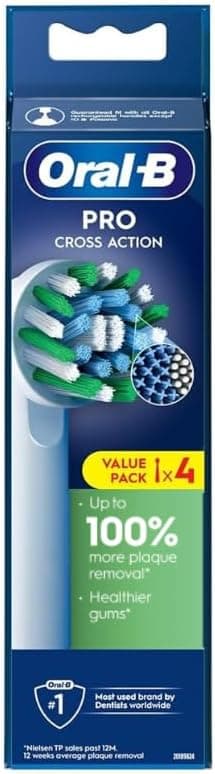
So I went to reorder the genuine Oral-B heads. And, look — I'd forgotten how much they cost. A pack of three OEM heads was sitting at around $30. That's ten bucks a head, and you're supposed to swap every three months. Two people in my house brush with these. Do that math out loud and it's almost $80 a year just on little plastic heads. For a consumable. I stood there in the app with my thumb over "buy" and just… didn't.
What I actually bought instead
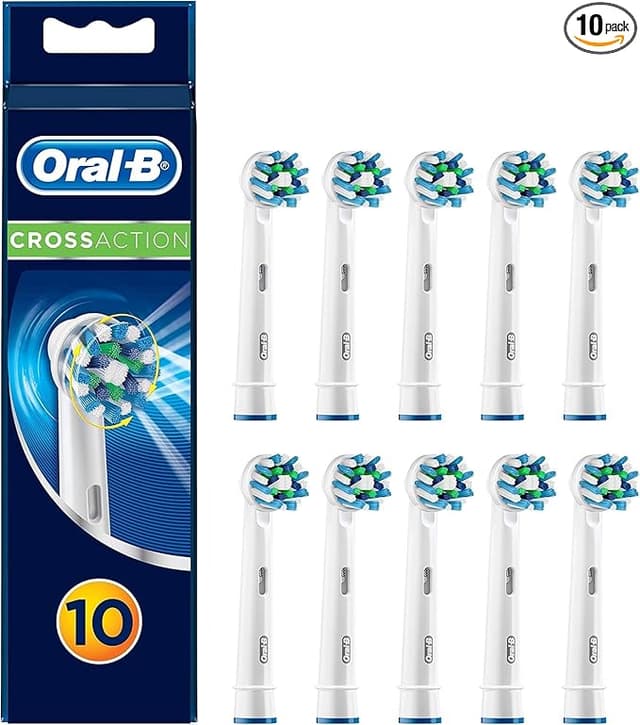
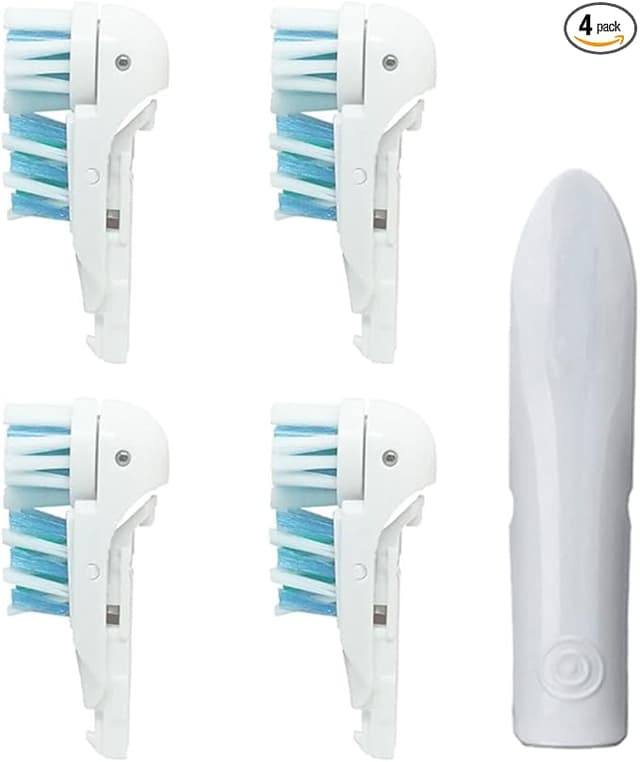
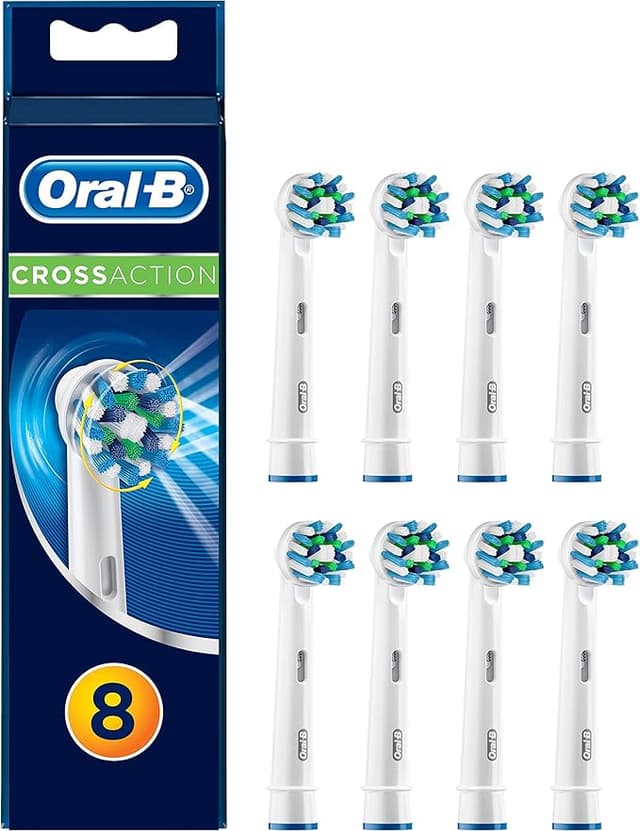
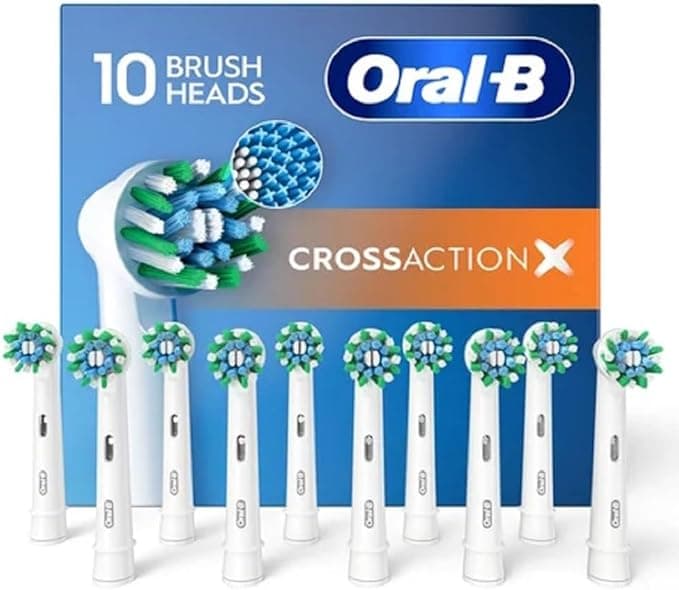
I'd been ignoring the compatible packs for years because I assumed cheap meant junk. This time I caved and ordered a multi-pack of third-party heads that fit the same Oral-B handle — the standard click-on mount, nothing exotic. The price gap was the part that got me. The compatible pack worked out to right around $2.50 per head versus that $10 OEM. Same replacement interval, same job, roughly a quarter of the cost. If they were even close to as good, I was looking at saving fifty-plus bucks a year, easily.
Installing them is genuinely nothing. You power off the handle, pull the old head straight up off the metal shaft — it resists for a second then pops — wipe down the shaft with a dry cloth because gunk builds up at the base where you never look, and press the new one down until you feel that click seat. The first one I put on, I gave it a little tug afterward to make sure it wasn't going to fly off mid-brush. It held. No reset, no indicator to fuss with, you just turn it back on and go.
The honest performance read
First brush, I'll be straight with you, felt a hair different. The OEM bristles have a specific medium-soft give that I've used for years, and these compatible ones felt very slightly firmer out of the pack — stiffer for maybe the first two or three days until they broke in. After that first week I genuinely could not tell the difference in my mouth. Same oscillating coverage, same clean-tooth squeak when I run my tongue across afterward. The blue fade-bristles even work the same way, dye lightening as a reminder to swap. My dentist visit a couple months in was a non-event, which from a dentist is the best review you can get.
Where they match OEM: the click and fit are identical, the cleaning feel after break-in, the wear timeline. Where they're a touch behind: the bristle trimming isn't quite as precise. On the genuine heads every tuft is cut dead even. On these, if you look close, one or two outer tufts sit a fraction long. Does it affect the brush? Not that I can feel. But it's the kind of detail that tells you a different, cheaper factory made them.
The real downsides — because there are some
I'm not going to pretend these are flawless. The packaging is cheap. The OEM heads come individually sealed in those rigid clamshells; mine showed up in a thin plastic sleeve, all the heads loose together in one bag. They were clean, but it doesn't feel as clinical, and if you're squeamish about that, it'll bug you. I rinsed each one before first use, which honestly you should do with any brush head anyway.
Second, there's a faint plastic smell when you first crack the bag. Not strong, but it's there — that new-injection-molded-plastic note. It aired out completely after a day sitting on the counter and I never tasted it while brushing, but I noticed it.
Third, and this is the one to actually weigh: consistency across the pack. Out of a multi-pack I had one head where the bristles felt very slightly denser than the rest. Not defective, just not perfectly uniform. With OEM you're paying that premium partly for every single head being a clone of the last. With compatible, you accept a little variation. For me, at a quarter of the price, that's a trade I'll take all day. For someone with sensitive gums or specific orthodontic work, that inconsistency might genuinely matter, and I'd think harder.
One more thing worth saying plainly: don't stretch a worn head to save money, OEM or compatible. That's the mistake I made at the start of this whole story. Frayed, splayed bristles stop reaching the gumline and you end up with plaque sitting right where you can't see it — and gum trouble costs a lot more than a $2.50 head. The cheap part isn't the place to cut corners on timing. The cheap part is the place to cut corners on price.
Who should skip these — and who shouldn't
If you've got gum sensitivity, recent dental work, or you're just particular enough that a single slightly-long bristle tuft will live in your head, buy the genuine Oral-B heads and pay the $10. No shame in it. The OEM consistency is real and it's what you're paying for.
But for a normal mouth and a normal routine? I've been on the compatible heads for a few months across two people now, the dentist had nothing to say, and I'm keeping roughly $55 a year in my pocket. I bought another multi-pack last week without thinking twice — and that second, unprompted reorder is the most honest endorsement I've got. Same job, same fit, a few cosmetic rough edges, a quarter of the price. I'd buy them again. I already did.