Troubleshooting & Analysis
The morning my dentist caught me
The bristles on my old Precision Clean head had splayed out so far they looked like a cartoon broom that lost a fight. I didn't even notice it happening — that's the thing. It creeps. Then one morning I'm at the dentist for a cleaning and the hygienist scrapes this gritty buildup off the back of my lower molars and says, almost casually, "You been brushing back here?" I had been. Twice a day. The brush head just wasn't doing anything anymore. The bristles were bent flat at the tips, so instead of getting between teeth they were skating across the surface like a worn-out windshield wiper. Four, maybe five months on one head. That's the failure nobody warns you about — it doesn't break, it just quietly stops working while you keep thinking you're doing everything right.
So that visit cost me an extra deep-clean fee and a lecture, and I went home annoyed enough to actually do the math on brush heads. And the math is where Oral-B gets you.
The price gap is genuinely ridiculous
Genuine Oral-B Precision Clean refills run me somewhere around $9 to $11 a head when I buy the small packs, and that's if there's no sale. Four heads a year — because you're supposed to swap every three months — and you're looking at roughly $40 a year just to keep plastic-and-bristle on the end of your handle. The compatible heads I switched to? I got a full year's supply for about the price of two original refills. Call it the cost of two OEM heads, except it covers all twelve months instead of three. That's not a rounding-error saving. That's the difference between replacing on schedule and stretching a dead head to five months because you don't want to crack open another $10 four-pack.
And that second part matters more than the dollar figure, honestly. The reason my bristles got so trashed wasn't that I'm cheap — it's that buying OEM refills felt like a small punishment every time, so I put it off. Make the replacement cheap enough and you actually replace on time. That alone fixed my real problem.
Do they fit? Yes — and that was my first worry too
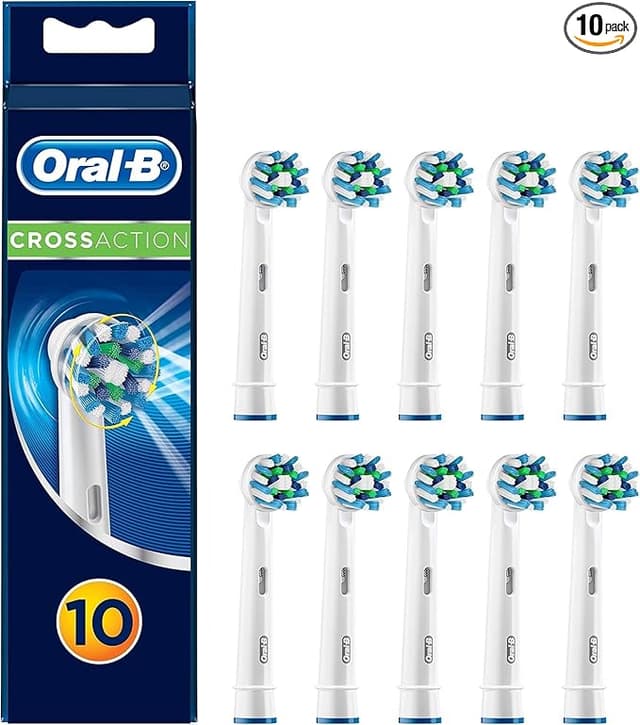
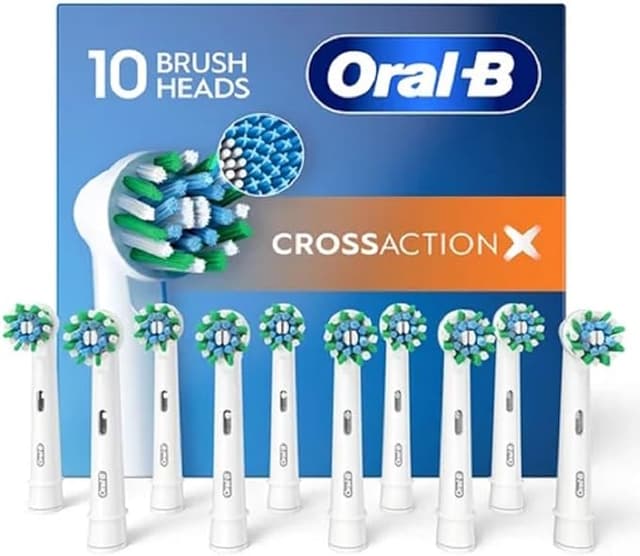
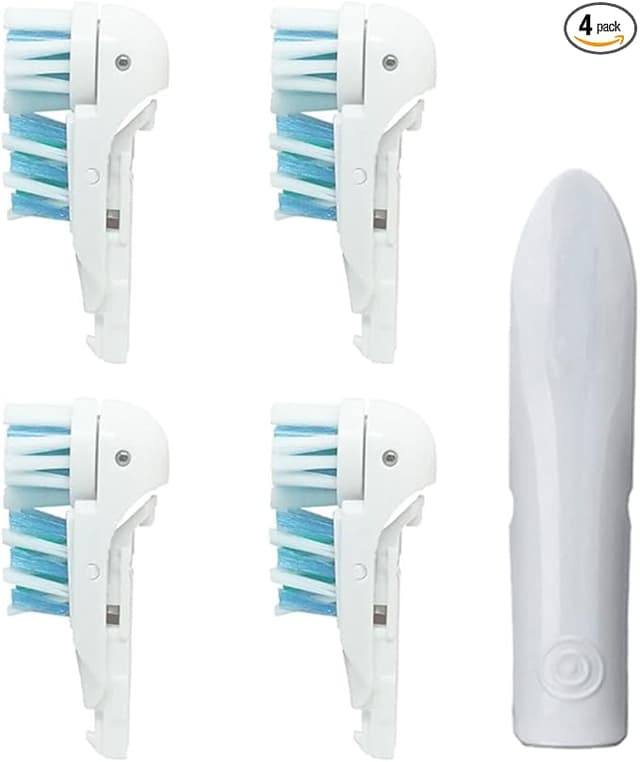
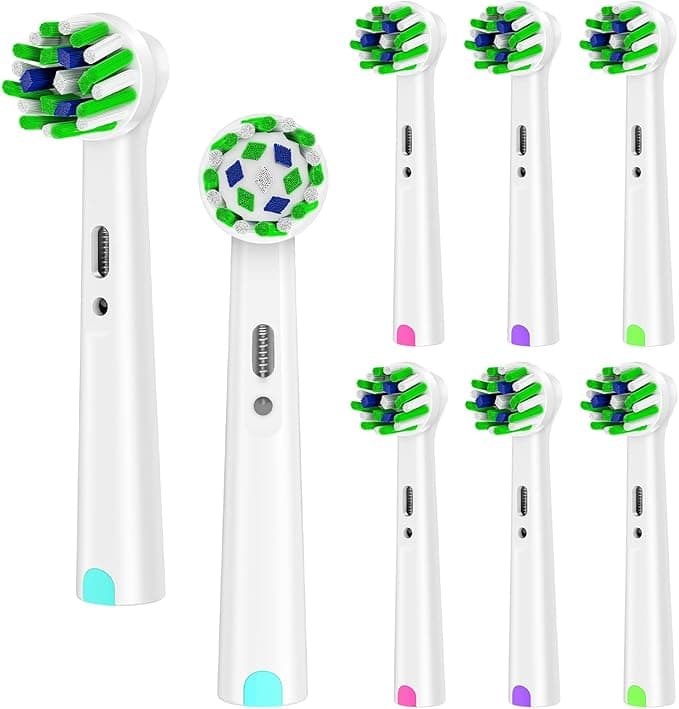
I'll be honest, the fit was the thing I was nervous about. The Oral-B handle uses that little metal shaft, and I figured a third-party head would wobble or sit crooked or rattle when the motor kicked on. The swap itself is dead simple: pull the old head straight off the shaft, rinse the metal stem under warm water — there's always a little gunk down at the base, do this part — and push the new one on until it clicks. That click is the tell. On these compatibles you get the same seat-and-click as the original. It's not mushy, it's not loose.
Out of the whole set I've gone through, one head sat a hair higher on the shaft than the OEM does — like a millimeter of extra play before it bottomed out. Didn't affect anything once it was running, but I noticed it. The rest seated identical to genuine. So: fit is a non-issue, with the small caveat that quality control across a pack isn't quite as bulletproof as Oral-B's. You might get one slightly-off head in a year's supply. For the price, I'll take that trade.
How they actually clean
The bristles are Dupont — same material the originals use — and in the mouth I genuinely cannot tell the difference in the cleaning feel. That squeaky-clean front-tooth feeling after you brush? It's there. My last two dental checkups since switching have been clean, no new buildup comments, which is the only performance test I actually care about. The oscillating action does its job because the head shape and the bristle pattern match what the Precision Clean was built around.
Where they're a touch behind: the bristle-wear indicator. Oral-B's blue fade-bars are calibrated and obvious — when they go pale, it's time. On the compatibles the indicator dye is there but it fades less dramatically, so it's a weaker reminder. I just set a recurring phone alarm for every three months now and stopped relying on the color. Problem solved, but it's a real small downside worth naming.
The downsides, for real
Let me not pretend this is flawless. First few days, there's a faint plastic smell when the head's new — rinse it, run it under hot water once before first use, and it's gone by day three. The packaging is cheap; mine showed up in a thin blister pack with the heads loose, versus Oral-B's tidy individual sleeves. Cosmetic, but if you're gifting these, they don't exactly look premium.
The bigger honest one: not every compatible brand holds bristle stiffness quite as long as OEM near the very end of the three-month window. Around week ten or eleven I sometimes feel the bristles going a little soft a touch earlier than a genuine head would. But here's the thing — because they're cheap enough that I actually swap on time, the head is never on my brush long enough for that to matter. The whole reason OEM wear "lasts longer" is moot if the price keeps you from replacing anyway. The dead-head problem I started with came from a genuine Oral-B head I'd guilt-stretched past its prime, not from a cheap one.
Why a dead head is more than a comfort thing
This isn't fear-mongering, it's just what my hygienist hammered into me: splayed, worn bristles don't reach the plaque sitting right at the gumline, and that's exactly where the trouble starts. A flattened head skates over the surface and leaves the stuff that actually causes cavities and gum problems behind. And an old brush head that's been sitting wet in a steamy bathroom for five months is a little bacteria hotel — millions of them, packed into the cracks where the bristles meet the base. Swapping every three months isn't OEM marketing. It's the one piece of dentist advice that's basically free to follow, as long as the refills don't cost a fortune.
Who should skip these
If you've got sensitive gums and your dentist specifically dialed you in on a particular Oral-B head, or you want the strongest possible wear-indicator because you genuinely forget to swap, buy the OEM. There's no shame in paying for the calibrated version when your mouth is finicky. And if a single slightly-off head in a twelve-pack would drive you up the wall, the consistency premium might be worth it to you.
But me? I went from punishing myself with $10 refills I'd stretch to five months, to a year's supply for the price of two of those — swapped on schedule, clean checkups, same Dupont bristles. The smell fades, the packaging goes in the trash anyway, and the head clicks home just like the original. For everyone with a normal mouth and a Precision Clean handle, I grab these — and I've reordered them twice now without thinking twice.