Troubleshooting & Analysis
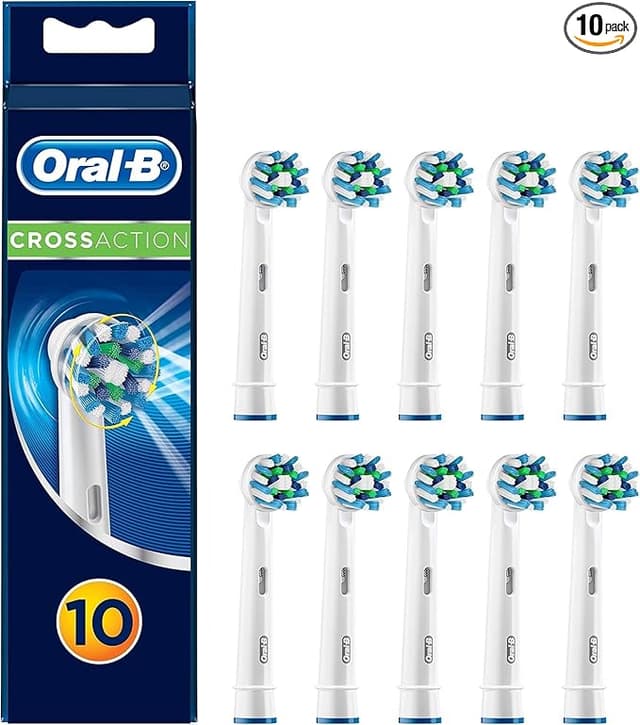
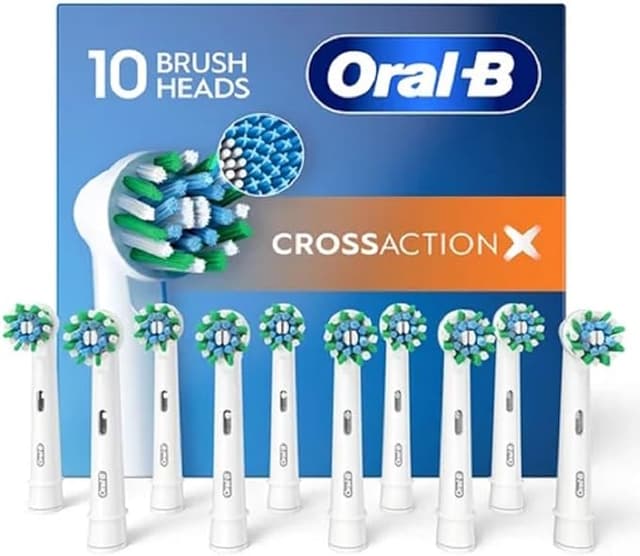
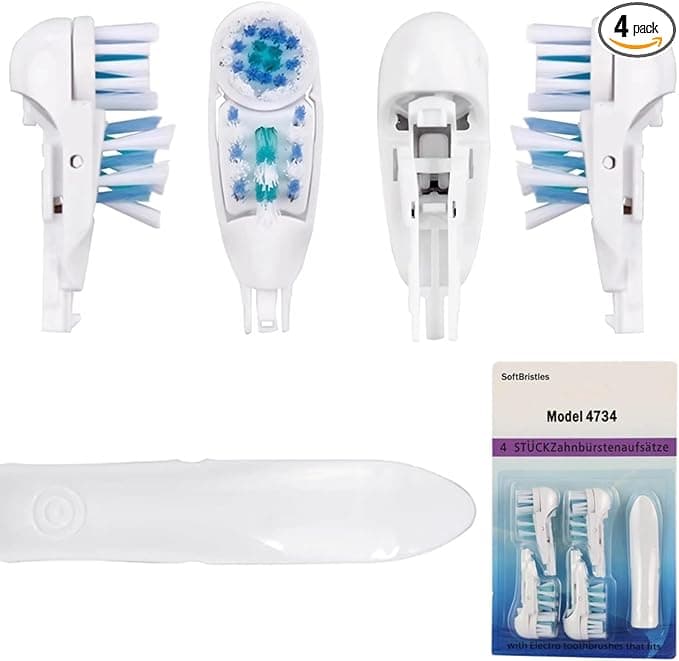
The click is the thing I notice first, every time. You push a new head down onto that thin metal shaft and there's this small, firm snick — and honestly, the first time I tried a compatible head instead of a real Oral-B one, I braced for that click to feel wrong. Loose. Rattly. It didn't. It seated the same way, sat at the same height, and when I thumbed it sideways to check for wobble, it held. That was the moment I stopped being precious about paying Oral-B prices for CrossAction heads.
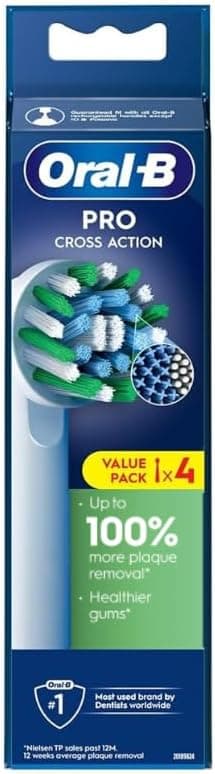
Let me back up. I've been running an Oral-B electric brush for years, and the part nobody warns you about when you buy the handle is that the handle was never the expense. The heads are. A genuine CrossAction four-pack runs you somewhere in the $28–$34 range depending on the week, and you're supposed to swap them every three months. So that's four heads a year per person, and if you've got two people in the house brushing twice a day, the brush-head line item starts looking like a small subscription you never agreed to.
The compatible heads I switched to get you roughly a year's supply for what two of the originals cost. Call it the price of a single genuine four-pack stretched across twelve months instead of three. I'm not going to throw a fake-precise number at you, but the gap is real and it's not subtle — it's the difference between shrugging at the dental aisle and actually pausing over it.
Do they actually fit, or is that the catch?
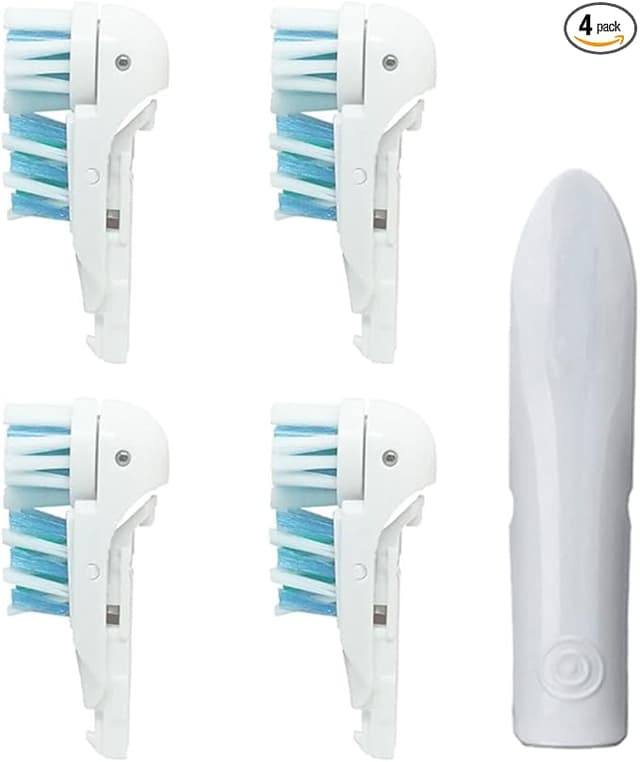
This is the only question that matters with aftermarket CrossAction heads, because the fit is mechanical. The head doesn't screw on or clip with a latch — it just slides down over the drive shaft and grips by friction and a little internal coupling. If the bore is molded a hair too wide, the head walks. If it's too tight, it won't seat all the way and you get this annoying half-second of slip before the bristles start moving.
The set I've been using seats clean. Pull the old head straight off — it comes with a tug, not a fight — rinse the metal shaft under warm water to clear out the gunk that builds up at the base (you'll be a little grossed out the first time, that's normal), and push the new one on until you feel that click I keep going on about. Done. The oscillation transfers with no buzz or lag that I can feel against my teeth. After about two weeks I genuinely could not have told you, blindfolded, whether I had a genuine or a compatible head on the handle.
The bristles are the part the listing leans on, and fairly so — these use DuPont filament, same as the name-brand uses, in that angled CrossAction pattern that's supposed to rake along the gum line. Plaque-wise, my teeth feel exactly as polished after a session. I'm not a dentist with a disclosing tablet, but I know what my own mouth feels like at 7am, and it feels the same.
The downsides, because there are some
Here's where I earn your trust. First: the bristle indicator. Genuine Oral-B heads have that blue dye band that fades to signal "replace me." The compatible heads I've used either skip the indicator entirely or use a weaker dye that fades faster than the bristles actually wear, which throws off the signal. So you can't lean on the color. You have to actually watch the calendar — three months, mark it on your phone, swap it whether the blue's gone or not. A worn brush head is genuinely a problem, not a cosmetic one: splayed, tired bristles stop reaching the plaque at the gum line, and an old head that's been damp in a bathroom for a season is a little bacteria hotel. The savings aren't worth riding a head past its date. Set the reminder.
Second downside: the packaging is cheap and a little fiddly. The genuine ones come in those individual sealed sleeves; some of the compatible bulk packs just nest the heads loosely in a plastic tray, and one of mine had a faint manufacturing smell — that new-plastic, slightly-chemical note — straight out of the box. It rinsed and brushed away within the first day or two of use and I've never tasted it since, but if you're sensitive to that, run the first head under hot water and do a dry brush before you put paste on it.
Third, smaller thing: the bristle trim on a couple of heads in my pack was very slightly uneven, one or two filaments standing proud of the rest. Cosmetic. Didn't affect the brushing. But the quality control isn't quite as locked-down as the brand, and across a dozen heads you'll probably hit one that's visibly a touch less tidy. For the price difference, I can live with a stray bristle.
So who should just buy the genuine ones?
If you've got sensitive gums and your dentist specifically tuned your routine around a particular genuine head, or you've had recession issues and you want the exact validated bristle stiffness — pay up, stay with Oral-B, this isn't the place to experiment. Same if you simply can't stand the idea of a faint break-in smell on day one; that's a real preference and I won't talk you out of it.
But for the rest of us — people with healthy teeth who just want the plaque gone and resent paying $30 every three months for a wad of nylon on a plastic stub — the compatible CrossAction heads do the job. Same DuPont bristles, same seating click, same clean-feeling teeth, for a fraction of the running cost. I've been on them for the better part of a year now across two handles in my house, and I've reordered twice without a second thought.
The cheap one is, in this specific case, actually fine. Just don't trust the faded-dye trick to tell you when to swap — that's the one habit you have to bring yourself.