Troubleshooting & Analysis
The click is the first thing that told me these were fine
You know that little snap when an Oral-B head seats onto the metal shaft? Genuine ones have it. I'd half-convinced myself the compatible heads wouldn't — that I'd get a mushy, half-on fit that wobbled and flung toothpaste at the mirror. So the first thing I did when my pack of aftermarket CROSSACTION heads showed up was push one on and listen. Clean click. Seated flush, no gap at the base, no side-to-side play when I tugged it. Honestly, that one sound did more to settle my nerves than any spec on the box.
I've been buying replacement brush heads for years, and I switched to compatible ones out of pure stinginess. Let me walk you through what four months of actually brushing with these looked like — the good, the slightly-off, and the one thing that annoyed me.
The price gap is the whole reason we're here
Here's the math that pushed me over. A genuine Oral-B CROSSACTION head, bought in the small packs most people grab at the drugstore, runs roughly $9 to $10 apiece. A four-pack is around $35–$40. Since you're supposed to swap every three months, a single person burns through four a year — call it $40 a year, per person. Two people in the house? You're looking at $80 annually just on plastic brush heads.
The compatible heads I bought came eight to a pack for about $16. That's $2 a head. Same three-month interval, so my yearly cost dropped from $40 to roughly $8. Run that across a couple in the bathroom and you're keeping fifty-some dollars in your pocket every year. That's the "year's supply for the price of two originals" pitch, and after living with them, it's not marketing fluff — it's just what the receipts say.
Fit and install: genuinely a non-event
This is the part people are scared of, and it's the part that turned out to matter least. The swap is dead simple and the compatible heads don't change it. Pull the old head straight off the handle — it slides right off, no twisting. I rinse the bare metal shaft under warm water while I'm at it, because gunk builds up at the base over three months and it's gross. Then push the new head on until you feel that click.
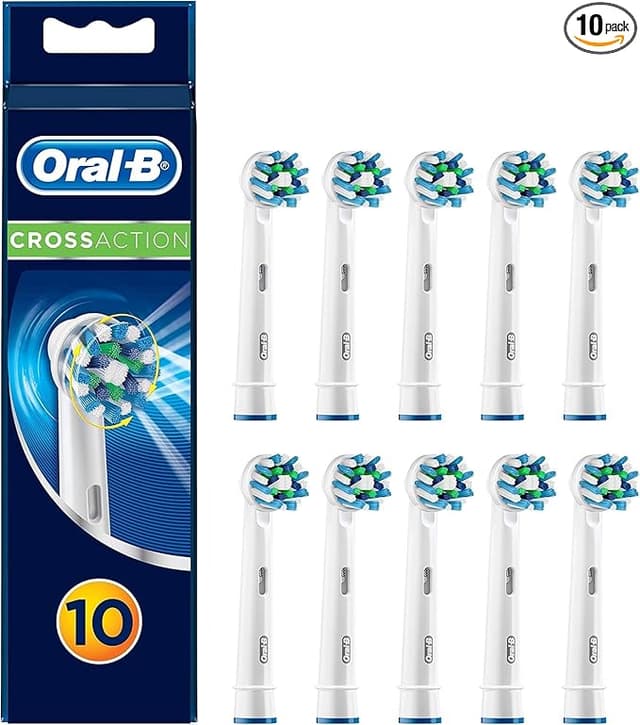
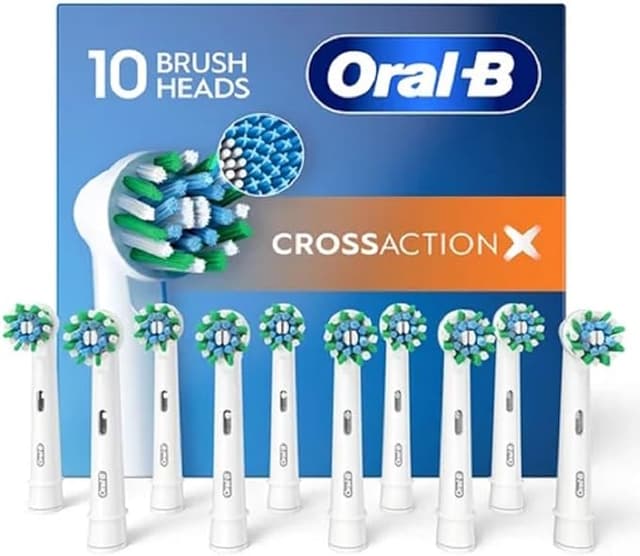
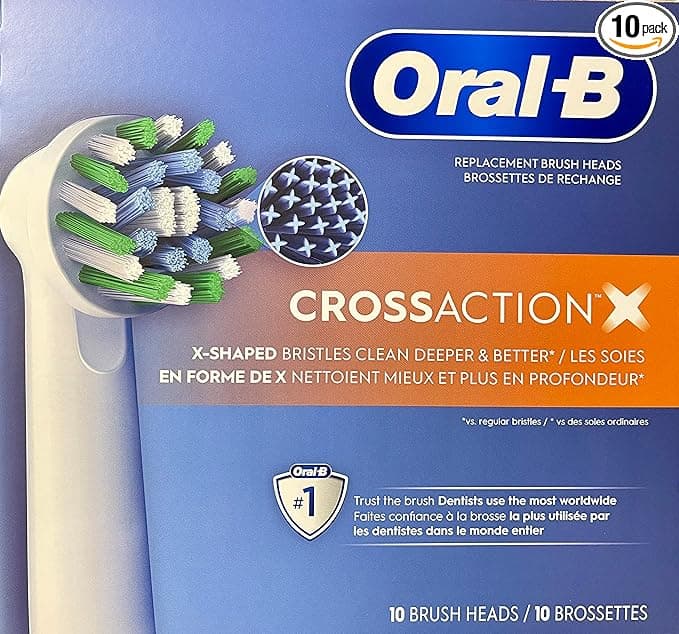
The bristle pattern matches the CROSSACTION crisscross angle, and the maker uses Dupont bristles — the same filament supplier behind a lot of name-brand heads. In the mouth I genuinely could not tell a difference in coverage. The angled bristles got behind my lower front teeth, where I always feel the plaque film by end of day, just as well as the originals did.
Performance: where it matches, and where it's a half-step behind
For the daily job — plaque off, gums not bleeding, teeth feeling actually clean at the dentist — these held up. My last cleaning, the hygienist did her usual scrape-and-frown and had nothing to say. No more buildup than my OEM-era checkups. The bristles kept their shape and didn't splay out into a sad floppy fan after a month, which is the real test. By the three-month mark they were showing wear, same as any head, which is your cue to swap anyway.
Where's the half-step behind? The bristle tips. Genuine CROSSACTION heads have those blue indicator bristles that fade to white to tell you it's time to replace. A few of mine had the fade dye, a few didn't, or it was faint. So you lose that built-in reminder on some of them and you're back to watching the calendar. Minor, but if you rely on the color cue, you'll notice it's missing.
The real downside — and I'm not going to pretend it isn't one
Quality control across the pack isn't perfectly even. Out of eight heads, one had a couple of bristle tufts that sat a hair taller than the rest — you could feel it as a faint scratch on the gumline for the first day before it broke in and evened out. Not painful, not a dealbreaker, but a genuine Oral-B head has never done that to me. With a name-brand four-pack, all four are clones of each other. With the cheaper multi-pack, you're rolling the dice slightly on each one, and maybe one in eight is a little rough out of the gate.
The packaging is also cheap — a flimsy blister card, no individual wrap on each head, just all eight rattling in one tray. I'd have liked them sleeved separately for hygiene since they're sitting in a bathroom. I rinse each one before its first use now, which I probably should've always done anyway, but with the originals I never felt I had to.
And the first-day taste: faint plastic. Brand-new head, brushed, and there was a barely-there plastic note under the toothpaste for the first two or three uses. Rinsing the head under hot water before the first brush cut most of it. By day three it was gone completely. Same thing happens with new OEM heads to a smaller degree, but it's a touch more noticeable here.
Why a worn head actually matters
Worth saying plainly, because it's the thing dentists actually warn about: splayed, flattened bristles stop reaching the gumline and stop lifting plaque — they just smear it around. And an old head that's been damp for months is a little bacteria hotel. None of that is specific to compatible heads; it's true of the genuine ones too. The point is that the swap interval is the thing that protects your teeth, not the brand on the head. Which is exactly why paying $2 instead of $10 actually helps — at that price I never hesitate to toss a worn one early. When heads cost $10, I'd guiltily stretch one to four or five months. The cheap ones killed that bad habit.
Who should skip these — and what I actually do
If you've got sensitive gums that flag up at the slightest rough bristle, or you really lean on that blue fade indicator to remember replacements, buy the genuine CROSSACTION heads and don't think twice. The consistency is worth the premium for you.
For everyone else — me included — these do the same job for a quarter of the price. Yes, I had one slightly-tall tuft, a cheap blister card, and a day of faint plastic taste. But four months in, my teeth are clean, my dentist is bored by my mouth, and I'm out about $8 instead of $40 for the year. I've already reordered. For a $2 brush head that clicks on right and cleans like the original, that's an easy yes.