Troubleshooting & Analysis
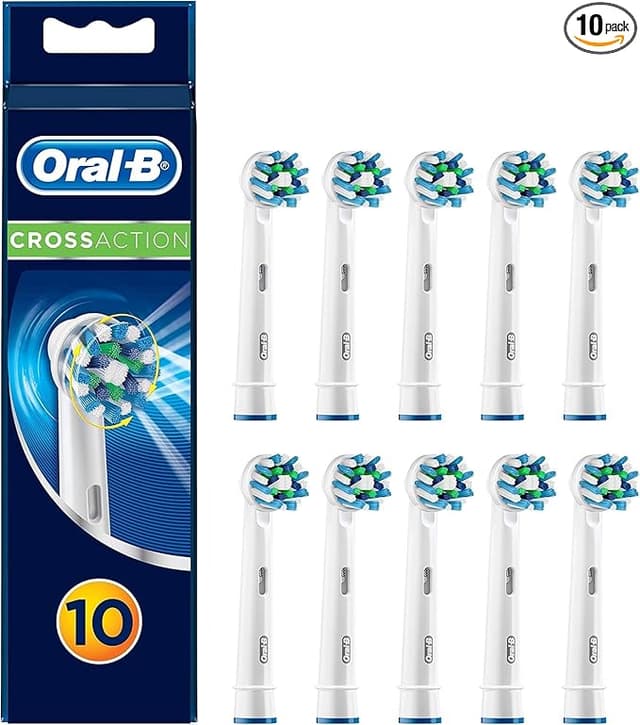
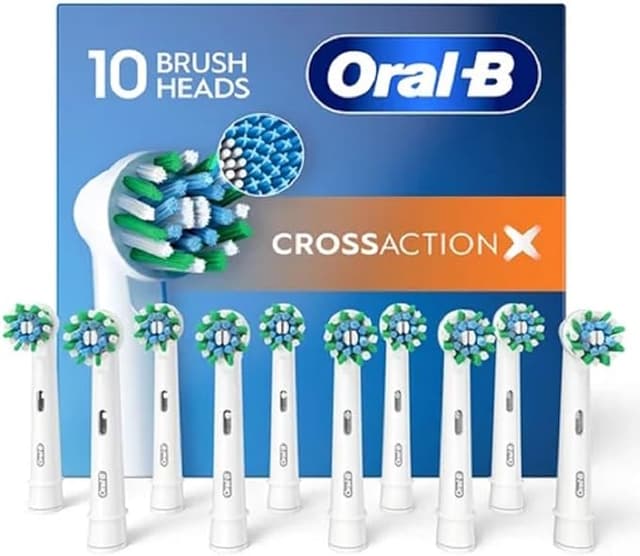
The bristles were splayed out flat like a tiny push broom — bent sideways, gray at the tips, and I'd been scrubbing with that thing for what had to be five, maybe six months. I only noticed because my hygienist found a soft spot of plaque along the gumline of my lower molars that hadn't been there at my last cleaning. She didn't lecture me. She just held up the little mirror and said, "When did you last swap your brush head?" And I genuinely could not remember. That's the thing about a worn-out CrossAction head: it doesn't break. It just quietly stops doing its job while you keep going through the motions, thinking you're clean.
So I went home and actually looked at the old one under the bathroom light. The bristles weren't just frayed — they'd gone limp. The angled indicator bristles, the ones that are supposed to fade to tell you it's time, had been white for who knows how long. I'd been pushing a dead brush around my mouth twice a day. And the bacteria angle isn't fearmongering, either — a brush head that's been damp and shoved in a cup for half a year is a little petri dish. That's the part that actually bugged me more than the plaque.
The price math is what made me try the compatibles
Here's where I'll be honest about what tipped me. Genuine Oral-B CrossAction heads run about $11 to $12 apiece where I shop, and you're supposed to replace them every three months. Do that math: four a year, call it $48 to keep yourself in real Oral-B heads. And I've got a wife and a kid who also brush, so in our house it's closer to triple that. The replacement heads are the printer-ink of the bathroom — the handle's cheap, the refills bleed you dry over the years.
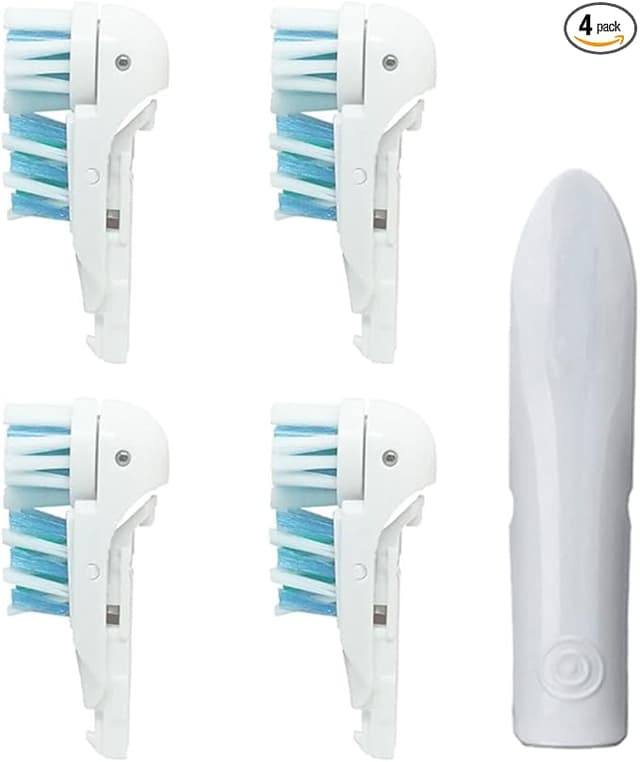
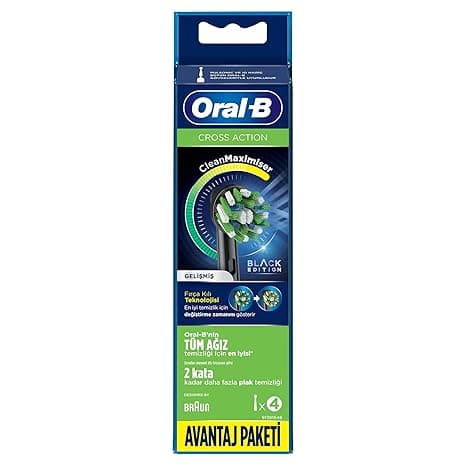
The compatible CrossAction-style heads I landed on were $24 for a year's supply — a four-pack. Same idea the listing promises: a full year for roughly the price of two genuine heads. That stopped me. Twenty-four bucks versus forty-eight, for something I was going to throw in the trash every twelve weeks anyway. I figured if they were junk I'd be out the cost of one decent lunch, and I'd just crawl back to OEM.
Do they actually click on the handle?
This was my real worry. The whole Oral-B system lives or dies on that metal shaft and the little click when the head seats. A head that wobbles or sits loose is going to rattle, leak water down into the handle, and feel awful. I pulled my old genuine head straight off the shaft, rinsed the metal post under warm water — there was a surprising ring of gunk around the base, by the way — and pushed the new compatible one on.
It clicked. Honestly, it clicked exactly the way the real one does. Seated flush, no side-to-side play, no gap at the collar. I ran the handle and it spun true, no rattle. I've now done this swap four times across the year and every single head has seated clean. So on the one fit question that actually matters, these passed.
How they clean, the honest version
The bristles are DuPont, and you can feel it. Same medium stiffness, same round-tip feel against the gums, same little cupped clusters that the CrossAction design uses to come at the tooth from an angle. After two weeks I went back for my follow-up and the hygienist actually said my gumline looked better — that soft plaque spot was gone. I'm not going to pretend a $6 brush head performed a miracle; the point is it did the same job the genuine one does, which is exactly what I was nervous it wouldn't.
Where it's a touch behind: the fade indicator. On a real CrossAction head, that dye fades in a slow, even way that's genuinely useful for knowing when you're due. On these compatibles the indicator bristles fade too, but the color's weaker out of the box and goes pale a bit faster than the wear actually warrants. So I stopped trusting the color and just set a phone reminder for every three months instead. Minor. But real.
The downsides I'd want you to know
Let me not do the thing where every point is secretly a compliment. There are a couple of real ones.
First, the packaging is cheap. The genuine heads come individually capped in those hygienic little sleeves; these came four-to-a-blister-pack, loose-ish, and one of the four had a hair of plastic flash on the base of the collar that I had to thumbnail off before it would seat. Took ten seconds. But if you're squeamish about that kind of thing, it's there.
Second — and this is the one to actually weigh — there's some variation in the bristle trim head to head. Three of my four were dead even, trimmed flat and clean. One had a couple of slightly long bristles on the outer edge that I noticed for the first day or two until they broke in. It didn't poke or scratch, it was just not as factory-perfect as a genuine head, which is uniform every single time. With OEM you're paying partly for that consistency, and you do get it.
Third, the faint one: a fresh compatible head has a whisper of plastic smell the first day. It rinses out fast, gone by day two, but it's there when you first crack the pack. The genuine ones don't really have it.
Who should just buy OEM
If you wear braces, have receding gums, or your dentist has you on a specific brush-head prescription, buy the real thing and don't overthink it — the consistency and the trusted indicator are worth the extra $24 a year when your mouth is already a project. Same if you're the kind of person who'll be genuinely bothered by one slightly imperfect head out of four. Pay for the peace and move on.
The verdict
But for me — a guy with a normal mouth who'd been riding a frayed dead brush for half a year precisely because $12 refills made me keep putting it off — these compatibles solved the actual problem. They click on right, they've got real DuPont bristles, they clean the same, and at $24 for the year instead of $48 I now swap them on schedule without flinching, which means I'm brushing with a fresh head instead of a tired one. That's the whole game. A perfect brush head you never replace loses to a good one you actually swap every three months. I'm on my fourth pack. I'd buy them again — and I have.