Troubleshooting & Analysis
The day my gums told me the brush head was done
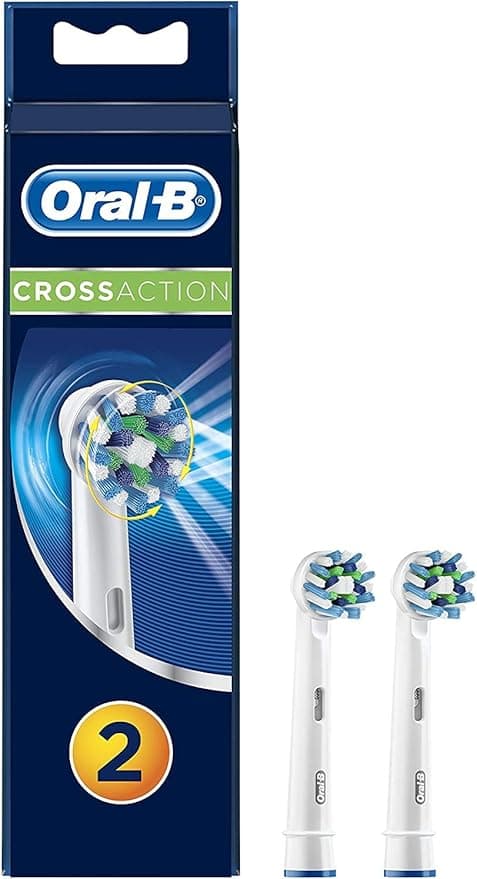
I knew something was off when I spat pink into the sink three mornings in a row. Not a lot. Just a little rust-colored swirl that wasn't there a month earlier. My first thought was, great, I'm one of those people now. My second thought, after I actually looked at the brush head on my Oral-B CrossAction, was: oh. That's the problem.
The bristles had splayed out like a tiny exploded broom. The blue indicator strip had gone almost white. I'd been running that same head for — honestly? Probably five months, maybe six. I'd stopped counting because the brush still "worked," in the sense that it still spun and made noise. But a frayed head doesn't clean. It just smears toothpaste around and massages plaque deeper into the gumline. The bleeding wasn't a gum disease scare. It was a worn-out brush head dragging bacteria-loaded bristles across irritated tissue twice a day.
That was the morning I went looking for replacements, and that's the morning I got annoyed all over again at what Oral-B charges.
The price math that made me try the compatible heads
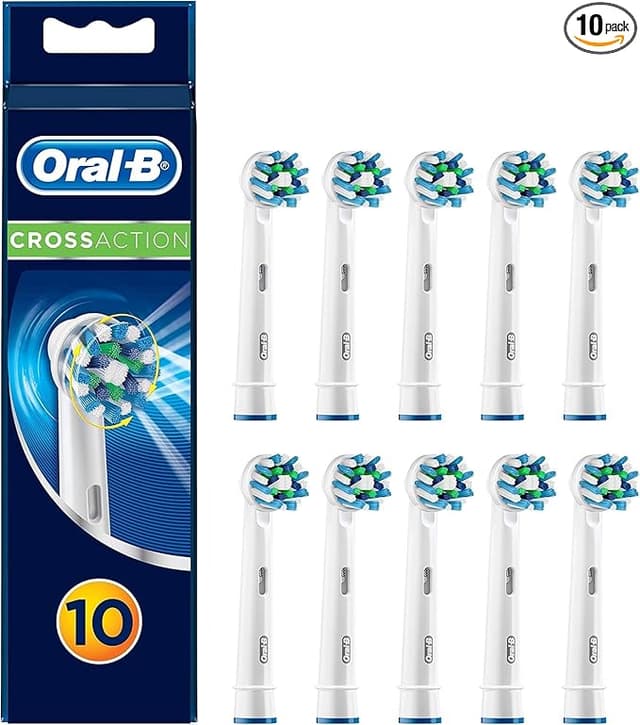
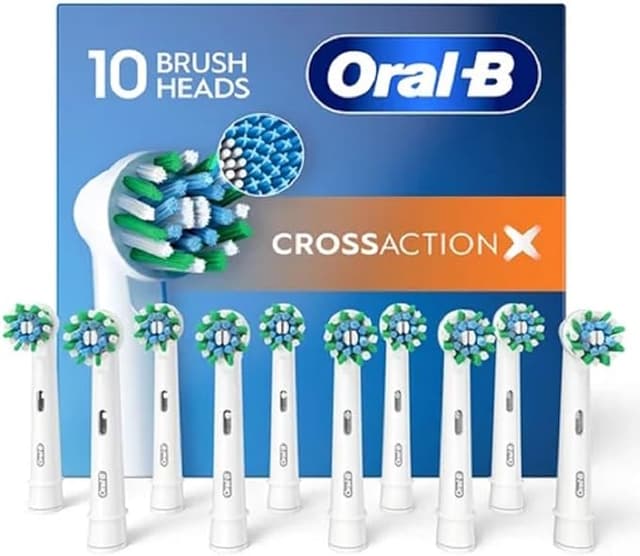
Here's the part that gets me. A genuine Oral-B CrossAction multipack runs you real money — you're often looking at something like $40 for a pack of originals once you factor in the per-head cost. Replace every three months like you're supposed to, and a year of OEM heads is a slow, steady bleed from your wallet. The compatible heads I switched to? You can basically get a year's supply for what two original packs cost. Same Dupont bristles, same CrossAction-style crisscross pattern, a fraction of the spend.
I did the dumb little spreadsheet thing. Four head changes a year on OEM versus the compatible set, and the gap was somewhere around $25 to $30 a year just sitting on the table. For a brush head. A thing I rinse, use for twelve weeks, and throw away. That's the moment the "but is the cheap one safe?" question stopped feeling noble and started feeling like I was just overpaying out of habit.
Do they actually fit the CrossAction handle?
This was my real worry. The handle is the expensive part — the motor, the battery, the thing I'm not trying to wreck. If a third-party head wobbled or sat crooked on the metal shaft, I'd rather eat the OEM price than risk it.
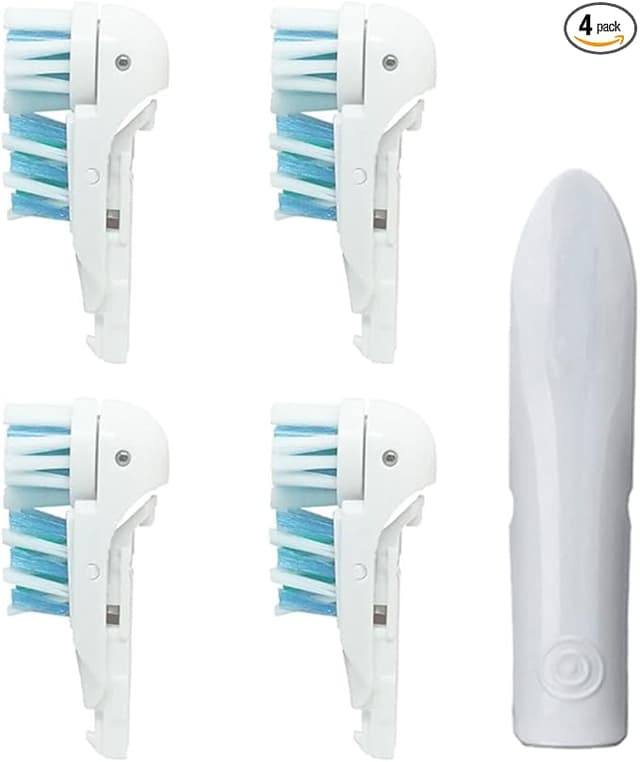
So I did the swap carefully the first time. Pulled the old splayed head straight off the shaft — it comes off with a firm tug, no twisting. Rinsed the bare metal shaft under warm water, because five months of gunk had built a little ring of grime right at the base. Then I pushed the new compatible head down until I heard the click. And there is a click. A real, seated, that's-not-going-anywhere click. It sat flush. No gap at the base, no side-to-side play when I wiggled it.
Turned it on, and the head spun true — no eccentric wobble, no rattle. If you didn't tell me it wasn't an Oral-B head, I genuinely could not have picked it out blind in the first week.
The honest downsides — and there are a couple
I'm not going to pretend these are flawless, because they're not.
First: the plastic. For the first two or three days, there's a faint plastic-y taste on the very first brush of the morning. Not chemical, not alarming, just... new-plastic. It rinses off after the initial use and was completely gone by day three, but it's there, and OEM heads don't really do that. I'd run the head under hot water for ten seconds before the first use next time to cut it down.
Second: the indicator bristles fade a touch faster than the genuine ones. On the real CrossAction heads, that blue band wears down on a pretty predictable schedule. On the compatible set, the color indicator faded a little ahead of where the bristles actually gave out — so it told me to replace slightly early. Mildly annoying if you're the type who runs a head right to the line. I just switched to a calendar reminder for the three-month mark instead of trusting the color, which honestly you should be doing anyway.
Third, smaller one: the packaging is cheap. Thin plastic clamshell, a sticker label that looked a little off-brand. Doesn't touch the actual brushing — but if a fancy box is part of what you're paying for, you won't get it here.
How they actually clean after months of use
I've now run these for a full cycle and started a second one, so this isn't a first-impression take. Day to day, the clean feels the same as OEM to me — that squeaky, just-left-the-dentist feeling on the front teeth, good reach on the back molars where the round head matters most. The bristles held their shape honestly well; they were still standing mostly upright at the eight-week mark, which is more than I can say for the abused OEM head I'd been ignoring.
The thing that matters, the reason any of this is worth caring about: a fresh, intact head removes plaque. A frayed one doesn't, and it parks millions of bacteria right against your gums every morning. My little pink-in-the-sink scare cleared up within about a week of going back to a head with actual bristle structure. The lesson wasn't "buy OEM." The lesson was "stop running a dead head for half a year because you're cheap about replacing it" — which, ironically, the cheaper compatible heads make easier, because swapping every three months stops feeling expensive.
So who should buy what?
If you've had a genuinely bad fit experience with an off-brand head before, or you've got sensitive gums and that first-week plastic taste would bug you, or you just want zero variables — buy the OEM heads and pay the premium. That's a fair choice and I won't argue it.
But for me? After months on these, a clean that I can't tell apart from the original, a click that seats solid on the CrossAction handle, and roughly $25 to $30 a year back in my pocket — I bought a second set without hesitating. The downsides are real and they're minor: a few days of faint plastic taste, an eager indicator strip, ugly packaging. None of that touches my teeth.
The expensive mistake isn't the compatible head. It's the worn-out one you keep using because replacing it felt pricey. Make it cheap to swap on schedule, and your gums stop arguing with you.