Troubleshooting & Analysis
The morning my brush head finally gave up
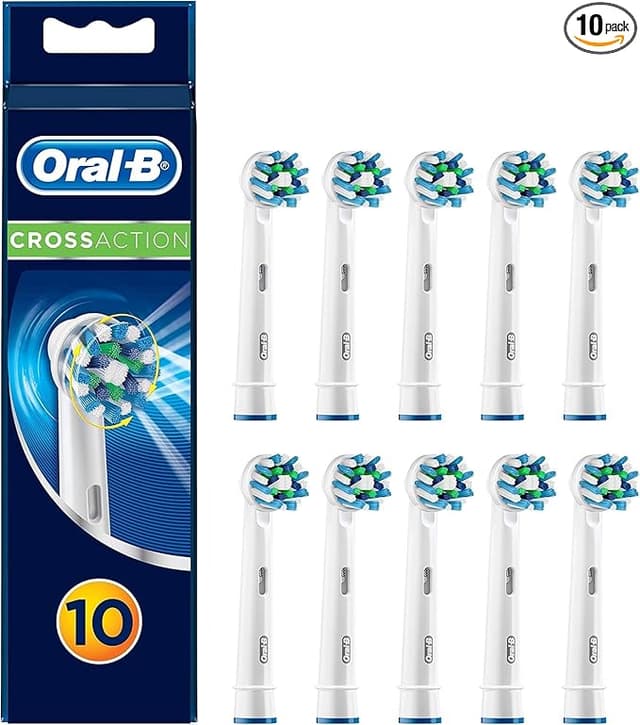
I noticed it on a Tuesday, brushing before work, half-asleep. The bristles on my Oral-B CROSSACTION head had gone flat — splayed out sideways like a worn paintbrush — and there was this gray-ish discoloration creeping up from the base that I'd somehow been ignoring for weeks. I ran my thumb across it and the bristles barely pushed back. No spring left. I'd been "cleaning" my teeth with what was basically a wet stick for who knows how long.
Then I went to my dentist that same month and got the lecture. Mild bleeding at the gumline, a little plaque buildup where the brush clearly wasn't reaching anymore. She asked when I'd last swapped the head. I genuinely couldn't tell her. That's the thing nobody warns you about — a flat brush head doesn't fail loudly. It just quietly stops doing its job, and the first time you find out is in the dentist's chair.
So I went looking for replacements that night, fully expecting to just reorder the genuine Oral-B ones. And then I saw the price again. That sting. That's what pushed me to finally test the compatible heads I'd been skeptical of for years.
The price gap is genuinely ridiculous
Here's the math that broke me. Genuine Oral-B CROSSACTION heads run around $10 each when you buy them — sometimes more if you grab a single. You're supposed to replace every three months, so that's four a year, call it $40-plus annually just to keep one toothbrush honest. If two people in the house use the same handle? Double it.
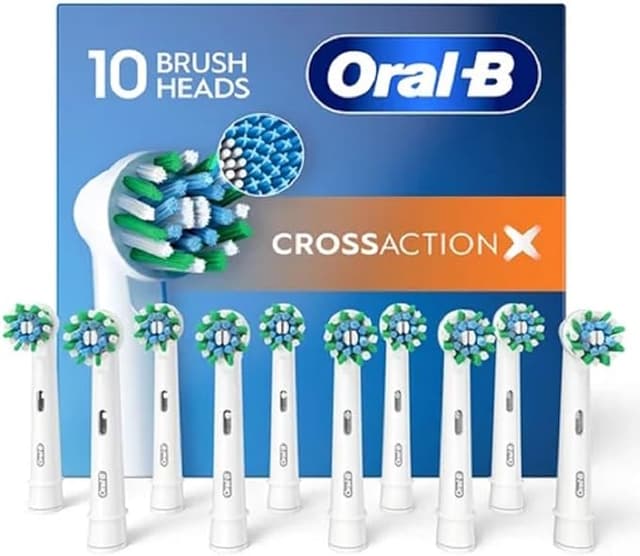
The compatible set I bought got me a full year's supply for roughly the cost of two originals. Think about that. Two genuine heads, or twelve months of the compatible ones. I sat there doing the arithmetic and felt a little dumb for having paid OEM prices for the better part of a decade. Same DuPont-style bristles, same X-pattern, same click onto the shaft — for a fraction.
I'll be honest, the cheap price made me MORE suspicious, not less. My gut said there had to be a catch. So I treated this like an actual test and paid attention.
Does it actually fit? (the part I worried about)
This was my real fear — that a third-party head would wobble, or sit loose on the metal shaft, or fly off mid-brush. The install itself is dead simple, same as always: you pull the old head straight off the shaft, rinse the metal post under warm water to clear any gunk, then push the new one down until it clicks. That click is what you're listening for. With the genuine heads it's a crisp, confident snap.
With the compatibles? The click is there. It's just a touch softer. The fit is maybe a hair looser than OEM out of the package — I could feel a tiny bit more play if I wiggled it dry. But once it's seated and wet and running, I have never once had it slip, rattle, or work loose. Months of daily use, twice a day, and it stays put exactly where it should. The fear was bigger than the reality.
How it actually cleans
This is where I expected the compromise, and mostly it isn't there. The bristle action feels the same on my teeth — that slightly aggressive CROSSACTION scrub that gets between teeth. After a full cleaning my mouth has that same squeaky, just-left-the-dentist feel. My next checkup came back clean, no new complaints from the hygienist, which honestly is the only test result that matters.
Where it's a touch behind OEM: durability over the full three months. The genuine heads hold their bristle shape maybe a couple weeks longer before they start splaying. The compatibles are great for about ten or eleven weeks, then you can see them starting to soften right around when you're due to swap anyway. So it's not really a problem — you're tossing it at three months regardless — but if you're the type who stretches a head to four or five months (don't, that's literally what got me into the dentist's chair), you'd notice the cheaper one fading first.
The real downsides — and there are a couple
I said I'd be straight, so here's the stuff the product page won't tell you.
First: the first-day plastic smell. Pop a fresh one out of the packaging and there's a faint chemical-plastic odor for the first day or two of use. It's mild and it rinses out fast, but it's there, and it's a little off-putting that first morning. I run a fresh head under hot water for thirty seconds before the first brush now and it mostly kills it.
Second: the packaging is cheap and you can tell. The genuine heads come in those tidy individual hygiene caps and a clean blister pack. The compatibles came loose-ish in a plain plastic tray, no individual caps on mine. For a bathroom shelf where things get splashed, I'd have liked covers. I keep mine in a small zip bag in the drawer instead. Minor, but it's the kind of corner-cutting that tells you where the savings came from.
Third, and this is the honest one: quality control is slightly less consistent. Out of a twelve-pack, one head had a couple of bristles that sat a hair unevenly. It still worked totally fine and I used it. But you don't get that with genuine — every single OEM head is identical. With the compatibles, one in a dozen might be a little off. At this price I genuinely do not care, but you should know going in.
Why a worn head is more than a cosmetic problem
Look — the reason I'm even this careful now is what my dentist drilled into me. Flattened, splayed bristles don't reach the gumline or the spaces between teeth, so plaque sits and hardens into tartar that only a scraper removes. And an old, never-replaced head is a damp little habitat for bacteria; you're essentially re-introducing whatever's living in there every morning. The whole point of swapping every three months is to stay ahead of both. Which means the cheaper the heads are, the more likely you are to actually replace them on schedule instead of nursing a dead one for half a year like I did.
That's the quiet argument for the compatibles, honestly. The best brush head is the one you'll actually change on time. At $10 a pop, people stretch them. At a year's worth for the price of two, you swap without thinking twice.
The verdict — who should buy what
Buy genuine Oral-B if you've got specific gum sensitivity your dentist is managing, or if the idea of a one-in-a-dozen cosmetic flaw genuinely bothers you, or if you simply want the individual hygiene caps and don't mind paying for that polish. No shame in it.
But for me? After months of running these twice a day, with a clean checkup to back it up, I grab the compatibles every time now. The fit is solid once it's seated, the clean is the same, and the downsides — a day of plastic smell, plain packaging, the occasional slightly-off bristle — are exactly the kind of small stuff I'll happily trade for paying a fraction of the price. I've reordered them. Twice. That's the most honest endorsement I can give: I spent my own money on the second box.