Troubleshooting & Analysis
The morning my old brush head finally gave up
I noticed it in the mirror before I noticed it on the brush. My gums were puffy along the bottom front — that pink, slightly angry look — and I'd had a cleaning six weeks earlier, so it wasn't neglect. Then I actually looked at the brush head sitting on the Oral-B handle. The bristles had splayed out like a busted broom, fanned flat and gray at the tips, the little blue indicator band long since faded to white. I'd been "brushing" for who knows how many weeks with something that was basically smearing plaque around instead of lifting it off.
That's the thing nobody tells you about a worn brush head. It doesn't fail loudly. It just quietly stops working while you keep going through the motions, and your mouth pays for it. Honestly, the puffy gums scared me more than any number on a price tag. So I went looking for replacements that same night — and that's where the OEM-versus-compatible fight started.
The price gap that made me hesitate
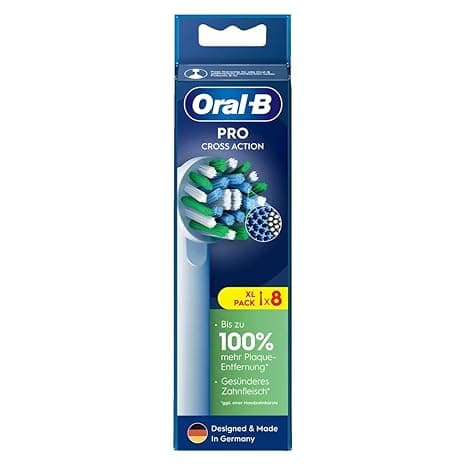
Here's what set me off. Genuine Oral-B refills run about $11 to $13 each once you're past the intro pack, and the dentist line is "replace every 3 months." Do that math honestly — four heads a year, roughly $48 to $52 a year, just to keep one toothbrush running. And that's per person. We've got two handles in this house.
The compatible pack I landed on works out to about $3 a head. A year's supply for me cost less than the price of two genuine refills. That's not a rounding-error discount — that's the difference between dreading the replacement reminder and just doing it on schedule without thinking about it. Which, it turns out, matters a lot, because the whole reason my old head got nasty was that I'd been stretching it to save money on the real ones.
I didn't trust the cheap ones at first. Three bucks a head? My gut said the bristles would be wire-stiff or fall out in a week. I'd been burned by no-name stuff before.
Does it actually fit the handle?
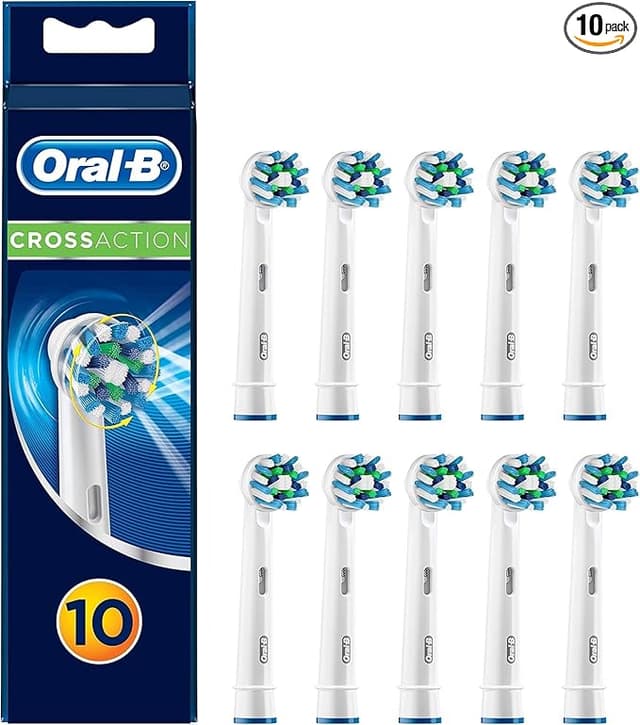
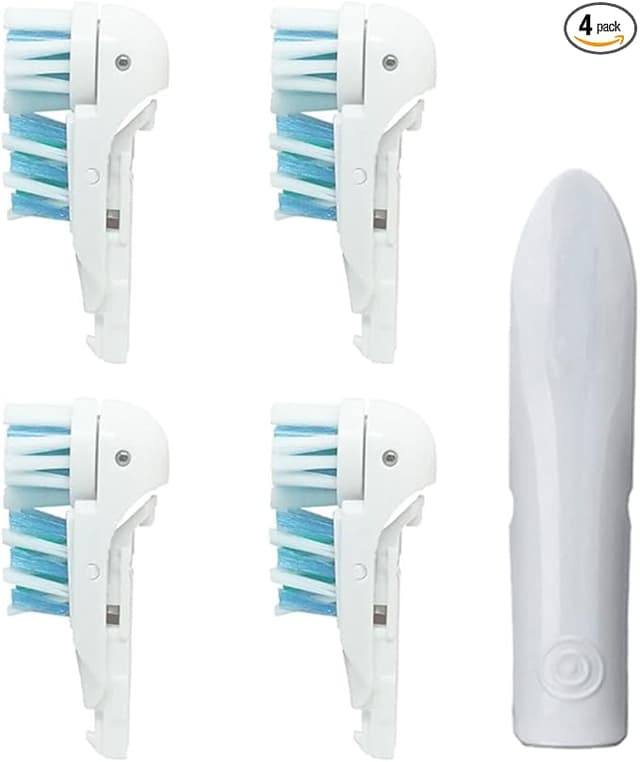
This was my first real test, and it's the one most people are nervous about. The install is dead simple — and it's the same motion as the genuine head, no adapter, no trick. You pull the old head straight off the metal shaft (it resists for a second, then pops), rinse the shaft under warm water because there's always a little gunk built up at the base, and push the new one down until it clicks. That click is the whole game. You feel it seat, and then it doesn't wobble.
On mine, it clicked clean and sat flush. No side-to-side play, no rattle when the motor spun up. I'll be straight with you though: across a multi-pack, the fit isn't perfectly identical head to head. One out of the four needed a firmer push to seat, and it rode maybe a hair higher on the shaft than the genuine one does. It still locked, still ran true, no gap — but if you're the kind of person who notices a millimeter, you'll notice it. It didn't affect anything in use. It just wasn't the machined-glove fit of the original on that one piece.
How it actually cleans
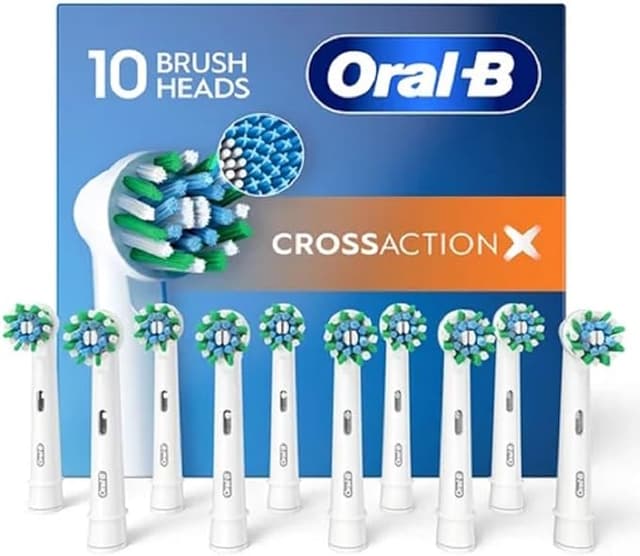
I ran one of these for a little over three months — a full replacement cycle — before swapping it, so this isn't a first-impression take. The bristles are DuPont, same as the heads claim, and you can feel it. The day-one sweep across my teeth felt as scrubby and grabby as a genuine head, and the indicator bristles faded on roughly the same timeline as the real ones, which tells me the wear rate is honest and not some softer filament that quits early.
Where's it a touch behind? The bristle trim. On the genuine Oral-B heads, the outer rim of bristles is cut in this slightly cupped, rounded profile that hugs around each tooth. The compatible ones are trimmed a little flatter. In practice my teeth feel just as clean, but I had to be a bit more deliberate getting into the back molars and along the gumline — a couple extra seconds per quadrant. Not a dealbreaker. Just a real difference, and I'd rather tell you than pretend it's a clone.
The downsides I actually hit
Let me give you the unvarnished list, because a review with zero complaints is a review you shouldn't believe.
- First-day smell. Fresh out of the wrapper there's a faint plastic-y smell on the head. It's gone after the first rinse and first brush, but it's there. The genuine heads don't really have it.
- Cheap packaging. They come in thin blister plastic, not the nice retail box. Doesn't change how they brush, but it doesn't feel premium when you open it, and the printing on the heads is a little less crisp.
- That one loose-ish fit. Like I said — one head in the pack needed extra muscle to seat and rode slightly high. The other three were spot-on.
- Slightly flatter bristle trim, so a few extra seconds at the molars. Covered above, but it belongs on the honest-downsides list too.
None of those touched the actual job — getting plaque off and keeping my gums calm. After a couple weeks on a fresh head, the puffiness I started with was gone and my next cleaning came back boring, which is exactly what you want a cleaning to be.
Why this matters more than the money
Here's the part I keep coming back to. The danger isn't buying a compatible head — the danger is running a dead one. Splayed, worn-out bristles don't reach the gumline, and they trap moisture and bacteria in the matted-down filaments. That's the puffy-gum, smear-the-plaque-around situation I walked into. A dentist will tell you the same thing: a worn head is worse than a cheap head, every time.
And that's the quiet argument for the affordable ones. When a head costs $3 instead of $12, you actually swap it on schedule. You stop rationing. The cheap-but-fresh head beats the expensive-but-stretched one in your mouth, no contest.
Who should buy OEM — and what I personally do
I won't pretend these are for everyone. If you've got sensitive gums that flare at the slightest texture change, or your dentist has you on a specific genuine head for a reason, or you simply want that exact cupped bristle trim and machined fit and you don't mind paying four times as much for it — buy the real Oral-B heads. No shame in it.
But for me? I run two handles, I want to swap every three months without flinching, and these clean my teeth and keep my gums quiet at about a quarter of the price. The plastic smell fades, the packaging goes in the trash, and the one slightly-tall head still brushes fine. For the savings — a whole year's supply for what two genuine refills cost — doing the same job, I'd buy them again. And I already have.