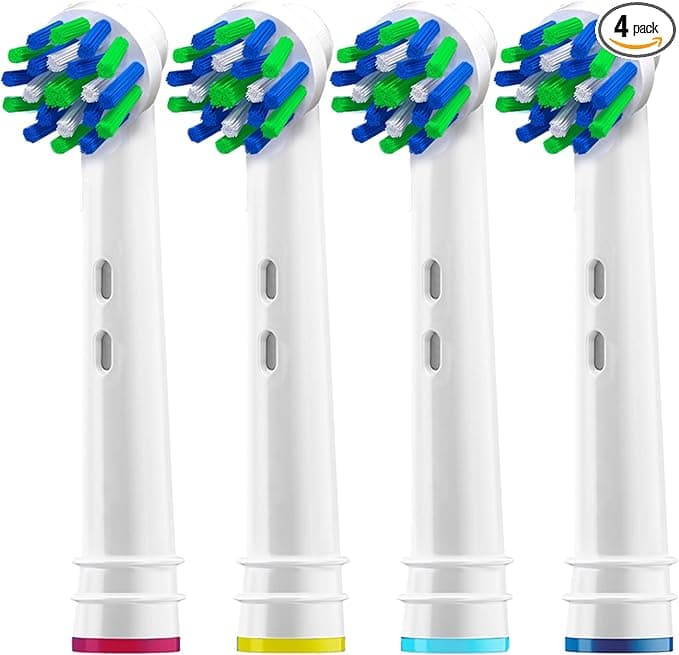
Troubleshooting & Analysis
I didn't believe a $20 pack could be fine either
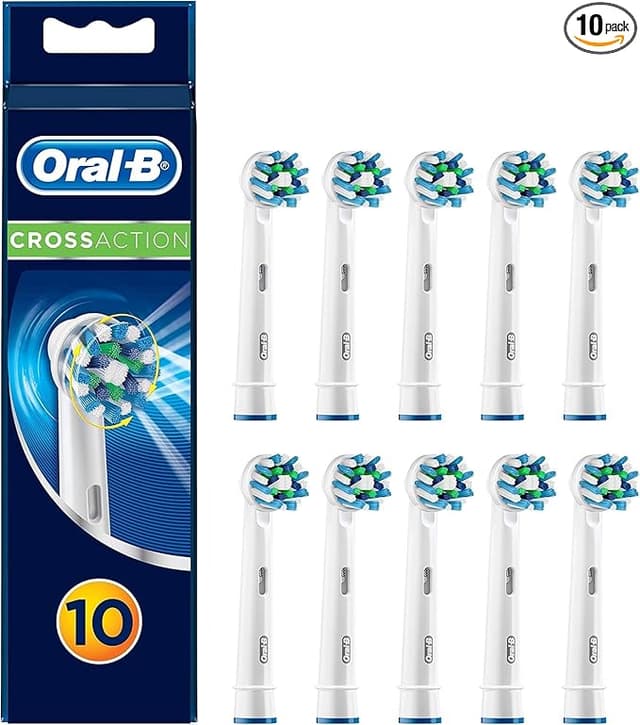
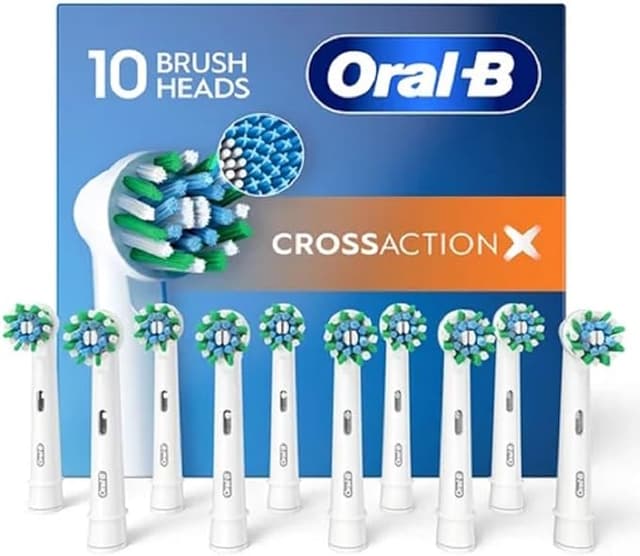
Here's the thing — I bought my first set of off-brand Oral-B heads almost out of spite. I'd been paying for the genuine refills for years, the ones that ring up around $45 for a four-pack, and every time I stood in that aisle I felt a little robbed. So when a compatible eight-pack showed up for about $22, my honest first thought was: no shot. Same Dupont bristles? Clicks onto the same shaft? For half the per-head price? I figured I'd get a mouthful of plastic and regret.
I was wrong, mostly. Let me walk you through it, because there's a real downside and I'm not going to pretend there isn't.
The money, plainly
Run the actual math, because that's the whole reason you're reading this. A genuine Oral-B refill set runs me roughly $45 for four heads — call it about $11 a head if you don't catch a sale. The compatible set I've been using is around $22 for eight. That's roughly $2.75 a head. You're supposed to swap every three months, so a year is four heads. OEM: about $45 a year. Compatible: somewhere near $11 a year for the same cadence.
That's the line the seller leans on — a year's supply for the price of two originals — and annoyingly, it checks out. The first time I did that subtraction I actually went back and re-counted the heads in the bag because the gap felt too wide to be real.
Fit and the click
This is where I expected it to fall apart, and it's the part I want you to trust me on. The install is dead simple and it's identical to the real thing. You pull the old head straight off the metal shaft — it comes with a firm tug, no twisting. Rinse the shaft under warm water because gunk builds up at the base where you can't see it. Then you push the new head down until it clicks. That click matters. With the genuine heads it's a crisp, confident snap. With these compatible ones, on maybe one head out of the eight, the click was a touch softer — it seated, it held, it ran true with no wobble, but I had to press a half-second longer to feel it lock. Seven out of eight were indistinguishable from OEM going on.
Once seated, there's no rattle, no off-center wobble, no whine from the drive. The bristle field lines up with the oscillating cup the way it should. If you've ever had a knockoff head spin slightly off-axis, you know the buzz it makes — these don't do that.
How they actually clean
I've now run these for the better part of a year, two heads deep, brushing twice a day. The bristles are genuinely Dupont — the same nylon filament the name-brand heads use — and after a cleaning my teeth pass the tongue test the same as they did on OEM. Smooth at the gumline, no fuzzy film. My hygienist didn't say a word at my last visit, and she's the type who'd absolutely tell me if my plaque control had slipped.
Where the genuine heads have a slight edge: bristle longevity. The OEM heads seem to hold their shape a hair longer into month three before the indicator bristles fade. With the compatibles I notice the outer bristles starting to splay maybe two or three weeks earlier than I'd expect from the real ones. Not a dealbreaker — you're meant to replace at three months regardless — but if you're the kind of person who stretches a head to four or five months (don't, but I know you're out there), the OEM will hold up marginally better for that abuse.
The real downside
Okay, the honest flaw. For the first two or three days, a couple of the heads had a faint plastic-and-packaging smell. Not a taste, exactly — more something you notice on the first morning brush. I ran each new head under hot water for ten seconds before first use and brushed once without paste to break it in, and the smell was gone by day three every time. It's the kind of thing the genuine heads don't have, and it's the clearest tell that you're not buying the premium product.
The other gripe is packaging. The genuine refills come individually sealed in those rigid blister shells. These come loose in a single bag, all eight together. They're clean and fine, but if you're squeamish about your spare brush heads sharing a pouch, you'll want to stash them in a drawer container rather than leaving the bag open on the counter. Minor. But you asked me to be straight, so there it is.
And the looser click on that one head — I want to flag it again because it's the thing I'd watch. It held the whole three months without issue. But if a head ever feels like it pops loose under pressure, toss it. A head that isn't fully seated can let water creep into the shaft coupling over time, and that's a path to a corroded drive pin. I haven't had it happen. I'm just telling you what to watch for.
Why a worn head is the actual risk
People obsess over OEM-versus-compatible and forget the bigger problem: most folks brush with a head that died months ago. Splayed, flattened bristles don't reach the gumline, and that's where plaque turns into the stuff your dentist scrapes off with a metal hook. A frayed head also holds more bacteria in the matted bristle base — you're scrubbing with a tiny used sponge. The single best thing you can do for your mouth isn't buying the premium head. It's actually swapping the head every three months. And at $11 a year instead of $45, you're far more likely to actually do it. That, honestly, is the strongest argument for the cheap pack — it removes the excuse.
Who should skip these
If you've got sensitive gums and your dentist specifically dialed you in on a particular genuine head — a gum-care or sensitive-specific design — stick with that exact one. The compatibles are a solid general-clean head; they're not trying to replicate every specialty variant. And if a faint plastic smell for two days is a genuine no for you, pay the OEM premium and don't think twice.
Everybody else? I've run these for the better part of a year, my hygienist's happy, the fit is right, and they cost roughly a quarter of what I was paying. The plastic smell fades, the packaging is cheap, one head clicked a little soft — and I'd still buy them again. I already have.