Troubleshooting & Analysis
The math that finally broke me
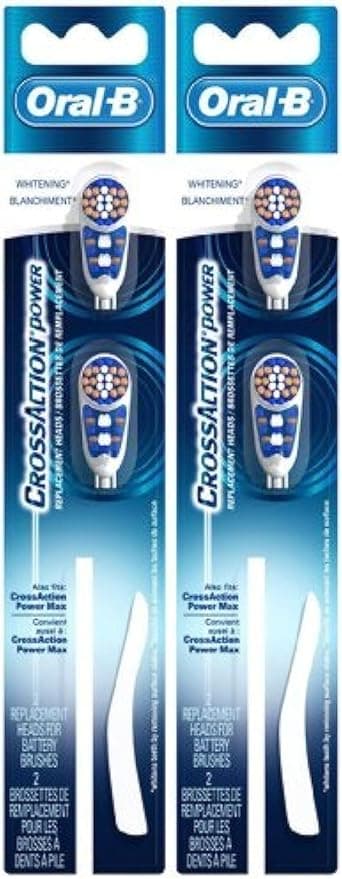
Here's the number that did it. I went to reorder genuine Oral-B brush heads — the CrossAction ones my dentist nags me about — and a 3-pack rang up at $34. That's a little over $11 a head. You're supposed to swap every three months, so call it four heads a year, per person. We're two adults in this house. I was staring at roughly $90 a year just to keep plastic toothbrush tips fresh, and I actually said something out loud in the kitchen that I won't repeat.
So I did what I'd been putting off for a year: I bought a pack of compatible heads instead. Eight of them for around $18. That's $2.25 a head against $11-plus. A full year's supply for one person ran me less than the price of two genuine packs. I've been running them on my Oral-B handle ever since, and this is the honest report.
Do they actually click on right?
This was my first worry, and I'll be straight with you — it's the fair worry. The Oral-B connection is just a metal shaft you push the head straight down onto. Genuine heads seat with a confident little snap and zero wiggle. The compatible ones? They fit. They seat. But the very first one I pushed on felt a hair stiffer going down, like the inner collar was a touch tight, and I had to give it one firm extra push past where I expected it to stop. After that it clicked and held fine.
Out of the eight in my pack, seven went on clean. One had a slightly looser fit — not falling-off loose, but if I wiggled it hard with my fingers I could feel a tiny bit of play that I never feel on a genuine head. In daily use it didn't matter; it didn't spin, didn't pop off, didn't rattle while brushing. But I noticed it, and I'm telling you because that's the kind of thing the upsell-only reviews leave out. If you're someone who'd be bothered by 1-in-8 being a little less snug, factor that in.
Install is the same routine you already know: pull the old head straight off, rinse the metal shaft under warm water so there's no gunk built up at the base, push the new one on till it clicks. Took me ten seconds. Rinsing the shaft actually matters more than people think — old toothpaste scum down there is part of why a head can feel loose, genuine or not.
How they clean, honestly
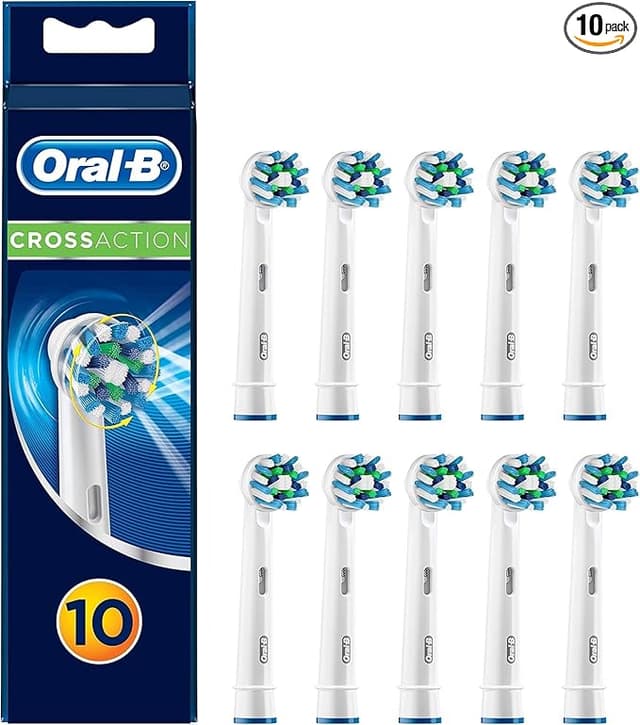
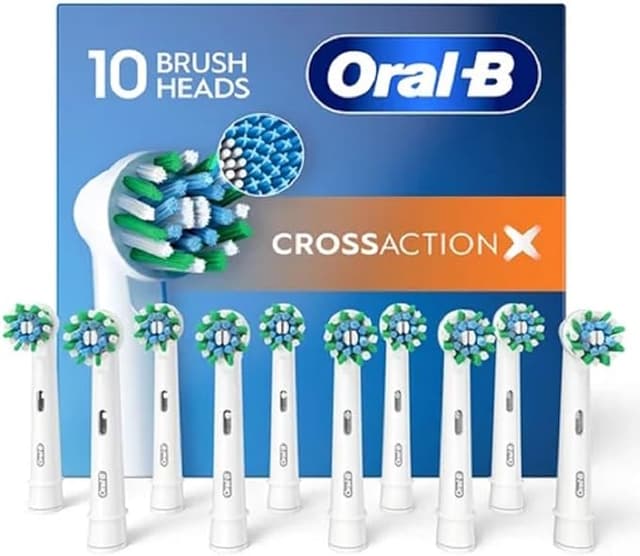
The bristles are the part that surprised me. These use DuPont filament, same as a lot of the genuine line, and after the first day my teeth had that squeaky, just-left-the-dentist feel I associate with a fresh real head. The bristle pattern on the CrossAction-style ones I bought angles the same way, and the little indicator bristles fade as they wear, so you still get the visual "time to change me" cue.
Where's the gap? Two small places. First, the first two or three days there's a faint new-plastic smell when the head gets wet and warm. Not chemical-harsh, just... new. It rinses out completely by about day three and I stopped noticing. Second, and this is the real one: I think the genuine heads hold their bristle shape maybe a couple weeks longer at the tail end of the three-month window. By month three my compatible heads were a little more splayed than a genuine head usually is at the same age. Which is fine — you're supposed to toss them at three months anyway — but if you're the type who stretches a head to four or five months (don't, but I know you're out there), the cheaper one will look tired sooner.
The downsides, laid out plainly
Let me give you the full list, because one downside in a review reads as fake and three reads as true, and the truth here is genuinely closer to three.
- Packaging is cheap. The genuine heads come individually sealed in those rigid plastic shells. Mine came loose-ish in a single bag inside the box. They were clean and sealed in plastic film, but it doesn't feel as premium, and if that bugs you, it'll bug you every time you grab one.
- That one loose head. Covered above — roughly 1 in 8 fit slightly looser than genuine. Not a safety issue in my experience, just not perfectly consistent unit to unit.
- Break-in smell. A few days of faint plastic odor when wet. Gone by day three, but it's there.
None of those moved the needle on the actual job — getting plaque off my teeth — but you deserve to know them before you spend even $18.
Why this isn't just a money thing
The reason I won't let a head go past three months, compatible or genuine, is simple and a little gross. Worn, splayed bristles stop reaching the gum line properly, which is exactly where plaque turns into the stuff that costs you a real dental bill. And an old head that's sat wet in a bathroom for months is a little bacteria hotel — you're scrubbing your gums with months of accumulated grime. The whole point of swapping on schedule is that a fresh, stiff bristle actually does the work. Paradoxically, the cheap heads make me more diligent about replacing on time, because at $2.25 a pop I have zero hesitation tossing one. At $11 I'd catch myself rationalizing one more week. The thing that's actually best for your teeth is the head you'll replace without flinching.
Who should buy the genuine ones
I'll be fair to Oral-B. If you have sensitive gums and use their specialized Sensitive or Gum Care heads, the genuine versions have softer, more refined bristle tips, and I'd stick with the real ones for those — that's a comfort thing worth paying for. If consistency matters to you more than money and a single slightly-loose head out of eight would genuinely annoy you, pay up. And if you're under specific instructions from your own dentist to use a particular head, follow that, not me.
The verdict
For everybody else — and that's most of us standing in the aisle doing the same math I did — the compatible heads are an easy call. Same DuPont bristles, the same that-feels-clean result, the same three-month routine, at a fraction over a fifth of the price. Yes, the packaging's cheap, one head fit a touch loose, and there's a faint plastic smell for a couple days. I noticed all of it. And I reordered them anyway, because for roughly $70 a year saved across two people, doing the job that matters just as well, I'd buy them again. I have, twice now. That's the most honest endorsement I've got.