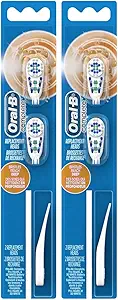
Troubleshooting & Analysis
The click is the first thing you notice — and it's not quite the OEM click
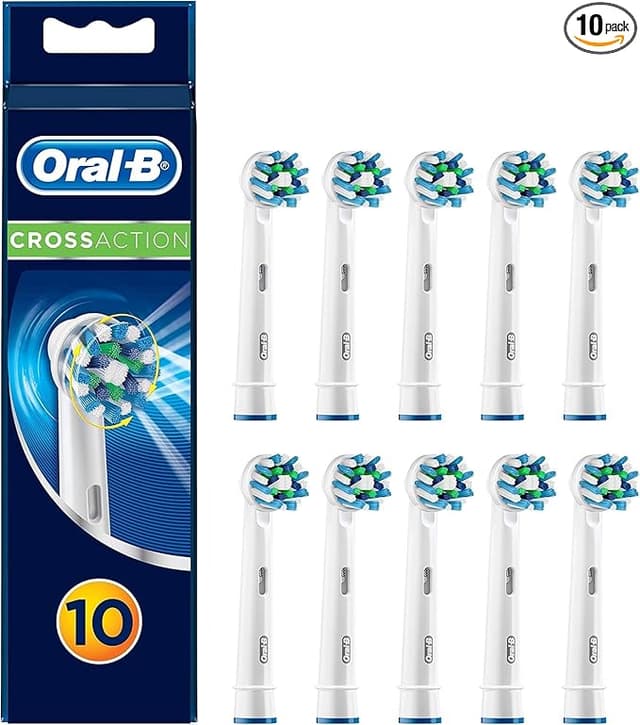
I pushed the new head onto the metal shaft, felt it slide down, and waited for that solid snk the genuine Oral-B heads make when they seat. What I got was a slightly softer click. A little less authoritative. My first thought, honestly, was: here we go, twenty bucks wasted. So I stood there in the bathroom at eleven at night and tugged on the head to see if it would pop off. It didn't budge. I turned the handle on. No wobble, no rattle, no spray of water sideways. It just ran.
That's the whole story of compatible Oral-B brush heads in one moment. The fit is a hair different from the original, your gut tells you to worry, and then it does the job anyway. I've now run these through a couple of replacement cycles on my own handle, so let me walk you through what I actually found — the good, and the parts nobody mentions.
The price math, which is the entire reason you're here
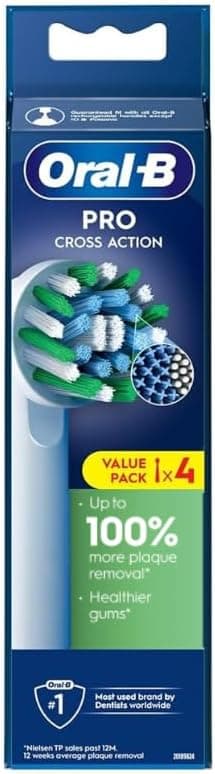
Genuine Oral-B brush heads cost real money. Depending on the line, a single authentic head runs somewhere around $9 to $10 when you buy them in the small packs, and a genuine 4-pack lands near $35 to $40. Since you're supposed to swap heads every three months, that's four heads a year — call it $35 to $40 annually just to keep bristles on your toothbrush.
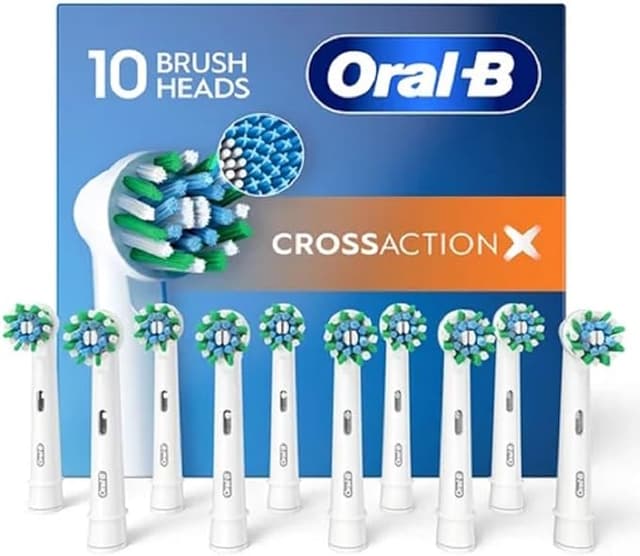
The compatible heads I've been using come in larger packs for around $20. That's roughly a year's worth of replacements — sometimes more, depending on the count — for less than the price of two genuine heads. Same swap interval, same shaft, same twice-a-day job. The savings aren't dramatic on any single head; it's the yearly total where it adds up. Over a few years, with two people in the house both brushing, the gap between OEM and compatible is real money you're handing over for, near as I can tell, mostly the brand stamp.
Fit and install: easier than you'd expect
If you've never changed an Oral-B head, it's almost insultingly simple, and the compatible ones don't change that. You pull the old head straight off the metal shaft — it just lifts away, no twisting, no buttons. Give the shaft a quick rinse under warm water, because gunk builds up at the base where the head meets the handle and you don't want to seal that in. Then you push the new head down until it clicks.
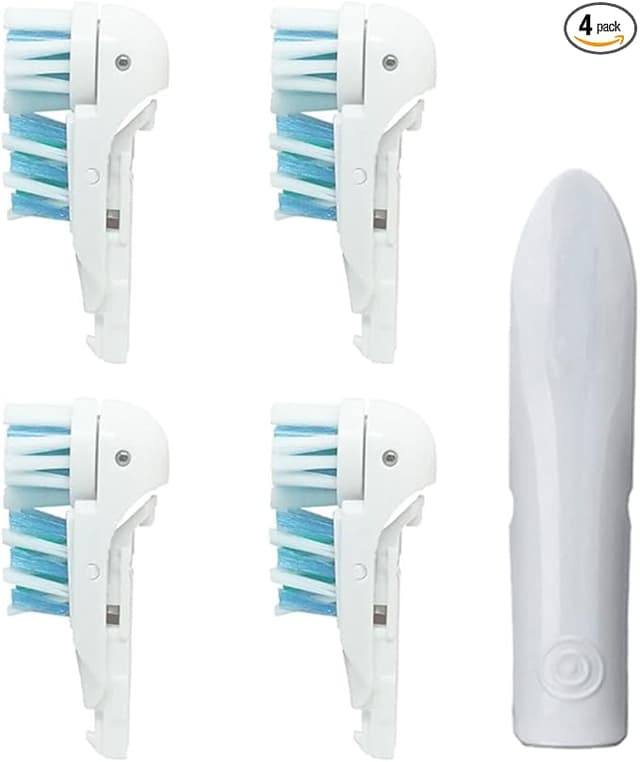
That's it. The compatible heads slide onto the same shaft the originals use, and I've never had one refuse to seat. The only thing I'll flag is what I mentioned up top: the click feels marginally less crisp than OEM, and on one head out of a multipack the fit was a touch looser than the rest — not loose enough to come off in use, but loose enough that I noticed it. I gave it a firm push, it seated, and it's been fine since. If you're the type who needs everything to feel factory-perfect, that small inconsistency will bug you. For me it was a shrug.
How they actually clean
The thing I cared about most was the bristles, because that's the only part that touches your teeth. These use DuPont bristles, and after a few weeks of normal use I genuinely can't tell the difference at the gum line. My teeth feel the same kind of clean they did on the genuine heads — that just-left-the-dentist smoothness when you run your tongue across them in the morning. The bristles hold their shape through the three-month window and fan out the same way the originals do as they wear, which is actually a useful signal that you're due for a swap.
Where I'll be straight with you: the bristle trimming is a notch less precise than OEM. On a genuine head the colored indicator bristles fade on a very predictable schedule. On the compatibles, the fade is there but a little less even — one side wore down slightly faster on a head I used hard. It cleans the same. It just doesn't look as engineered up close. If you actually watch the indicator to time your replacements, lean on the calendar instead. Three months. Mark it.
The downside nobody puts on the package
Here's the real one. The first day or two, a brand-new compatible head has a faint plastic taste. Not strong, not chemical-alarming, but it's there if you're paying attention — that fresh-out-of-the-bag smell, except now it's in your mouth at 7 a.m. It fades completely after a couple of brushings. I ran a new one under hot water for thirty seconds before first use and that cut it down a lot. By day three I'd forgotten about it entirely. But if you switch heads and that taste surprises you, that's what it is, and it's normal.
The packaging is also cheap. The genuine heads come in those little individual hygienic caps and a sturdy box; these come more bare-bones, sometimes loose in a bag. Functionally it doesn't matter — you rinse the head before first use anyway — but it's the kind of corner-cutting that makes you second-guess the purchase before you've even tried it. Don't let the packaging do your thinking. The part that matters is the bristle and the fit, and both held up.
Why a worn head is the actual risk
The genuine concern here isn't the compatible head — it's running any head too long. Dentists are blunt about this: once the bristles splay out and lose their spring, they stop sweeping plaque off the gum line, and an old head also harbors bacteria from months in a damp bathroom. A frayed brush is a brush that's quietly doing half its job. So the smartest money move isn't buying the most expensive head — it's actually replacing the cheap one on schedule. Compatible heads make that easy, because at this price you're not tempted to stretch a tired head an extra month to save a few bucks. You just swap it.
The verdict — who should skip these, and why I keep buying them
Buy genuine if you're under any kind of dental warranty or specific guidance that calls for OEM heads, or if that slightly-softer click and the uneven indicator fade will genuinely nag at you every morning. Some people want the factory part and want to stop thinking about it, and that's a fair reason to pay the premium.
For everyone else: a year's worth of heads for around $20 instead of $35 to $40, the same DuPont bristles, the same shaft fit, the same clean teeth — and the only costs are a two-day plastic taste and packaging you'll throw away anyway. I tugged on that first head expecting to be disappointed. Months later I'm still using these, still swapping them every three months, and I'd buy them again. I have, in fact. That's the most honest endorsement I've got.