Troubleshooting & Analysis
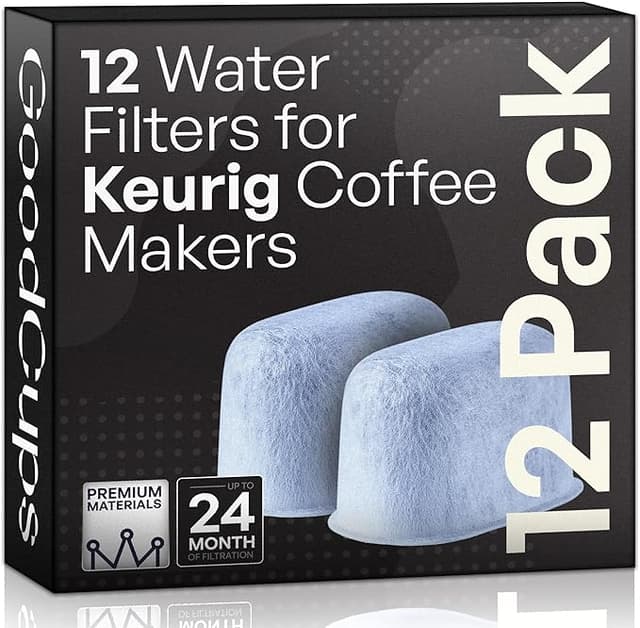
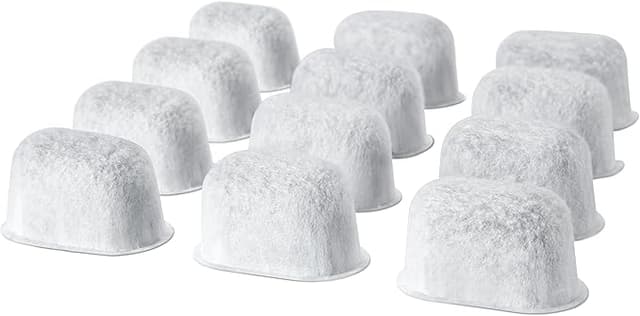
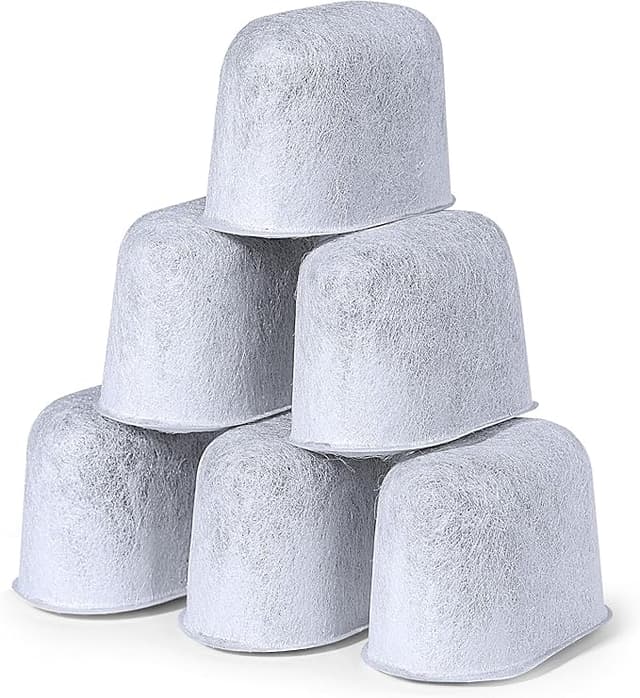
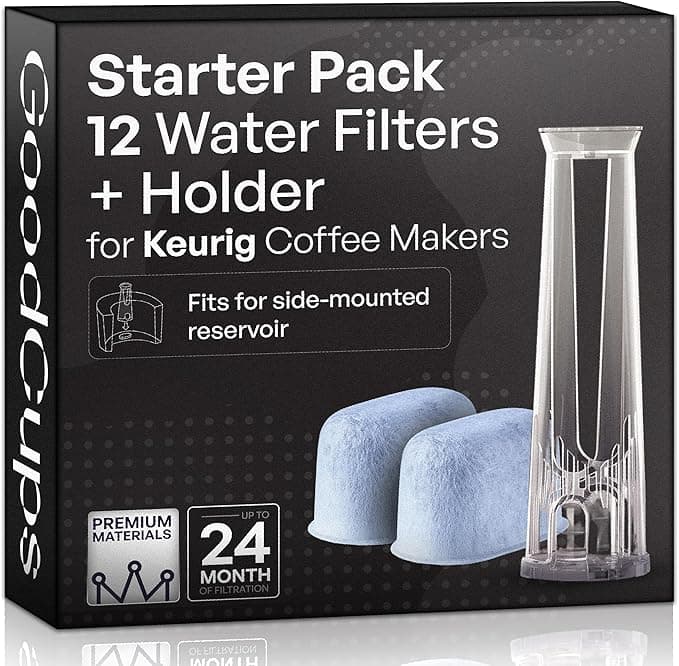
The first thing you notice is the smell of the water after it sits. I dropped one of these compatible charcoal pods into a glass to soak it — the instructions say five minutes, I gave it ten because I'm impatient and forgot it on the counter — and when I came back the carbon dust had settled into this faint gray cloud at the bottom. Rinsed it under the tap until the water ran clear, gave it a squeeze, and pushed it into the little white holder. There's a soft click when the cap seats. Not a loud one. More of a "yep, that's in" kind of click that you feel through your thumb more than hear.
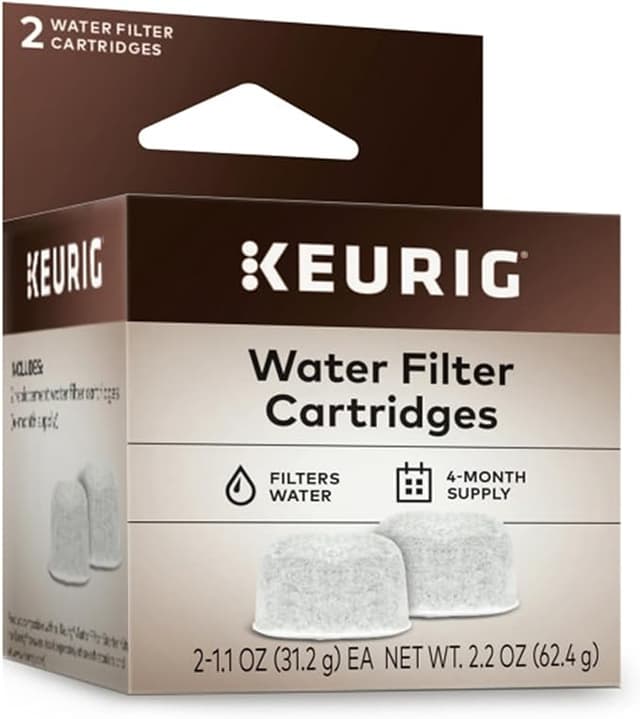
I've owned my K-Classic for going on four years. The original Keurig charcoal cartridges that came with it lasted exactly as long as Keurig wanted them to — which is to say I ran out, looked at the price of a replacement multipack, and felt that little flinch you get when a $40 machine wants you to keep feeding it.
The actual math, because that's why you're here
Here's the part nobody on the box wants to spell out. A genuine Keurig water filter refill 6-pack runs around $16 most places, sometimes creeping toward $18 when they're feeling brave. The compatible 6-pack I've been buying is about $9. So roughly $7 less for the same count.
That gap sounds small until you do the calendar. You're supposed to swap the charcoal every two months — that's six filters a year if you're honest about it, and most people aren't (more on that in a second). At OEM prices that's a full pack and change every year, call it $32. On the compatible ones it's about $18 for the same year of coffee. Eighteen bucks. To clean the water going into a machine that already cost you forty.
It is not life-changing money. I want to be straight with you about that. Nobody retires off filter savings. But it's the principle of the thing — I'm not paying a premium for the privilege of a logo stamped on a piece of charcoal foam.
Does it actually fit the K-Classic holder?
This was my worry too. The K-Classic's filter assembly is that two-piece deal — the mesh basket on the bottom, the cap on top, the little date dial you're supposed to set and then never look at again. Aftermarket pods are where fit usually goes sideways, and I've had compatible filters in other machines that were a hair too fat to seat.
These slot in fine. The diameter is right, the height is right, the cap snaps down without me having to muscle it. If I'm being picky — and you should want me to be picky — the foam collar sits a touch looser in the basket than the OEM did. Not loose enough to rattle or float, just loose enough that I noticed it the first time. Once the holder's assembled and dropped onto the post in the tank it's a non-issue. The water still has to pass through the charcoal to get anywhere.
Install in the reservoir is the same three seconds it's always been: push the holder onto the post at the bottom till it grabs, fill, brew. No new steps. Soak, insert, install, done.
How the coffee actually tastes
I live somewhere with hard-ish water, and that's the whole reason this filter exists — to pull the chlorine bite and the mineral funk out before it ever hits the pod. With a fresh compatible cartridge in, my morning cup tastes clean. No pool-water chlorine note, no flat mineral aftertaste. Same as the day I bought the machine.
Is it identical to OEM? Honestly, in a blind cup, I couldn't tell you which filter the water went through. Charcoal is charcoal. What it's doing — grabbing chlorine, catching sediment, knocking down the stuff that makes coffee taste like the inside of a kettle — it does that just as well as the Keurig-branded one did. I went looking for a difference and didn't find one in the cup.
The downsides — and there are a couple of real ones
First: the break-in. For the first day or two after I install a fresh one, there's a whisper of that new-carbon taste — slightly flat, a little "off," the way water tastes out of a brand-new Brita. It's the filter shedding its initial dust even after you've rinsed it. By day three it's gone completely. But that first morning cup on a new filter? I notice it. If you've got a sensitive palate, run a plain hot-water cycle through the machine before your first real brew and you'll skip most of it.
Second, and this is the one that actually matters: the packaging is cheap, and there's no date marking on the pod itself. The genuine refills came stamped; these show up in a plain bag and it's on you to remember when you put one in. I started writing the install date on a strip of masking tape stuck to the back of the reservoir, because I will absolutely forget otherwise — and a filter you forget about is the whole problem.
Because here's what a lot of people get wrong, OEM or not: they install a filter and leave it in for a year. Don't. A charcoal cartridge that's past its life stops adsorbing and starts being a wet sponge holding everything it already caught — and now that's steeping in your water supply, plus the scale it was supposed to help hold back is building up inside the brewer. Scale is the number one thing that kills these machines. A dead filter isn't neutral. It's worse than no filter at all. Two months. Set a reminder on your phone if the masking tape feels like too much.
Who should skip these
If you genuinely can't stand even a trace of break-in taste and you won't bother with a pre-rinse cycle, the OEM might hand you a marginally cleaner first cup right out of the gate. Marginally. And if your tap water is already soft and tastes great, you may not need a charcoal filter at all — branded or off-brand.
But for everyone else with a K-Classic and water that tastes like water from a pipe? I've run these compatible cartridges through mine for the better part of a year now. Same clean coffee, a holder that seats right, and about $7 a pack back in my pocket every time I restock. The collar's a hair looser and you have to track your own swap dates — fine, I can live with both. For the money, doing the exact same job, I'd buy them again. And I have, twice now.