Troubleshooting & Analysis
The aisle moment, two boxes, one dollar gap that didn't make sense
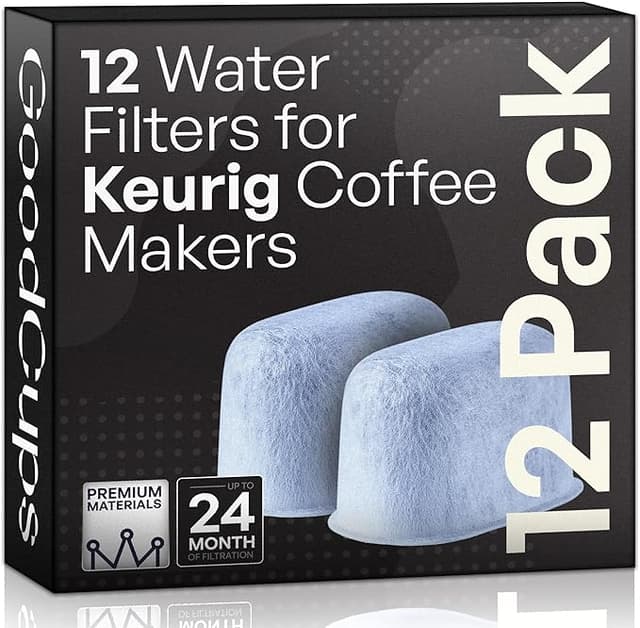
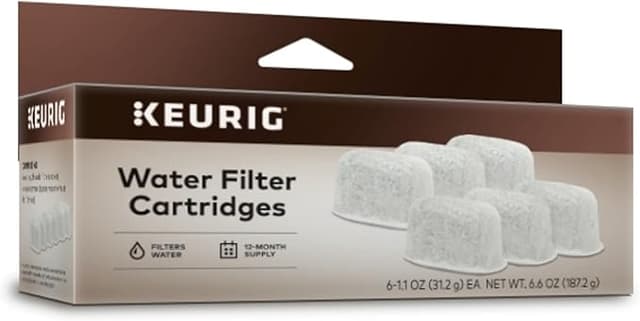
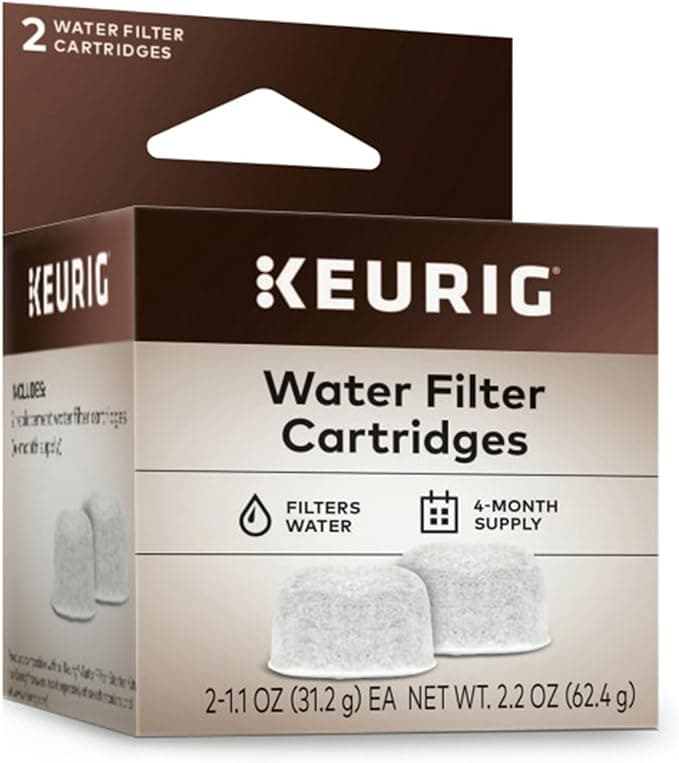
I was standing in the coffee aisle holding two little boxes of Keurig charcoal water filters and feeling kind of stupid about how long it was taking me to decide. One was the Keurig-branded refill pack — six of those small mesh pucks for about $16. The other was a compatible 12-pack from a brand I'd never heard of, $13 for twice as many. Same charcoal, same job, half the per-filter cost. And I just stood there, because the back of my brain kept whispering the thing it always whispers: it's your machine, don't cheap out on the part that touches the water.
I bought the compatible ones. I've now run them in my Keurig for the better part of a year. So here's the honest rundown — fit, taste, the stuff that actually annoyed me — because I went looking for exactly this kind of writeup that day and couldn't find one that wasn't either a spec dump or a sales pitch.
The money, laid out plainly
This is the whole reason anyone's reading, so let me not bury it. Keurig says swap the charcoal filter every two months. That's six cartridges a year. With the OEM refills at roughly $2.60 a piece, you're spending about $16 a year just on the little carbon puck. The compatible pack I grabbed worked out to a hair over $1 each — call it $7 a year for the same six swaps. Not life-changing money. But it's a $9 gap, every year, on a part that dissolves into the same tap water either way. Over the five or six years a Keurig usually lasts, that's fifty-something bucks I'd rather keep.
And honestly the savings argument only lands if the cheap one actually works. So let's get into whether it does.
Fit and install — does the puck actually seat?
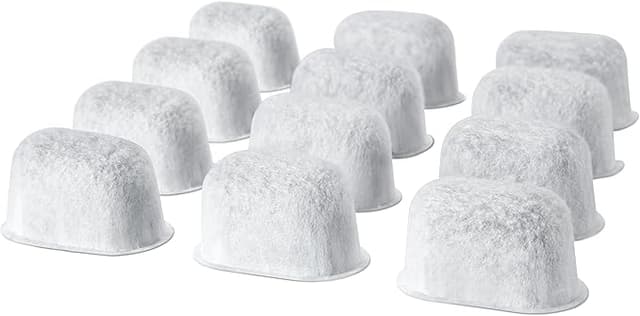
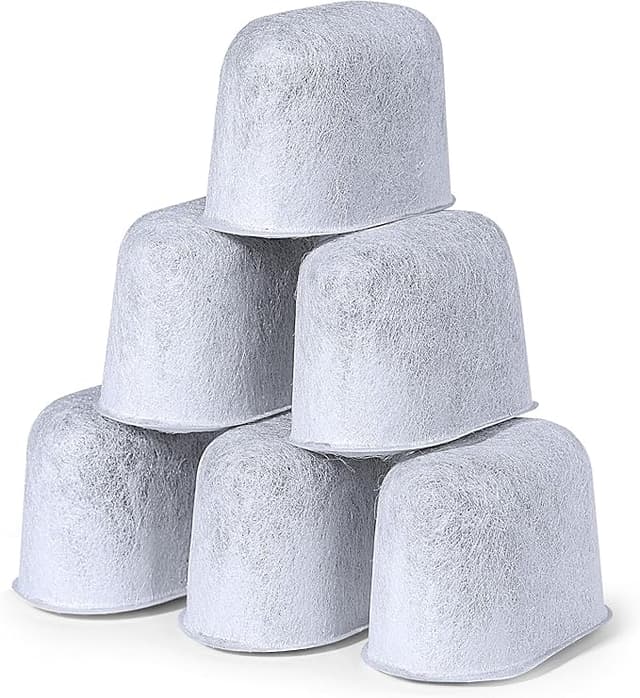
The install is dead simple and the compatible filter didn't make it harder. You soak the cartridge in water for about five minutes first — this matters, don't skip it, the dry carbon needs to wet through or it floats and channels. Then it snaps into the little filter holder, the holder clips down into the bottom of the water tank, and that's it. On my unit there's a faint click when the holder seats, and the compatible cartridge clicked the same as the Keurig one did. No wobble in the basket. The mesh diameter matched the holder; I didn't have to shave anything or wedge it.
One small thing I'll flag: out of the 12-pack, one cartridge had a slightly proud seam on the plastic rim — not enough to stop it seating, but I noticed it going in. The Keurig-branded ones were a touch more uniform box to box. If a perfectly molded little puck matters to you, that's a real difference. To me it mattered for about four seconds.
How it actually brews — the taste test I didn't expect to care about
I live somewhere with hard, slightly chlorine-y tap water, so the charcoal filter is doing real work in my house, not just sitting there for show. The point of the carbon is to pull chlorine and the off-flavors that come with it before the water ever hits the K-cup. With the OEM filter my morning cup tastes clean — no pool-water edge, no metallic aftertaste on the back of the tongue.
The compatible filter does the same thing. First cup off a fresh one tasted clean, chlorine bite gone, coffee tasting like coffee. I did a side-by-side the first week — brewed the same dark roast pod twice, once with the tank running the Keurig filter and once with the compatible — and asked my partner to call it blind. She couldn't. Neither could I, honestly.
Where I'll give OEM a slight edge: longevity at the tail end of the two-month window. By about week seven, my compatible filter felt like it was fading a touch faster — the last week or so, a very faint flatness crept back into the water if I really hunted for it. The Keurig one seemed to hold its punch a day or two longer. We're talking the very edge of a two-month cycle, the part you're supposed to replace anyway. But it's real and I'd rather tell you than pretend the cheap one is identical down to the molecule.
The genuine downsides — more than one
Two things you should actually know before you buy.
First, the break-in. The first cartridge I dropped in threw a faint plastic-y smell for the first two or three days — I caught it leaning over the open tank, not in the coffee, but it was there. It went away. The fix is to do that five-minute soak properly and then run a couple of water-only brew cycles through the machine before you trust your first real cup. After that flush it was gone and never came back on later cartridges. Cheap packaging probably; the box these came in is flimsy and the cartridges aren't individually sealed the way the branded ones are, so they sit a little more exposed in the drawer.
Second — and this is the one that actually matters — a charcoal filter you forget about is worse than no filter. People treat these as fit-and-forget, and they're not. A saturated, neglected cartridge stops adsorbing and just sits in warm standing water being a sponge for exactly the gunk you didn't want. That's not a compatible-vs-OEM problem, it's a did you actually swap it problem, and the cheap multipack quietly fixes it: when refills cost a buck instead of three, I actually change mine on schedule instead of stretching a $2.60 cartridge to four months out of guilt. The bigger danger to a Keurig isn't an off-brand puck anyway — it's scale building up inside from water you never bothered to filter or descale. A working filter, whoever made it, is what protects the machine.
So who should skip the compatible one?
If you're still inside your Keurig's warranty and you're the type who'd lose sleep over whether an off-brand part could ever be blamed for a problem — buy the branded refills, pay the extra nine bucks a year, sleep fine. That's a legitimate reason and I won't talk you out of it. Same if your water is already soft and clean and the filter is more habit than necessity; the marginal difference shrinks to nothing and you might as well grab whatever.
For everyone else — me included — the compatible charcoal filter does the job the OEM one does. It seats the same, it pulls the chlorine the same, it survives the two-month cycle with only a faint fade at the very end. You eat a couple days of plastic smell up front and a flimsier box. In exchange you pay roughly a third of the price and you actually swap on schedule because it stops feeling expensive. I've reordered the same compatible pack twice now. That's the most honest endorsement I've got: I had the choice again, knew the tradeoffs, and bought the cheap one on purpose.