Troubleshooting & Analysis
Standing in the coffee aisle doing dumb math
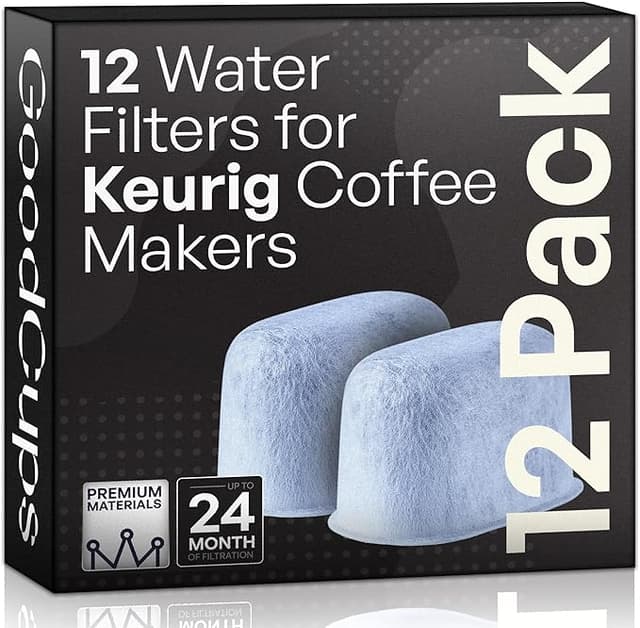
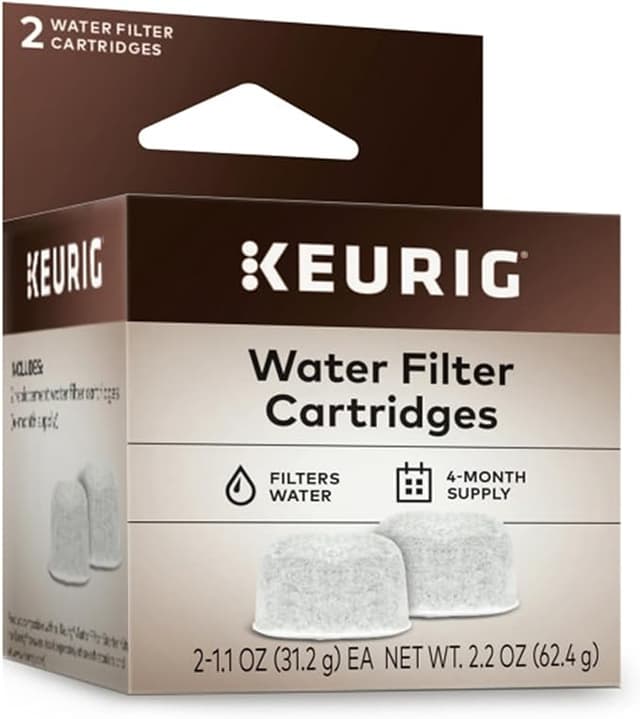
There I was, holding two little boxes of charcoal water filter discs for my K-Classic, and honestly I felt ridiculous. One was the Keurig-branded refill pack — six pucks for about $16. The other was a compatible set, twelve pucks, for $12. Same job. Same little gray discs that snap into the same plastic holder in the water reservoir. And I stood there long enough that a guy reaching past me for the K-Cups gave me a look.
So I bought the cheap one. Not because I trusted it — I didn't, not yet — but because the worst case was twelve bucks and a slightly worse cup of coffee, and the math was just too lopsided to ignore. That was about seven months ago. I'm on my fourth disc now. Here's what I actually learned running these in a daily-driver K-Classic that brews two or three times a morning.
The price gap is bigger than it looks on the shelf
People look at $16 vs $12 and shrug. Four dollars, who cares. But that's not the real comparison, because the pucks aren't the same count. The Keurig pack gave me six. The compatible pack gave me twelve for less money. You're supposed to swap the charcoal disc every two months, so a six-pack is a year of filtering and a twelve-pack is two years.
Run the annual number: OEM is roughly $16 a year. The compatible set works out to about $6 a year for the same swap schedule. That's not a rounding error. Over the life of a K-Classic — and these machines run for years if you treat the water right — you're looking at the difference between filtering your coffee for the cost of a sandwich versus the cost of nothing. I wish I'd switched sooner.
Do they actually fit, or do you fight them?
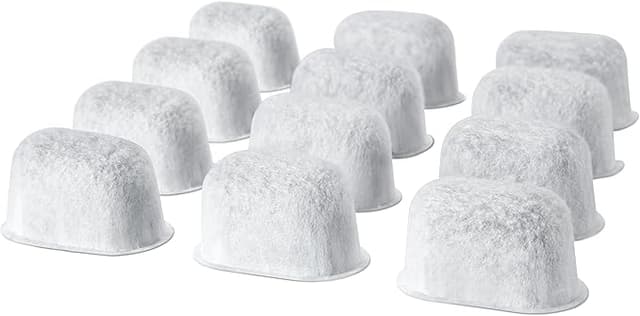
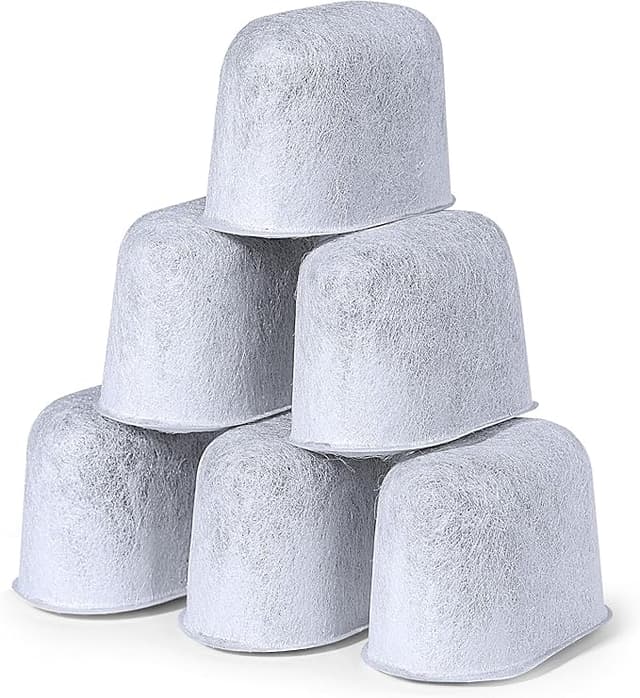
This was my real worry. A disc that's a half-millimeter too wide won't seat, and then you've got a filter rattling loose in the tank doing nothing. The compatible pucks dropped into the holder clean. No shaving, no forcing, no popping them in at an angle and praying.
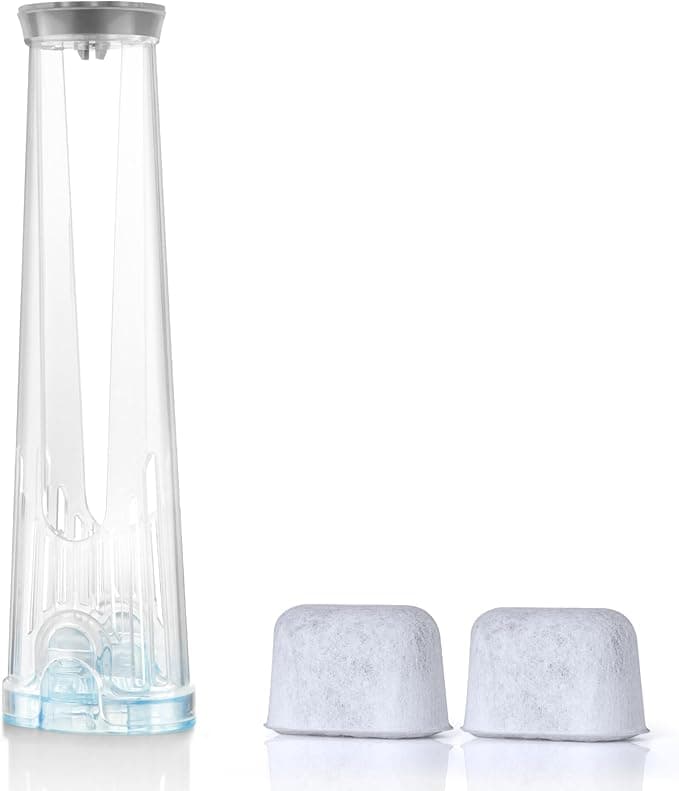
The install is the same ritual you already know, so I'll just confirm the steps held up as described: you soak the disc in a cup of water for about five minutes first — and do not skip this, a dry charcoal puck floats and clogs weird — then it presses into the filter holder, and the holder clips back into the bottom of the water tank. The disc sat flush. The holder clicked home the way it's supposed to. I've reseated it maybe a dozen times now pulling the tank to refill it, and it's never once felt loose or wrong.
One genuinely small fit note: the very first puck of the batch was a hair tighter going into the holder than the OEM ones I'd used before. Not a problem — it went in — but I noticed the friction. By the second disc I didn't notice anything. Could've been that one disc. I'm telling you anyway because that's the kind of thing the spotless reviews leave out.
How it actually performs against the real thing
The whole point of this charcoal puck is taste and scale. My tap water is mediocre — there's a faint chlorine note if I drink it straight — and the job of the filter is to pull that out before it ends up in the brew. With a fresh OEM disc, the coffee tastes clean. With a fresh compatible disc, the coffee also tastes clean. I did a side-by-side over two mornings, same beans, same K-Cup brand, and I could not honestly tell you which cup came from which filter. If there's a difference, it's smaller than my own palate.
Where I'll be straight with you: I think the OEM disc holds its performance a touch longer into the back half of its two-month life. Around week six, the compatible puck felt like it was fading a little — the water out of the tank had the faintest flat edge to it if I really hunted for it. Honestly it might be in my head. But if I'm being a skeptic about my own purchase, that's the one place I'd give OEM a nod. The fix is dumb and cheap: I've got twelve discs, so I just swap a week early. I can afford to be generous when the pack costs six bucks a year.
The downside nobody markets
The packaging is cheap. Thin plastic clamshell, no individual wrapping on the discs, and the printing on mine was slightly off-register. It doesn't affect the filter — it's a lump of charcoal, not a phone — but if you're someone who reads "premium" off the box, you won't get that feeling here. You're paying for the puck, not the presentation.
Second, and more real: the first disc out of a fresh pack had a faint carbon smell when I unwrapped it. Not chemical, not gross — just that dusty charcoal smell. The five-minute soak handles it, and a single throwaway brew cycle through the machine clears anything left. But if you install one dry and brew immediately, your first cup might carry a whisper of that. Soak it. That's the whole trick.
And look — this is the part that actually matters and gets buried. The reason you run any filter at all isn't really the taste. It's scale. Mineral buildup is what kills these machines; the heating element and the lines crust over and one day the thing just brews lukewarm and dies. A saturated, neglected filter is worse than no filter because it stops doing its job while you assume it's still working. So whichever disc you buy, the cardinal sin is leaving the same one in for six months. The compatible pack makes the right behavior — swapping on schedule — the cheap behavior, and that's the actual argument for it.
Who should skip these, and what I do
If you've got the kind of brand loyalty where an off-register box genuinely bothers you, or you want the absolute most consistent filtration through the entire two months without thinking about it, buy the Keurig discs. Sixteen bucks a year is not a hardship and there's nothing wrong with the OEM puck. No shame in it.
But me? I keep buying the compatible twelve-pack. It fits my K-Classic without a fight, it pulls the chlorine out so the coffee tastes like coffee, it protects the machine from scale exactly like it's supposed to, and it costs roughly a third of OEM per year. The downsides are a cheap box and a charcoal smell that a five-minute soak erases. For everything I actually care about — the cup in my hand and the machine still running — it's done the same job for seven months. I'd buy it again. I already did.