Troubleshooting & Analysis
Forty-eight bucks a year to filter your coffee water. Or twelve.
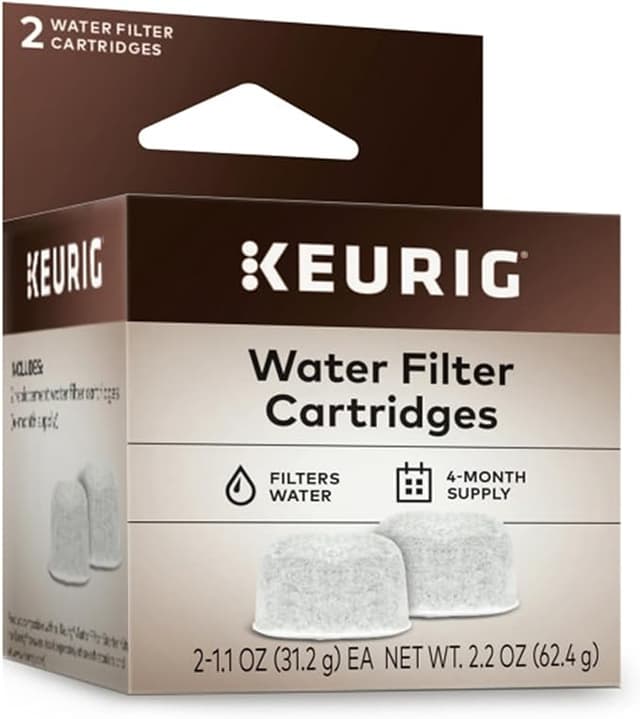
That was the number that stopped me. I'd been buying Keurig's own charcoal water filter refills for my K-Classic for two years without thinking about it — grab the little box, drop it in the cart, move on. Then one morning I actually did the math while the machine spat out my cup. Keurig wants you swapping that filter every two months. Their refill packs run me around $15 for six, sure, but with how I burn through them, plus the puck holder cartridge replacements, I was bleeding close to $48 a year on a piece of charcoal the size of my thumb.
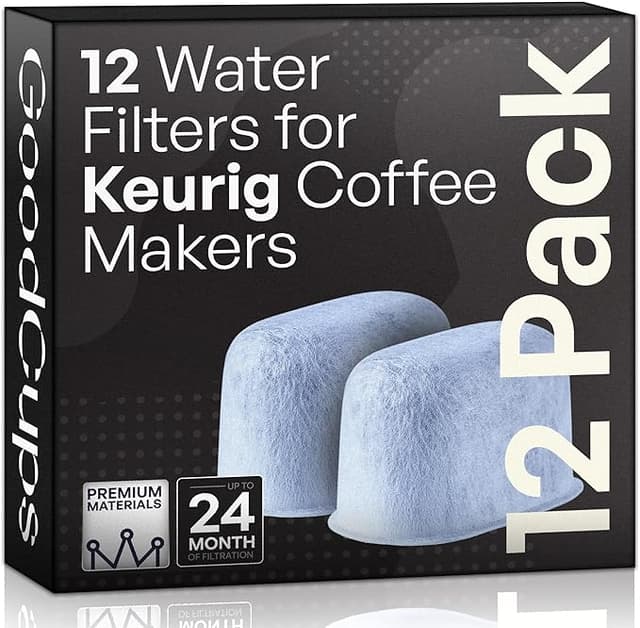
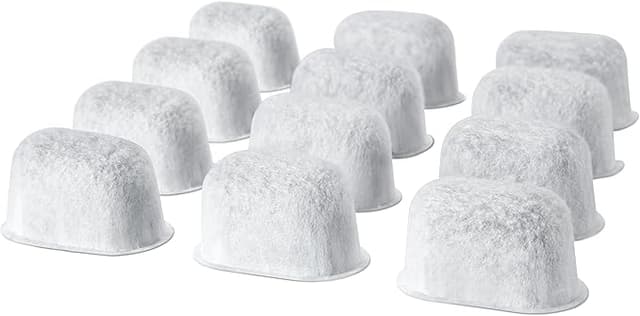
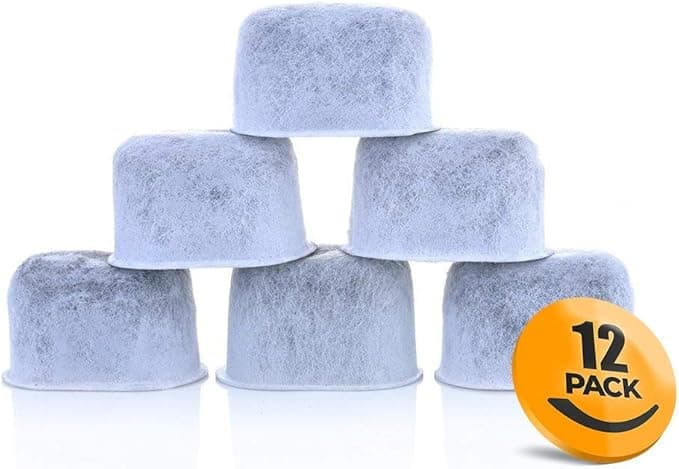
The compatible 12-pack I switched to? About $13. That's roughly a buck a filter against Keurig's two-and-a-half, and it covers me for a full year instead of half of one. Same gritty black charcoal beads inside. Same job: pull the chlorine taste and the scale-causing minerals out of your tank water before they ever touch the brew. I stared at that gap — call it a $35 swing every single year — and felt a little dumb for not checking sooner.
I didn't trust it either, at first
Cheap third-party stuff for a machine you paid real money for makes you nervous. I get it. The K-Classic isn't a $400 espresso rig, but it's still the thing that makes mornings tolerable, and the whole reason you run a water filter is to keep scale from killing it. Scale buildup is the number one thing that turns these machines into paperweights — the heater clogs, the pump strains, and one day it just sighs and quits mid-brew. So if a knockoff filter doesn't actually filter, you're not saving money. You're feeding the exact problem you were trying to prevent.
So I ran a real test. I kept one of my old Keurig-branded filters in rotation in my kitchen unit and put the compatible one in the identical K-Classic at my office. Same tap water source — I literally hauled a jug from home so the input was the same. Four months. Two filters each, swapped on schedule.
Honestly? I couldn't taste a difference in the cup. Both pulled that faint pool-water chlorine edge off the water. Both machines stayed clean inside when I descaled at the four-month mark — no extra crust on the compatible side, no funky mineral ring. The charcoal in these compatible cartridges does what charcoal does. It's not magic and it's not proprietary. Keurig isn't packing some secret media in there.
Fit and install — the one spot you fiddle
The install is the same dance either way, and there's a small trick. You soak the new filter disc in water for about five minutes first — don't skip this, dry charcoal floats and traps air, and you'll get bubbles in your reservoir for days. Then it snaps into the little filter holder cage, and that whole assembly drops down the post inside your water tank. On my OEM filters the disc seats with a clean, slightly satisfying click.
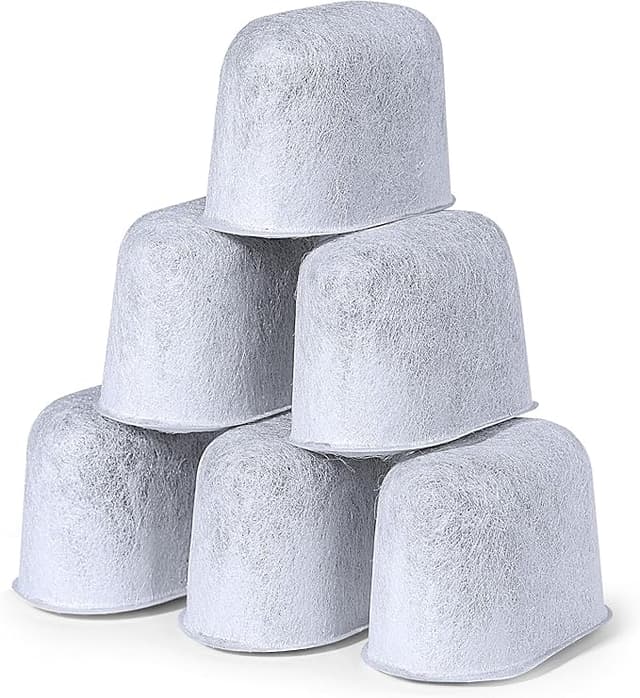
The compatible discs — here's my real gripe, I'll get to it — sit a hair looser in the holder. The molding tolerance just isn't as tight. On one out of the dozen I've installed, I had to give it a second push to feel it actually seat instead of resting crooked. Once it's down in the tank and the cage is clipped, it holds fine. Water still flows through the media, not around it. But that first seat takes an extra second of attention compared to Keurig's, where it just goes thunk and you're done.
The downsides, for real
I told you I'd give you at least one honest knock, so here are a few, because a review that's all sunshine is a review you shouldn't believe.
First, that looser fit. It's minor and it's never caused a leak or a bypass in my testing, but if you're someone who hates anything that doesn't snap perfectly, it'll bug you. The plastic of the holder clips on some compatible sets feels thinner too — I've cracked exactly one clip by being impatient and forcing it. Be gentle and it's a non-issue.
Second, the break-in. The first pot or two after installing a fresh compatible disc, even after soaking, I got a whisper of that new-charcoal flatness — not bad, not plastic-tasting, just slightly muted before the media settled in. By cup three it was gone. The Keurig ones do this a little too, but I'd say the compatible ones take maybe one extra brew to fully wake up.
Third, the packaging is nothing. A flimsy plastic bag, a single folded slip of instructions, no resealable anything. With Keurig you at least get a tidy box. If you care about the unboxing, this is not that. I throw mine in a drawer with a rubber band and don't think about it, but it's worth saying out loud.
Who should just buy the Keurig one
If you've got hard, heavily mineralized well water, I'd actually lean you toward replacing more often regardless of brand — and at that point the convenience of grabbing Keurig's own refills at the same store you buy your pods might be worth the premium to you. Some people also just don't want to think about whether a part is "official," and there's nothing wrong with paying for that certainty. If a few bucks of doubt would nag at you every morning, buy the brand. Your coffee should make you calmer, not anxious.
What I actually do
Me, I grab the compatible 12-pack. I've descaled my machine on schedule, watched the inside stay clean, tasted the water side by side, and run it for months across two units. The charcoal filters the same impurities, protects the machine from the same scale, and costs me roughly a third of what the branded refills do. That $35-a-year gap isn't life-changing money, but it's real, it's recurring, and I get nothing extra for paying it except a slightly nicer click on install.
Soak it five minutes, push it down till it seats, swap it every two months, and your K-Classic won't know the difference. Mine doesn't. I've bought these three times now, and I'll buy them again the next time the drawer runs dry.