Troubleshooting & Analysis
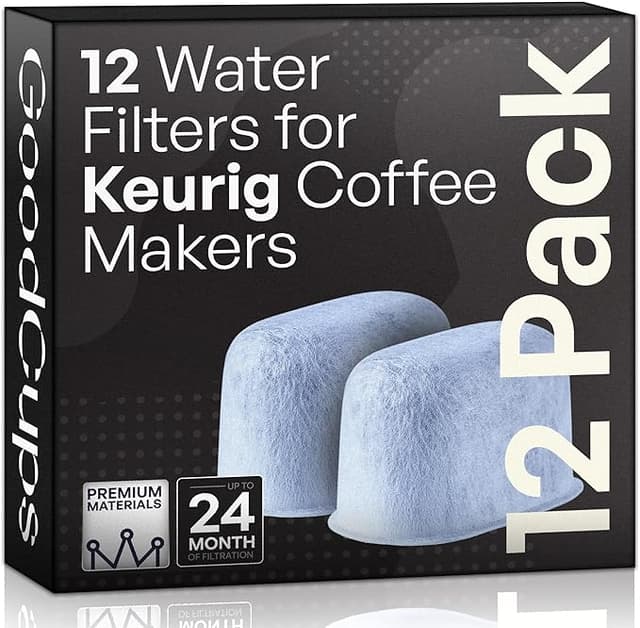
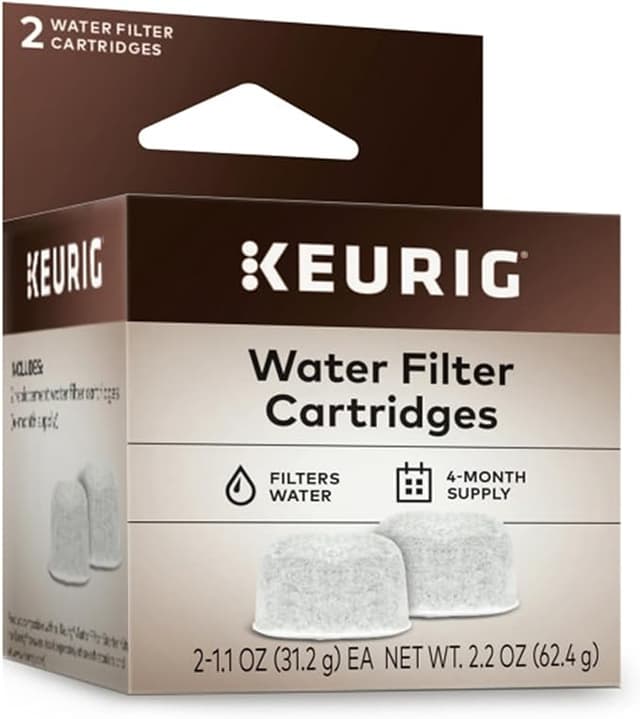
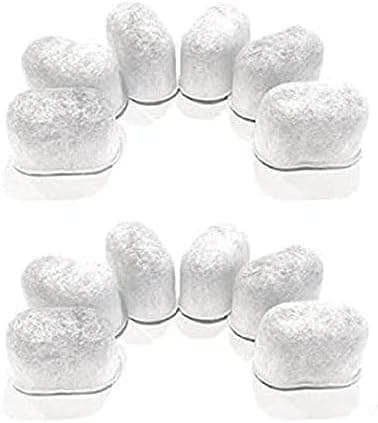
The first thing I noticed wasn't the taste. It was the click. That little plastic snap when the new charcoal puck seats down into the filter holder and the holder drops back into the K-CLASSIC's water tank — OEM Keurig refills make that exact same click, and the compatible one I'd ordered did too. I'll be honest, I was standing at my kitchen counter half-expecting it to wobble or sit a millimeter proud so the tank lid wouldn't close. It didn't. It sat flush. Lid closed. And right then, before I'd even brewed a cup, about eighty percent of my "did I just waste money on the cheap one" worry evaporated.
Here's where I was coming from. I'd been buying Keurig's own charcoal water filter refills for years — the six-pack runs around $16 most places, and you're supposed to swap the filter every two months. Do that math out and a year of genuine refills is roughly $32 if you stay disciplined (I never do; more on that later). The compatible pack I grabbed was about $9 for six. Same form factor, same little mesh cartridge full of activated charcoal, same two-month interval printed on the package. So we're talking a real-world gap of maybe $20-something a year. Not life-changing money. But it's coffee-machine money, and it's the kind of small recurring bleed that bugs me on principle.
What these little filters actually do
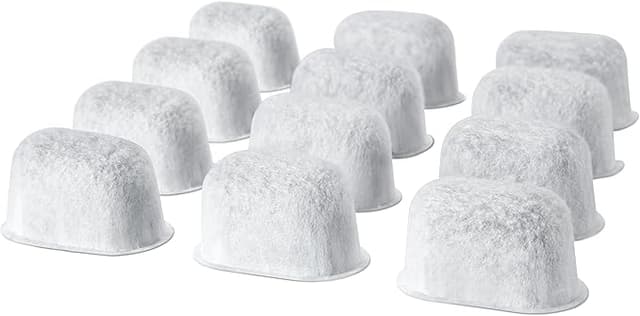
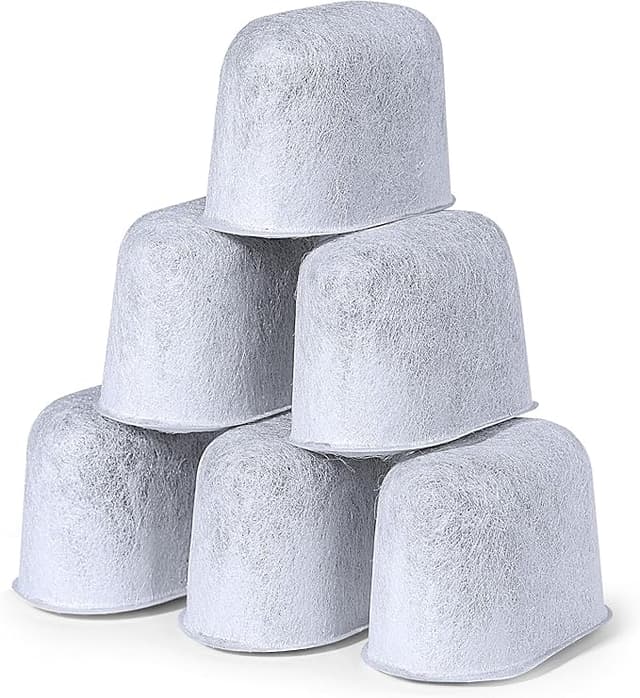
People get confused about this, so let me be clear about what you're buying. This isn't the thing that brews your coffee. It's a charcoal puck that lives in your water reservoir and scrubs chlorine and off-tastes out of your tap water before it ever gets heated. If your tap water tastes faintly of pool — that municipal chlorine bite — that's what this kills. And the quieter job, the one that actually matters for the life of the machine, is reducing the gunk that leads to scale building up inside. Scale is the slow killer of every Keurig I've ever owned. It clogs the needle, it makes the pump work harder, and one day the thing just gurgles and refuses to push a full cup. A working charcoal filter doesn't descale for you — you still need to run the vinegar or descaling solution every few months — but it cuts down what's feeding the problem.
The install, and the one thing nobody tells you
Soak it first. This is the step people skip and then come back online to complain that their water tastes like a campfire. Drop the new puck in a glass of water for five minutes before you install it. You'll actually see tiny dark specks and a little cloud come off the fresh charcoal — that's normal, that's just loose carbon dust, and the soak rinses most of it out. Then you push the puck into the holder, snap the holder into the tank, fill, and run one brew cycle with nothing in the K-cup chamber to flush it. After that, clean.
With this compatible set, I'll tell you the truth: my first cup after install had the faintest gray cast and a whisper of something I can only describe as "new aquarium." Not bad. Not undrinkable. But present. The genuine Keurig pucks have done this to me too on occasion, so I don't think it's a knock specific to the aftermarket one — but the cheap one did it a touch more noticeably. One extra flush cycle and it was gone completely. By cup three I could not have told you, blind, which filter was in the machine.
Where the cheap one is honestly a little behind
The packaging is junk. A flimsy plastic sleeve, no individual wrapping on each puck, and the print quality looks like it was run off in a hurry. The genuine refills come in a tidier box with each filter sealed. Does that affect performance? No. Does it make you trust it less when you first open it? A little, yeah, I felt that.
The bigger real downside: the fit tolerance on the puck itself is a hair looser than OEM. When I pulled an old genuine filter and dropped this one in, the new puck had the tiniest bit more play inside its holder cage — it rattles just slightly if you shake the empty holder. Seated in the tank with water around it, it doesn't matter at all; it's held in place. But if you're the kind of person who notices that a part isn't machined to a perfect press-fit, you'll notice. I noticed. I also stopped caring within about a day because the water tasted right and the machine ran fine.
And the charcoal itself — I'd say it's maybe a half-step less aggressive at the very end of its life. With genuine pucks I can usually push past the two-month mark and the water still tastes okay if I'm lazy. With these, the chlorine bite started creeping back a few days earlier than I expected, closer to seven weeks in. So I'd actually hold the line on the two-month swap with these rather than stretching it. Given a six-pack costs about $9, that's a non-issue — you've got a full year of swaps for less than the price of two OEM refills.
The four-month gut check
I ran one of these in my K-CLASSIC for a full filter cycle and then descaled the machine right after, specifically to look at what came out. Nothing alarming. No more scale than I'd get with the genuine filter over the same stretch and the same hard-ish water I've got. The pump sounded the same. The brew temperature held. No clogged needle, no weak pours, no gurgle of death. For a part that costs roughly a third of OEM, doing the same quiet job, that's the whole ballgame.
Who should skip it
If you've got a Keurig still under warranty and you're the type who'd rather not give the manufacturer any excuse — buy the genuine refills, the extra $20 a year is cheap insurance for your peace of conscience. Same goes if you're hypersensitive to taste and that first-day break-in flush would nag at you every two months. For those folks, OEM, no argument.
For everyone else — for me — this is an easy call. The fit is right, the click is right, the water tastes clean once it's broken in, and the machine's no worse off after a full cycle. I paid about $9 instead of $16 for the same six swaps, and I'd do it again. I have done it again, twice now. Soak it, flush it, swap it on time, and the cheap one is just fine.