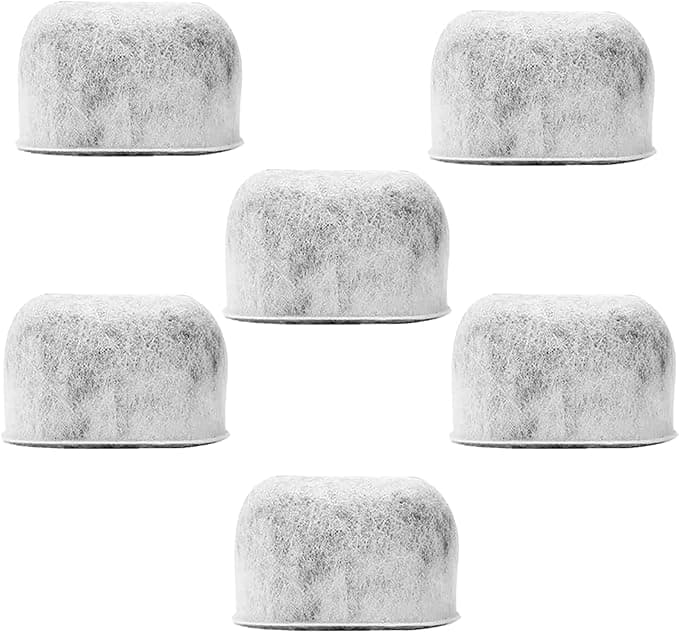
Troubleshooting & Analysis
I didn't believe a $14 filter could be fine either
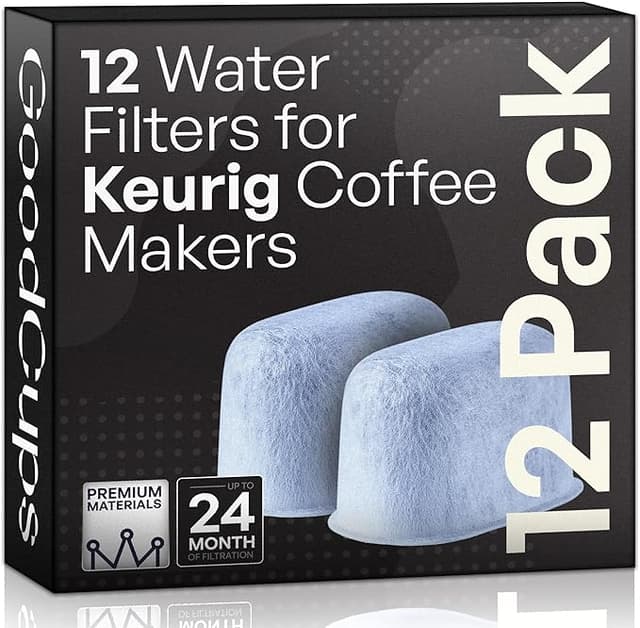
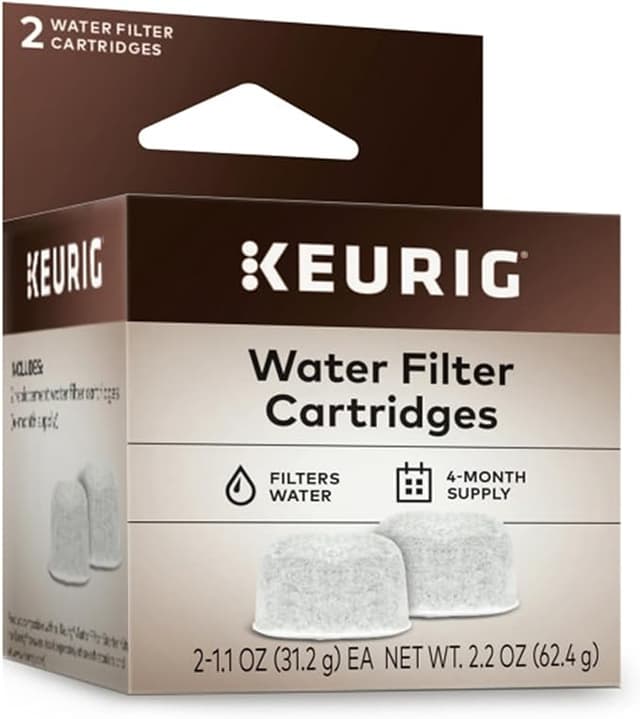
For about two years I bought the genuine Keurig charcoal cartridges without thinking twice. The little box with the Keurig logo, six puck-shaped filters inside, sitting next to the K-Cups at the grocery store. It felt like the safe choice — it's the brand, it's made for the machine, why risk anything else for a couple of dollars? Then one day I'm standing in the aisle and the OEM 6-pack is $16 and there's a no-name 12-pack of the same charcoal pucks for $14. Twice as many. Cheaper. And every cell in my body went: that's a trap. Cheap filter, ruined coffee, scaled-up machine, dead Keurig in eight months. No thanks.
I bought it anyway. Mostly out of spite, honestly — I wanted to prove to myself the cheap one was junk so I could go back to paying brand price and feel smart about it. That was over a year ago. I'm still using them. So let me tell you what actually happened, the good and the genuinely annoying.
The math that made me cave
Here's the thing nobody does the arithmetic on. Keurig says swap the water-reservoir filter every two months. That's six a year. With the OEM 6-pack at around $16, you're spending roughly $16 a year just on little charcoal discs — call it a clean $32 over two years. The compatible 12-pack I grabbed for $14 lasts me the full two years by itself. So I'm at about $7 a year against $16. It is not a fortune either way. But it's the same charcoal doing the same job, and I was paying double for a logo printed on the cardboard. Once I saw it written down like that, the brand loyalty just... evaporated.
And the consumable nature is the whole point. This isn't a one-time part you agonize over. You're buying these forever, as long as you own the machine. A small per-unit gap turns into real money across the life of the brewer.
Does it actually fit the holder?
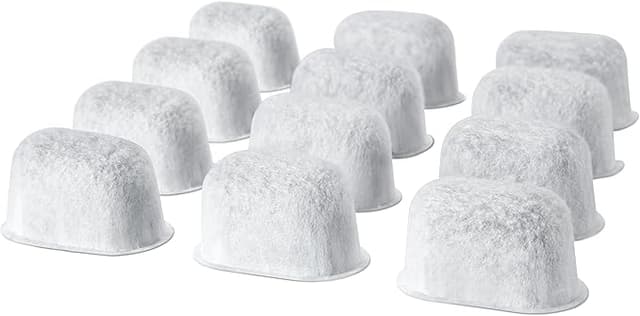
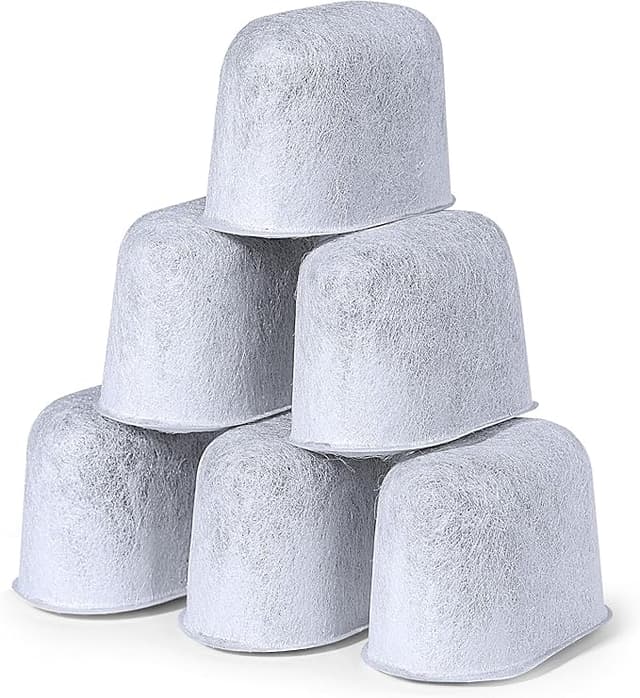
This was my first real test, because a water filter that doesn't seat right is worse than no filter. You soak the disc in water for five minutes first — don't skip this, dry charcoal floats and won't draw properly — then it snaps into that two-piece plastic holder, and the holder drops down into the reservoir. On my machine the compatible disc clicked into the cage exactly like the originals. Same diameter, same little notches. No shimming, no forcing.
I'll be straight with you on the one fit thing I noticed: the plastic of the disc housing on the off-brand ones is a touch thinner, a little more brittle-feeling than the OEM. When I pop a spent one out of the cage I'm slightly more careful, because it feels like it'd crack if I really torqued it. It never has. But it doesn't have that solid, slightly-overbuilt feel the genuine ones do. If you're rough with parts, just go gentle on the swap and you're fine.
The water, the coffee, and a faint new-plastic thing
Performance is where I expected to catch it failing, and mostly I didn't. The whole job of this filter is to pull chlorine and the funky tap-water taste out before the water hits the brew, and to slow down the scale that chews up these machines from the inside. My tap water has a noticeable chlorine bite straight from the faucet. With the compatible charcoal in the reservoir, that bite is gone from the cup. Coffee tastes clean. I did a side-by-side once — brewed a mug with the off-brand filter installed and one with the reservoir filter pulled out entirely — and the unfiltered cup had that flat, slightly pool-water edge. The filtered one didn't. So the charcoal is genuinely working.
Now the honest downside, and it's a real one. The first two or three days with a fresh compatible disc, there's a faint plastic-ish smell when you lift the reservoir lid. Not in the coffee, exactly — more around the tank. The OEM ones have it too but milder. What I do now is run one full reservoir of water through the machine and dump it before I brew anything I plan to drink, right after I install a fresh filter. That flushes whatever that break-in smell is, and by day three it's gone completely. It's a small ritual but I won't pretend it isn't there.
Where these are honestly a little behind
Two things, beyond the smell. First, that thinner housing I mentioned — it's a build-quality gap you can feel even if it's never caused me a failure. Second, the consistency across a pack isn't perfectly uniform. Out of my 12-pack, eleven were identical and one had a slightly loose seam on the cage. It still worked, it still seated, but the OEM batch I used before never had a single odd one. So you're trading a sliver of quality control for the price. With a charcoal water filter, where the disc is captured inside a holder and isn't under any pressure, I'm completely comfortable with that trade. If this were a high-pressure inline part I might feel differently. It isn't.
Why I don't let the filter slide past two months
Here's the part people skip and then wonder why their Keurig dies. A charcoal filter doesn't last forever — it saturates. Once it's full of the gunk it pulled out of your water, it stops pulling, and worse, scale starts building in the lines and the heating element. Scale is the number one killer of these machines. A $7-a-year filter is the cheapest insurance you'll ever buy against a $130 replacement brewer. So whether you go OEM or compatible, the real mistake is leaving the same disc in there for half a year. I write the install date on a sticky note on the side of my reservoir. Two months, swap it, soak the next one, done.
The verdict
Who should buy OEM? If you own a Keurig that's still under warranty and you're the type who wants zero variables if you ever need to make a warranty claim, pay the few extra dollars and keep it spotless. And if a slightly loose seam on one disc out of twelve would genuinely bother you, the brand consistency is better. That's a real reason, not a knock.
For everyone else — for me — the compatible charcoal filter does the exact same job. It seats right, it kills the chlorine taste, it holds back the scale, and it costs me about $7 a year instead of $16 for a part that lives hidden inside the water tank where nobody will ever see the logo. I bought it to prove it was junk. Instead I'm on my second pack and not going back. Soak it five minutes, snap it in, run one tank through to clear the break-in smell, and mark your calendar. That's the whole story.