Troubleshooting & Analysis
The first thing I noticed was the smell — and then the click
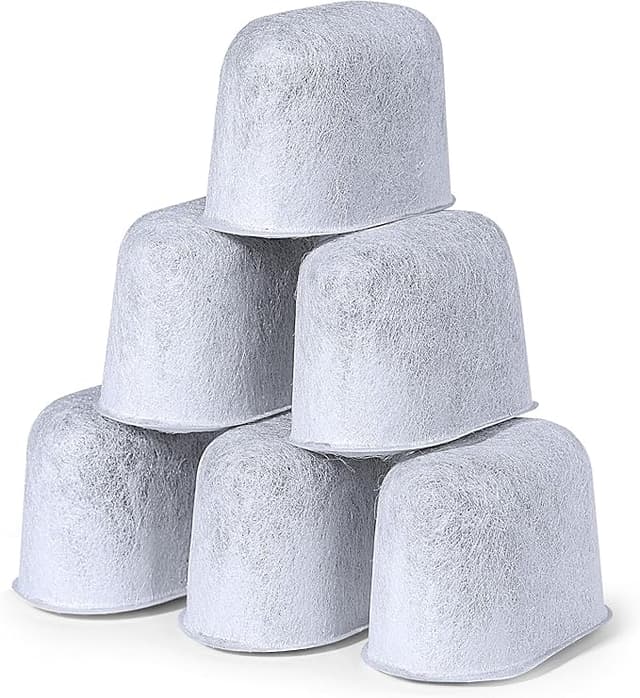
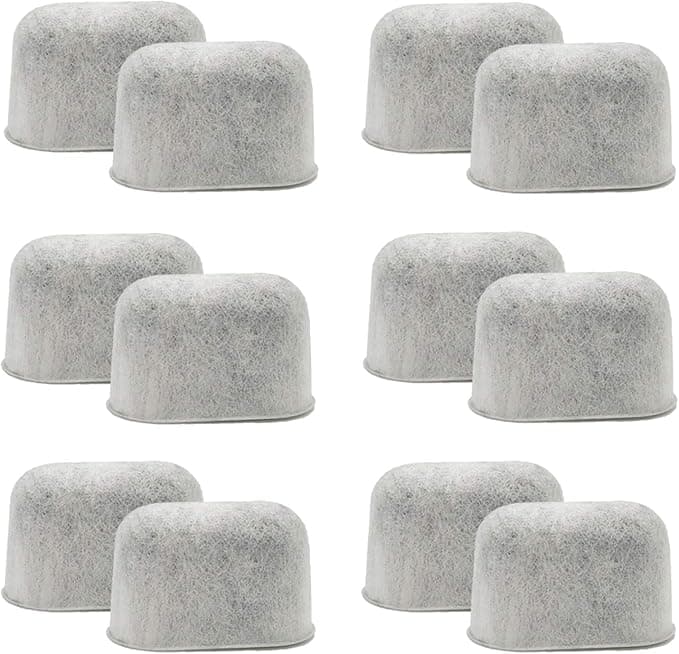
Pull a fresh charcoal cartridge out of the bag and the first thing that hits you is this faint, dusty carbon smell. Not bad. Just... there. Like the inside of a new Brita pitcher. I soaked my first compatible one for the five minutes the instructions tell you to, and the water in the cup went a little gray and cloudy at first — loose carbon fines rinsing out. That freaked me out the first time. It shouldn't. That's normal for any charcoal filter, OEM or not. A quick rinse under the tap and it ran clear.
Then comes the part I actually cared about: does it seat right in the holder? Because a coffee filter that doesn't click into the little frame in the reservoir is useless — it'll just float around or let water bypass it. I pressed it into the holder, snapped the cage shut, and got that satisfying little click. Dropped the whole assembly into the water tank. It sat exactly where the OEM one sat. No wobble, no gap. Honestly, if you handed me the machine a week later, I couldn't tell you which filter was in it by feel.
The price math is the whole reason I'm here
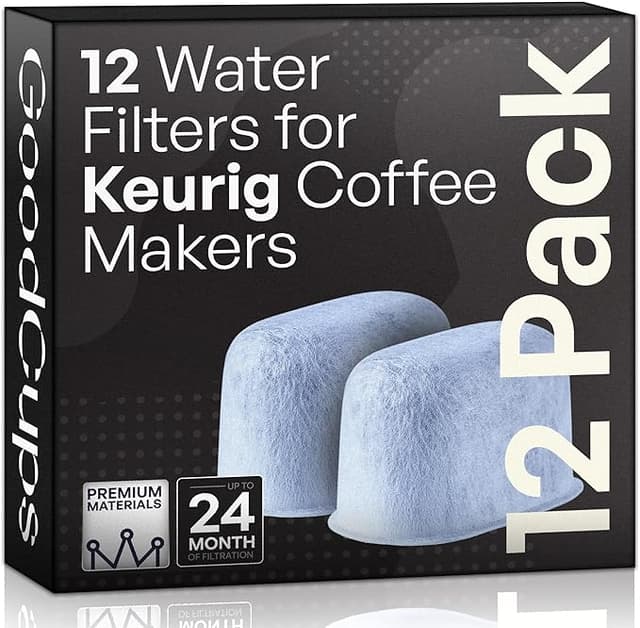
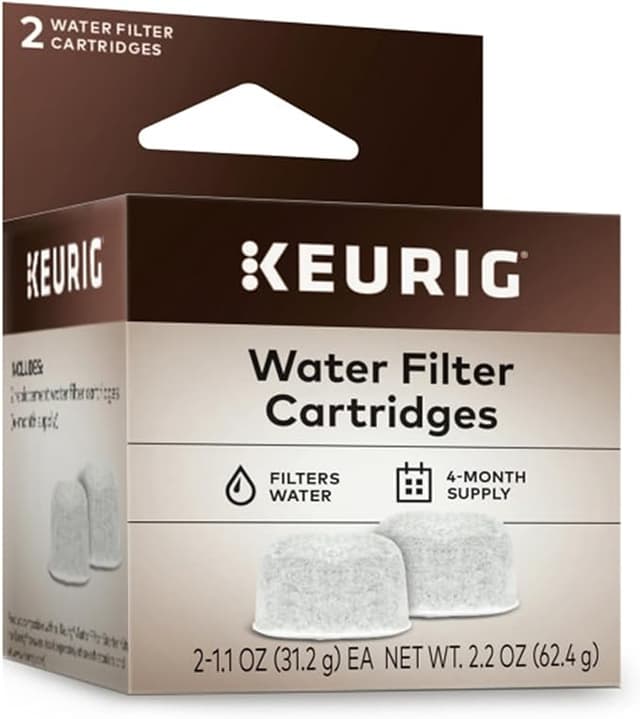
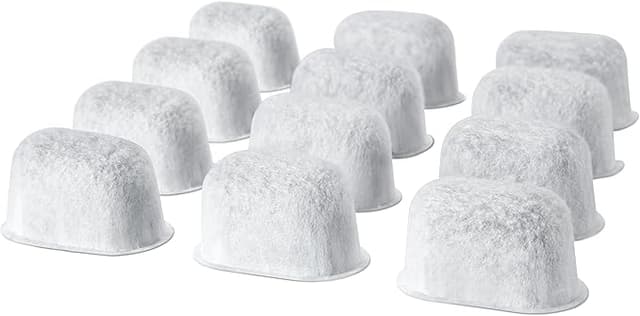
Here's what pushed me to try the cheap ones in the first place. Keurig's own branded water filter refills run about $15 for a six-pack — and you're supposed to swap the cartridge every two months. So one pack is a year of filtering, roughly, if you're diligent. That doesn't sound like much. But the compatible packs I've been buying come twelve to a box for around $13. Twelve cartridges. Two full years. For less than the price of Keurig's one-year pack.
Run that out: about $1.08 per cartridge compatible, versus roughly $2.50 a cartridge for the name-brand. On a single filter that's nothing — a buck and change. But I've got a machine that runs every single morning, and over a few years of swaps, the gap is real money for water that comes out tasting the same. That was the math that made me stop reflexively reaching for the Keurig box.
How it actually performs in the cup
I'm not going to pretend I ran lab tests. What I can tell you is what changed in my kitchen. My tap water is hard — I'm on a well-adjacent municipal line that leaves white crust on everything. Before I used any cartridge, my coffee had this faint mineral edge, and the inside of the reservoir would fuzz up with scale fast. With the charcoal cartridge in — compatible or OEM, didn't matter — that chlorine-y, slightly flat taste backs off and the coffee reads cleaner. Brighter, if that makes sense.
The thing these little carbon filters actually do well is knock down chlorine and the off-flavors that ride along with it. That's it, and that's enough — that's the part that ruins your coffee's taste. What they're not is a water softener. Don't expect a charcoal cartridge to stop scale buildup on its own; it reduces some of what feeds it, but you'll still need to descale the machine on schedule. Scale is the number one thing that kills these brewers, and no $1 filter is going to fully save you from that. The cartridge protects the taste. Your descaling routine protects the machine. Two different jobs.
Side by side over a couple of months, I genuinely could not taste a difference between the compatible cartridge and the Keurig-branded one. Same cleanup of the chlorine bite. Same neutral, slightly-better cup. If there's a performance penalty, it's below the threshold of my tongue, and I drink a lot of coffee.
The downsides — and there are real ones
Let me be straight about where the cheap ones come up short, because they do.
First, that initial carbon dust. The compatible packs I've used shed a little more loose carbon on the first soak than the Keurig-branded cartridge did. Not a lot — but if you skip the rinse-and-soak step and just jam one in dry, your first cup or two can taste faintly gritty and your reservoir water looks cloudy. The fix is just following the soak step honestly: five minutes in clean water, a swish, a rinse, then install. Skip it and you'll blame the filter for something that's really impatience.
Second, the build feels cheaper. The plastic mesh housing on the budget cartridges is a hair flimsier than OEM. The seam where the two halves meet on one of mine wasn't perfectly flush. It still clicked into the holder and sealed fine, but you can feel the cost-cutting in your fingers. The packaging is also bare-bones — a plain poly bag versus Keurig's printed box. None of that touches the water, but if you like a product that feels premium out of the wrapper, you won't get it here.
Third — and this is the honest one — quality control is a little less consistent batch to batch. Across two boxes, most cartridges were dead identical, but I had one with a slightly loose cap that I had to press firmly to snap shut. It worked. But with the OEM ones I never thought about it. You're trading a tiny bit of consistency for a big chunk of savings.
Who should skip these, and why I keep buying them
If you've got a brand-new machine under warranty and you're the type who worries that any non-Keurig part voids something — buy the OEM cartridges and sleep easy. The peace of th— the comfort of matching part numbers is worth a few extra dollars to some people, and that's a legitimate call. Same if you only swap a filter once a year; at that volume the savings barely register, so buy whatever's in front of you.
But me? I run my Keurig daily, I swap on schedule, and I've now gone through enough of these compatible charcoal cartridges to trust them. They soak the same, click into the holder the same, clean up the chlorine the same, and they come out of the cup tasting identical to the ones costing more than twice as much. The frame's a little cheaper and the first soak sheds a bit more dust. Those are the trade-offs. For the price of one Keurig six-pack getting me two years of clean-tasting coffee instead of one — I'd buy the compatible ones again. And I have, twice now.