Troubleshooting & Analysis
Standing in the coffee aisle, two little packs of charcoal in my hand
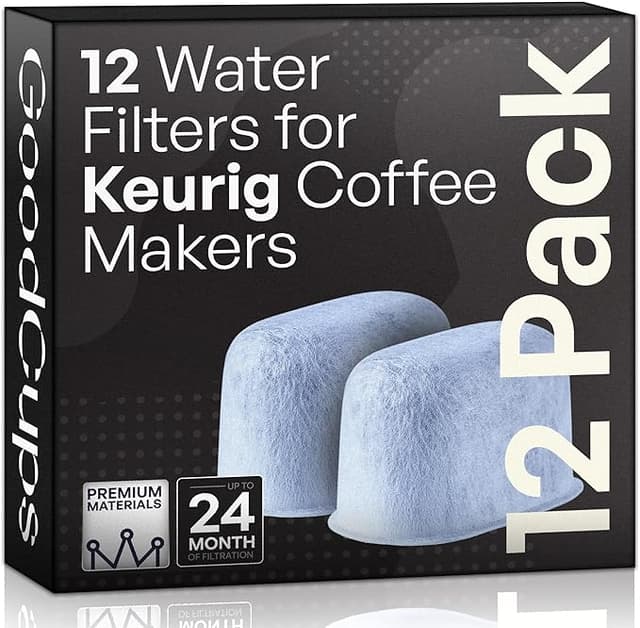
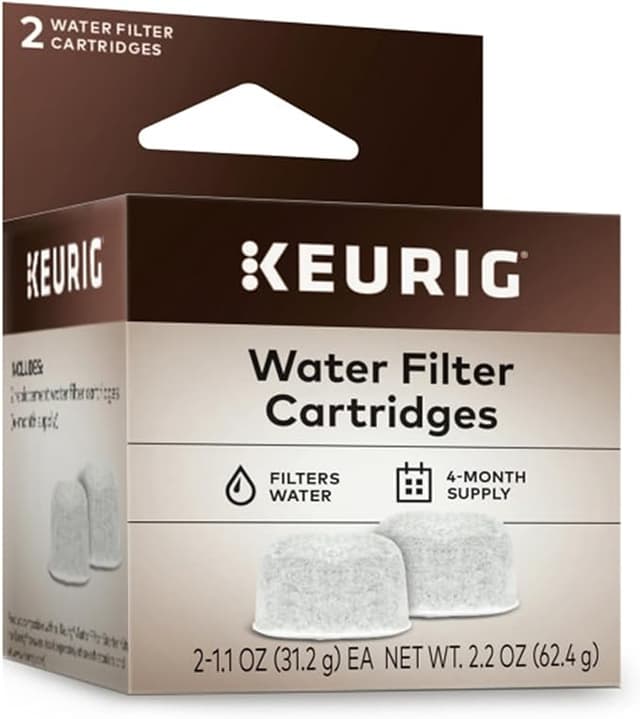
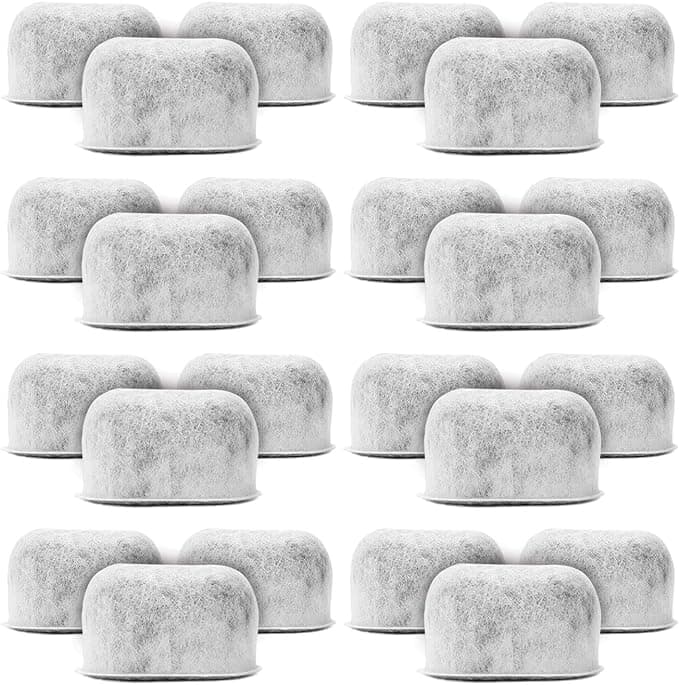
I almost didn't buy a replacement at all. I was standing there holding the genuine Keurig water filter cartridges — the official ones, the box with the green logo — and right next to them, a no-name compatible pack that cost about half as much. The Keurig-branded six-pack was running me around $16. The compatible twelve-pack? $13 for twice as many. So you do the napkin math: official ones land near $2.70 a cartridge, the compatible ones come out around a buck each. Over a year, swapping every two months like you're supposed to, that's the difference between spending roughly $16 and spending closer to $6. Not life-changing money. But it's the principle — I'm paying a brand tax on a chunk of charcoal in a plastic shell.
I'd been burned before by cheap aftermarket stuff, so honestly I hesitated. Then I figured, look, it's a water filter, not a head gasket. I bought the compatible pack. Here's how that's gone.
The thing they don't tell you: this is mostly about scale, not taste
People think the charcoal filter is there to make the coffee taste better. It does a little — it pulls chlorine and that faint pool-water edge out of tap water, and yeah, the cup is rounder. But the real job is keeping mineral scale from building up inside your Keurig. Hard water is brutal on these machines. The pump, the heating element, the little internal lines — scale chokes them, and a clogged Keurig is the number one way these things die before their time. So the filter is cheap insurance on a $90 to $130 appliance. That reframed it for me. If the compatible cartridge does that job even 90% as well, the math is a landslide.
Fit and install — does the cheap one actually seat?
This was my real worry. The Keurig filter sits in that little two-piece holder that clips into the bottom of the water reservoir, and if the cartridge is even slightly off-spec, it rattles or it won't click into the cage. I've had aftermarket parts that were a hair too fat to seat.
This one fit. The routine is the same as the genuine cartridge: you soak the new filter in a cup of water for about five minutes first — this is not optional, dry charcoal floats and traps air and the water just channels around it. After the soak I rinsed it under the tap for a few seconds to knock loose any black carbon dust (there was a little, more than I remember from the official ones — more on that below). Then it presses into the filter holder, the two halves of the cage close around it, and the whole assembly drops back into the slot at the bottom of the tank. The compatible cartridge snapped into the cage with the same click the Keurig one makes. No shimming, no forcing. It indexed on the date dial too — that little ring you spin to remind yourself when to swap it. Two months out, same as OEM.
One small thing: the first cartridge I pulled from the pack had a slightly looser fit in the cage than the genuine version. Not loose enough to rattle in use, but I noticed it when I was assembling it on the counter. By the time it's clamped in the holder and sitting in the reservoir, it doesn't matter. But I'm telling you because it's the kind of detail a marketer would leave out.
Performance, honestly
For the first three or four days I could tell a new filter was in there — the water tasted a touch flat, almost too clean, and there was the faintest whiff of fresh carbon on the very first brew of day one. I dumped that first cup. After the break-in, the coffee tasted exactly like it did on the genuine cartridge. I run a single-serve unit in my kitchen and I've been through three of these compatible filters now, so this isn't a one-cup impression — it's the better part of a year.
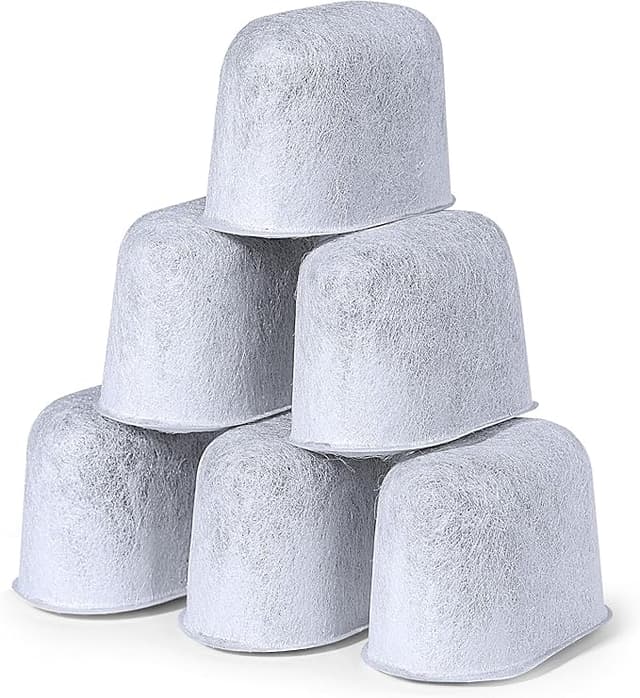
Where it's a touch behind OEM: I think the genuine charcoal is packed a little denser. The compatible one feels marginally lighter in the hand, and that's probably why I got more of that loose carbon dust on the initial rinse. Rinse it longer and it's a non-issue. But if you're the type who skips the soak-and-rinse step, the cheaper cartridge will punish you for it with a gritty first cup more than the official one would.
The genuine downsides — and there are a couple
Let me be straight about what's worse. The packaging is cheap — a flimsy poly bag inside a thin box, where the Keurig ones come individually sealed. It feels less premium and I have no idea how long they've sat in a warehouse, though the charcoal doesn't really expire in a way that matters for a sealed bag.
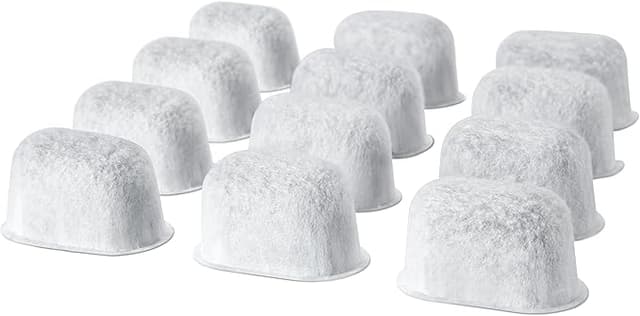
The bigger honest gripe: more carbon dust on a couple of the cartridges, like I mentioned. One out of the dozen had visibly more loose black powder than the others — quality control is clearly looser than Keurig's own line. You rinse it out and it's fine, but if you brewed without rinsing you'd see specks. And the printing on the cartridges was a little smudgy, which tells you these are coming off a budget line. None of that touches the water you actually drink, but it's the texture of buying compatible: you trade a bit of polish and consistency for the price.
I'll also say — and this matters — a saturated filter is a real problem, not a cosmetic one. Once the charcoal is spent, it stops pulling scale and can actually start harboring bacteria in the wet reservoir. So whatever you buy, OEM or compatible, the cardinal sin is leaving the same cartridge in for six months because you forgot. The two-month swap is the whole point. The compatible pack giving me twelve cartridges instead of six actually makes me more likely to change them on schedule, because I'm not hoarding expensive ones.
The verdict — who should buy which
If you're under warranty and you're the cautious type who wants to be able to say you ran nothing but genuine Keurig parts, buy the official cartridges. It's only a few dollars a year and it buys you a clear conscience. Same goes if you can't be bothered to rinse — the OEM ones are a little more forgiving of a lazy install.
But for everyone else? I've now run three of these compatible cartridges through my machine, on the same two-month schedule, and my coffee tastes identical, my Keurig isn't scaling up, and I'm spending roughly a third of what the branded filters cost. The frame's a hair looser, there's a bit more carbon dust, the box is cheap — and for ten dollars a year in savings doing the exact same job, I'd buy the compatible pack again. In fact I already reordered it.