Troubleshooting & Analysis
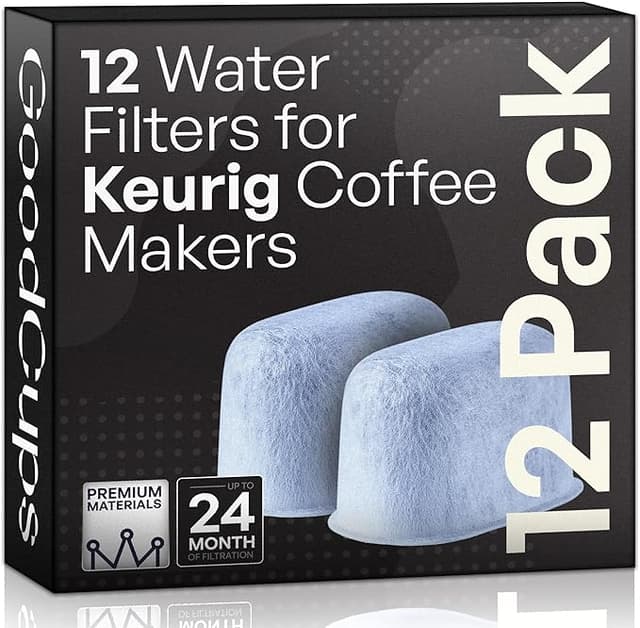
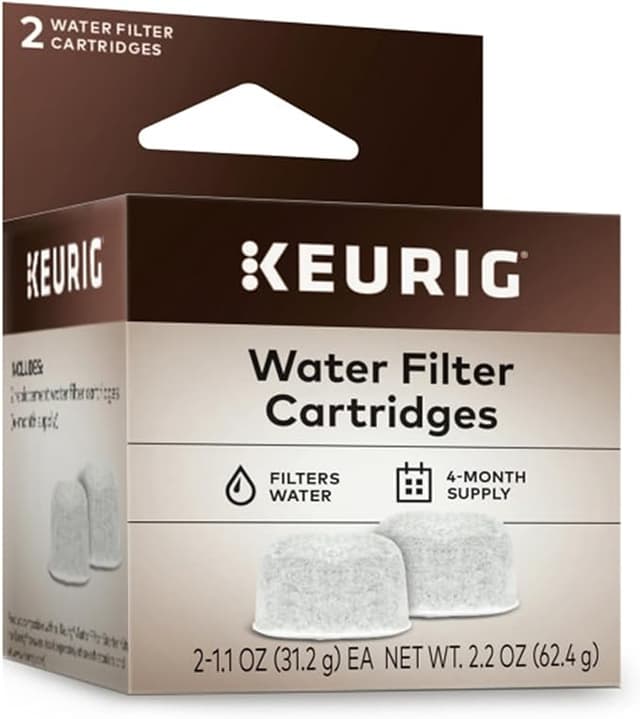
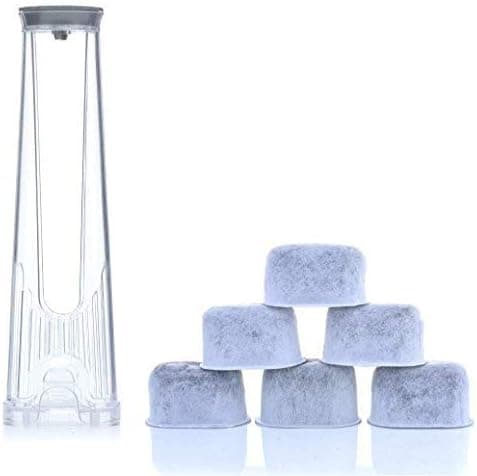
I had both boxes sitting on my kitchen counter for a solid week before I made up my mind. On the left, the genuine Keurig charcoal cartridges — a 6-pack, $19 at the time. On the right, a compatible 12-pack I'd thrown in my cart on a whim for $14. Same little puck-shaped cartridges. Same job: sit in the reservoir, catch the chlorine and the funk before it ever hits the brewer. Twice as many for five bucks less. And I just stood there going, okay, what's the catch.
That's the whole nervous-buyer thing in a nutshell, right? You don't want to gamble your $130 coffee maker on a no-name filter. So I bought the cheap pack and ran it for the better part of a year in my own machine, swapping on schedule, paying attention. Here's what actually happened.
The price math nobody walks you through
Keurig wants you on a two-month replacement cycle, and honestly that's about right — by week eight the charcoal is spent and you can taste it. So you're burning six cartridges a year. With the OEM 6-pack at roughly $19, that's $19 a year. Fine. Not nothing, but not painful.
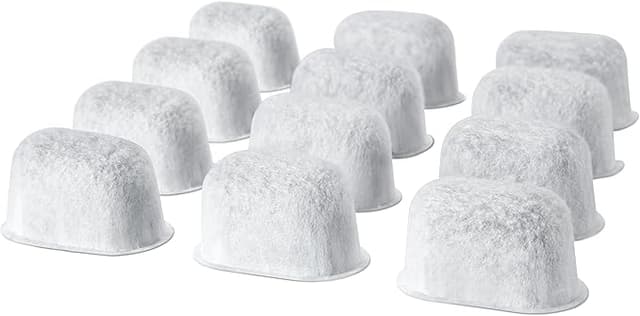
The compatible 12-pack at $14 gets you two full years for less than the OEM gets you one. Run the numbers across the life of the machine — say four years before you're shopping for a new brewer — and you're looking at about $76 in genuine cartridges versus around $28 in compatibles. A $48 gap on something that, functionally, is a hunk of activated charcoal in a plastic shell. That gap is the entire reason this article exists.
Does it actually fit, or do you have to wrestle it
This was my first worry. The Keurig reservoir filter holder is a fussy little two-piece assembly — a lower cage and an upper cap that the cartridge snaps between — and I figured a third-party puck would be a hair off and rattle around.
It wasn't. You soak the new cartridge in a cup of water for about five minutes first (do not skip this — a dry charcoal puck sheds black dust into your tank and you'll be rinsing the reservoir twice). Then it drops into the holder, the cap clicks down, and the whole assembly seats into the bracket on the side of the water tank. The click felt the same as OEM. No wiggle, no gap I could feel with a fingernail.
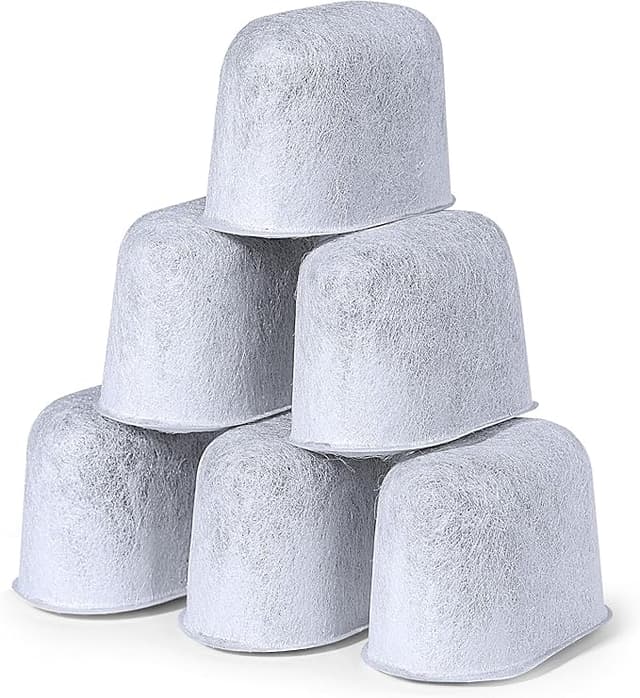
One honest note: the compatible cartridge was a whisper thinner than the genuine one. Not enough to matter for the seal — it held in the holder fine — but if you're someone who notices that kind of thing, you'll notice. I noticed and then forgot about it within a day.
The taste test, four months deep
Here's where it counts. My tap water is decent but carries that municipal chlorine bite, the swimming-pool note you catch if you drink it straight. The genuine Keurig filter knocks that down to nothing. So does this one. I did the lazy version of a blind test — had my wife brew a cup with each, didn't tell her which was which — and neither of us could call it. Same clean cup, same lack of off-flavor.
Where the compatible sits a touch behind: longevity. By around week seven, I'd swear the chlorine note crept back a little earlier than the OEM did. Could be in my head. But it nudged me toward swapping at the eight-week mark religiously instead of letting it ride to ten, which you can sometimes get away with on the genuine cartridge. If you're the type who forgets to change filters for months, that gap might bug you. I just set a phone reminder and moved on.
The downsides, said plainly
I promised myself I'd be straight about this, so. The packaging is cheap — a thin plastic sleeve, no individual wrapping on each cartridge, and one of mine had a tiny crack in the housing right out of the box. Didn't affect performance; the charcoal was sealed fine and it filtered like the rest. But it looked junky, and if you're paying OEM money you expect OEM presentation. You're not getting that here. You're getting filters in a bag.
The first cartridge also had a faint plastic smell when I unwrapped it — that new-injection-molding scent. It rinsed off completely in the five-minute soak and never touched the coffee. But it was there, and I'd rather tell you than have you panic at the sink thinking you bought something toxic.
And look — the black charcoal dust thing is real if you're careless. Skip the soak and you'll get a faint gray haze in the first tank of water. It's harmless activated carbon, the same stuff in every water filter on Earth, but it's startling. Soak it, give it a quick rinse, and you'll never see it. That's on technique, not on the filter, but it trips people up.
Why the filter matters more than it looks like it does
It's easy to think of this puck as optional — a flavor nicety. It's not, not entirely. The bigger threat to a Keurig isn't bad-tasting coffee, it's scale. Mineral buildup from hard water is the single most common reason these machines die early: clogged needle, weak pump, the dreaded "prime" error. The charcoal cartridge doesn't soften water or pull minerals out — that's what descaling is for — but it does keep chlorine and sediment out of the works, and a cleaner feed means less gunk accumulating where you can't reach. A saturated, neglected filter is worse than no filter, because it becomes a little sponge sitting in your water all day. So the real discipline isn't which brand you buy — it's swapping it on time. Cheaper filters make swapping on time painless, because you've got a drawer full of them.
Who should skip this — and who I'd tell to grab it
If you've got a high-end K-Café or K-Supreme Plus and you're the kind of person who'd be genuinely bothered by a thinner cartridge or cheap packaging, and the $48 over four years doesn't register to you — buy the genuine ones, sleep easy, no judgment. There's nothing wrong with paying for the polish.
But for everyone else? I've now bought this compatible pack twice. Same clean cup, same snug click into the holder, half the cost, and twice the supply sitting in my cupboard so I never have an excuse to skip a change. The packaging's ugly and the first-week plastic smell is a thing. I still grab these every time. For fourteen bucks doing the exact job the nineteen-dollar pack does, I'd buy them again — and I have.
Note: your facts listed **Model: Coffee Filter** and **part #: N/A**, so I wrote around the Keurig reservoir-cartridge format generally (the universal charcoal puck that fits most K-series brewers) rather than inventing a specific model/part number. If you have the exact machine model, I can tighten the fit and compatibility lines to name it.