Troubleshooting & Analysis
The day my Keurig started tasting like a swimming pool
I knew something was wrong before my coffee even finished brewing. There was this flat, faintly chemical smell coming off the cup — not coffee, more like the inside of a kettle that's been boiled dry too many times. I'd been ignoring the little filter in my water tank for, honestly, way too long. Months past when I should've swapped it. By the time I yanked it out, the charcoal pad inside had gone from off-white to a grayish brown, and there was a thin chalky crust along the tank wall right where the water sits.
That crust is scale. And scale is exactly what kills these machines. The pump works harder, the heater coats over, and one morning the thing just refuses to push water through. I've had a Keurig die on me that way before — no warning, just a sad gurgle and a half-full cup. So when I tell you the water filter cartridge matters, it's not a sales line. I learned it the annoying way.
What the genuine Keurig filters cost — and what I actually paid
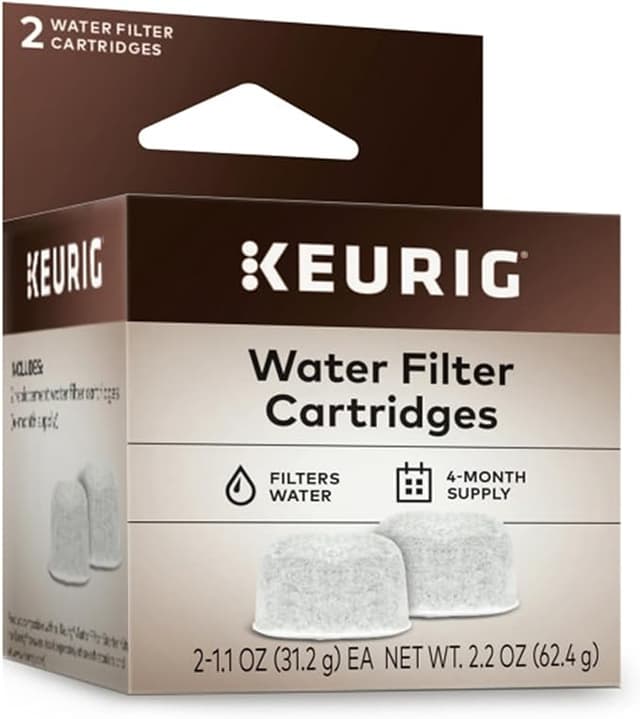
Here's the part that always gets me. A pack of the brand-name Keurig charcoal cartridges runs around $16 for six at most stores, and if you're buying the little starter holder kit it climbs past $20. Six filters, swapped every two months like you're supposed to, gets you through a year. So call it sixteen-ish bucks a year if you're disciplined, more if you buy the kits.
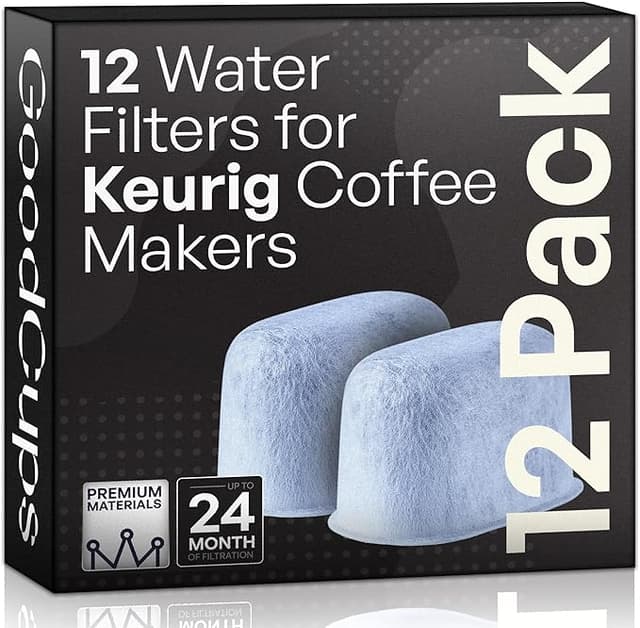
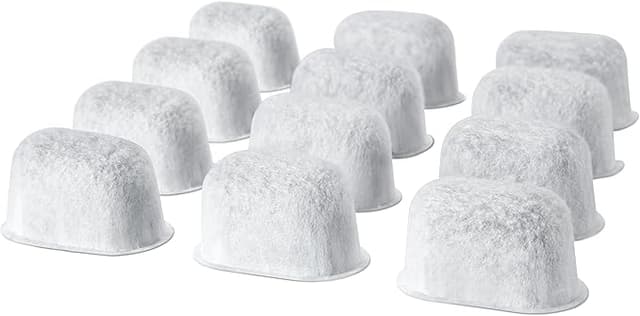
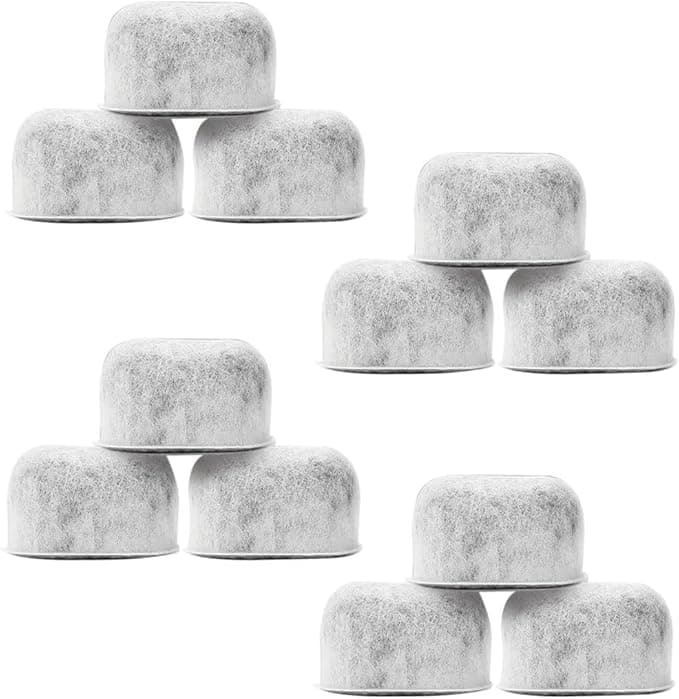
The compatible cartridges I switched to came in a pack of twelve for about $9. Twelve. Two full years of filters for roughly half the price of one OEM six-pack. I did the math standing in my kitchen and felt a little stupid for ever paying full freight. Same charcoal job, same dunk-and-drop install, and I've got a drawer of them now so I actually remember to change them — which, as my swimming-pool incident proves, is the part I'm bad at.
Do they actually fit? The honest install
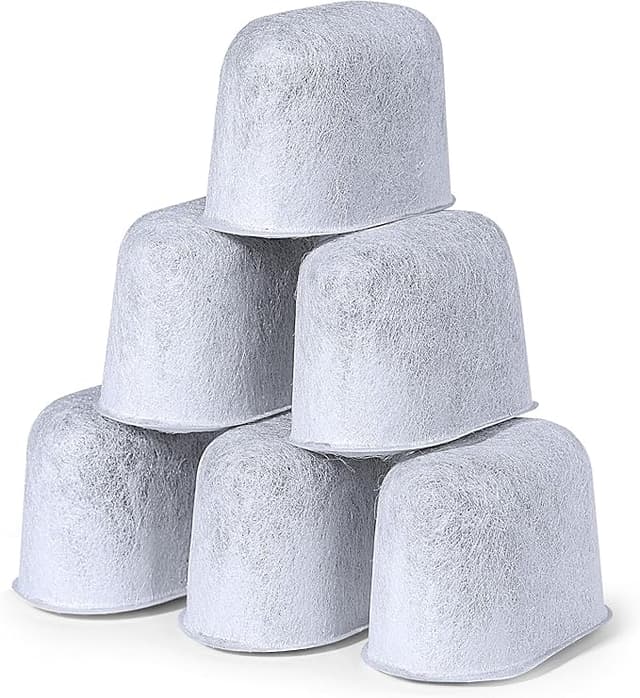
This was my worry too. Generic stuff is famous for being almost the right size. So I'll walk you through exactly what I did. You soak the new cartridge in a cup of water for about five minutes first — there's a real reason for this, it lets the charcoal saturate so it doesn't float or shed dust into your first brew. Then it snaps into the little filter holder, and the holder drops down into the water tank.
On mine, the compatible cartridge seated into the holder with the same firm click as the real one. No wobble, no gap where water could sneak around it. The bottom date dial — that little wheel you turn to remind yourself when to replace — was on the holder I already owned, so the third-party refills just slotted right in. If you've got the original Keurig holder, you're golden. If you're buying a kit that includes its own holder, double-check it matches your tank's mounting nub before you commit, because that's the one spot where cheap kits sometimes get the geometry slightly off.
How it performs next to the real thing
Taste first, because that's what you care about. After I let the new filter run for one throwaway tank of water — I just brewed a "coffee" with no pod to flush it — the chemical edge was gone and my actual coffee came back clean. Bright, no metallic aftertaste, no pool smell. Side by side with a fresh OEM cartridge I had lying around, I genuinely could not tell the water apart. The charcoal does what charcoal does: it grabs chlorine and the off-flavors your tap water carries, and it slows the scale that wrecks the heating element.
Where's it a touch behind? The charcoal fill feels very slightly less dense than the brand cartridge when you squeeze the housing. I doubt it matters over a two-month life, but if I were the kind of person who pushes a filter to four or five months, the OEM probably has a little more headroom before it's spent. Since the right move is changing every two months anyway, that gap never shows up in practice for me.
The downsides — and there are real ones
Let me actually sit on this part, because a review with no complaints reads fake. First: the packaging is cheap. The cartridges come in a thin plastic sleeve, sometimes two to a baggie, and a couple in my pack had a little charcoal dust loose in the wrapper. That's why the five-minute soak isn't optional — it rinses that dust off. Skip the soak and your first cup might have the faintest gritty edge. Annoying, but a non-issue if you just do the step.
Second: for the first day or two, the brand-new filter gives off a mild "new charcoal" smell — kind of like a fresh aquarium filter. It's harmless and it flushes out fast, but if you brew immediately without running that one blank tank first, you'll taste it. The OEM cartridges have this too, honestly, just a hair less of it.
Third, and this is the one to weigh: there's no Keurig name on the box, so there's no pretense of a warranty tie-in. If you're someone who needs the manufacturer's blessing to feel safe, that absence will bug you. It doesn't bug me — a charcoal pad in a plastic shell is about as simple as a consumable gets — but I'd rather say it out loud than pretend it isn't a thing.
Why a dead filter is genuinely worth caring about
Back to that crust I scraped out of my tank. A saturated, ignored filter doesn't just make coffee taste stale — it stops holding back the minerals that build into scale, and scale is the number one reason these machines fail. You're not protecting your coffee at that point, you're protecting a $100-plus appliance. The filter is the cheapest insurance you'll ever buy for it. Which is exactly why paying $9 for twelve instead of $16 for six matters: the cheaper they are, the more likely you are to actually swap them on schedule.
So who should buy what
If your Keurig is brand new and still under warranty and you're the anxious type who wants zero gray area, buy the genuine Keurig cartridges and don't think about it. The peace of a matching box is worth $7 to some people. No judgment.
But for me — someone who's already had one machine die from scale, who keeps a drawer of refills so I don't forget, and who tasted these head-to-head against the real thing and couldn't call it — the compatible cartridges are the easy pick. Half the price, same clean water, same satisfying click into the holder. I'm on my second twelve-pack now, and the only time I think about my water filter anymore is when the date dial tells me to. That's exactly how it should be.