Troubleshooting & Analysis
I didn't think a $20 charcoal filter could do the same job. I was wrong.
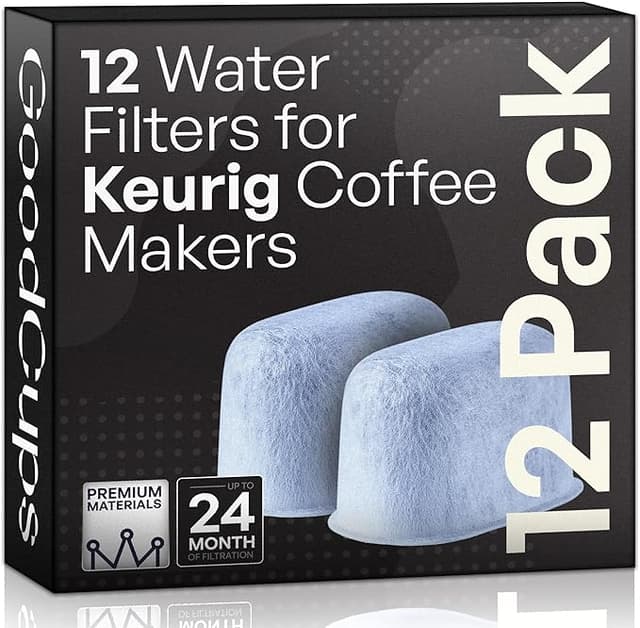
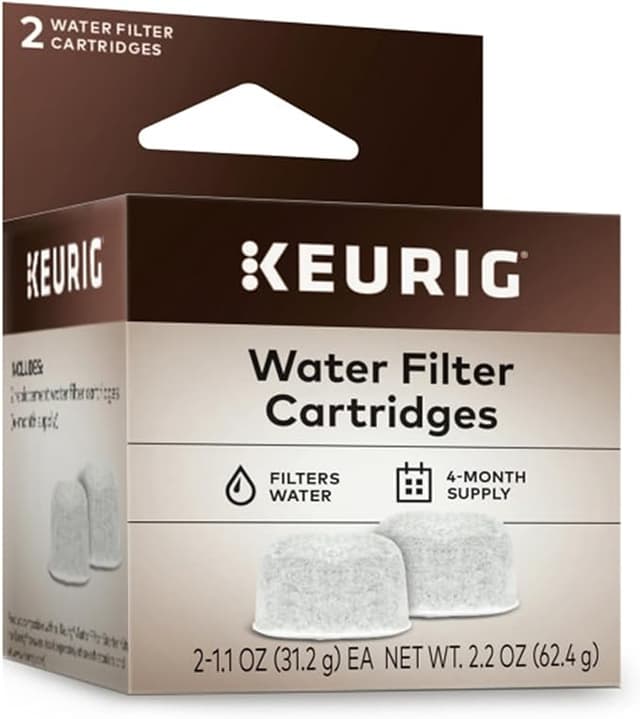
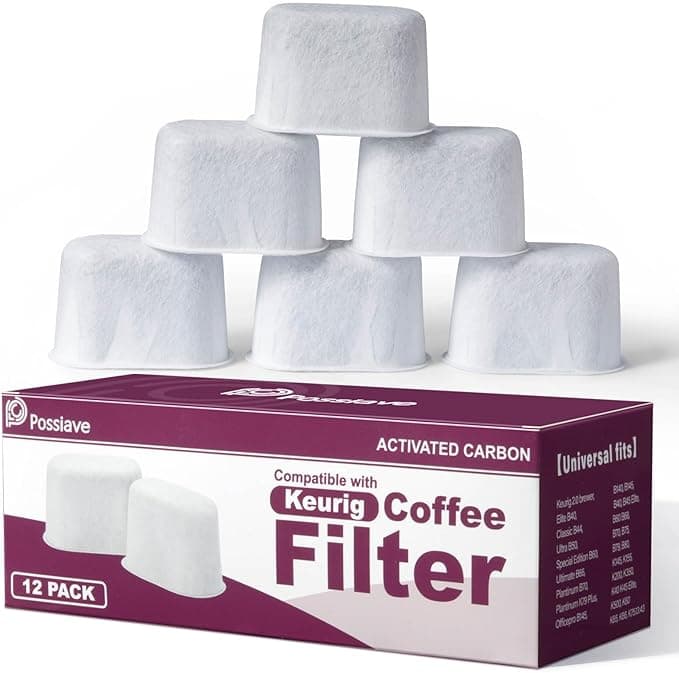
Here's where my head was at. I'd been buying the Keurig-branded charcoal water filter cartridges for years — the little disc-shaped ones that snap into the holder inside the reservoir. A pack of the OEM ones runs me around $26 for six. Then I'm scrolling and I see a compatible six-pack for about $13. Half the price. And my first thought wasn't "great deal." It was: "what's the catch." Because charcoal filtration sounds simple until you imagine cheap carbon dust drifting into your morning cup, or a disc that doesn't seat and just lets unfiltered water blow right past it. I genuinely did not believe a $20-and-under pack could be fine.
So I bought one to call its bluff. I've now been running these in my K-Elite for a little over five months — long enough to have swapped them on the every-two-months schedule a few times — and I want to tell you what actually happened, including the parts that bugged me.
The money, laid out plainly
This is the whole reason anyone hesitates, so let's do the math honestly. The OEM six-pack at ~$26 means each filter costs you roughly $4.30, and on a two-month replacement cycle you're spending about $26 a year. The compatible six-pack at ~$13 drops you to about $2.15 a filter — call it $13 a year. So the gap isn't life-changing in any single moment. It's a $13-a-year thing. But it's $13 a year, every year, for a part whose entire job is to hold charcoal and let water through. That framing is what pushed me to test instead of just defaulting to the brand out of habit.
Does it actually fit and seat right?
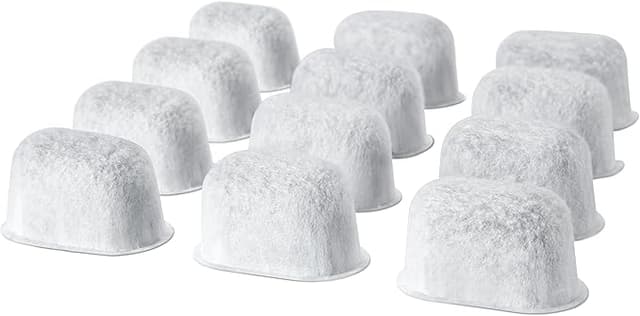
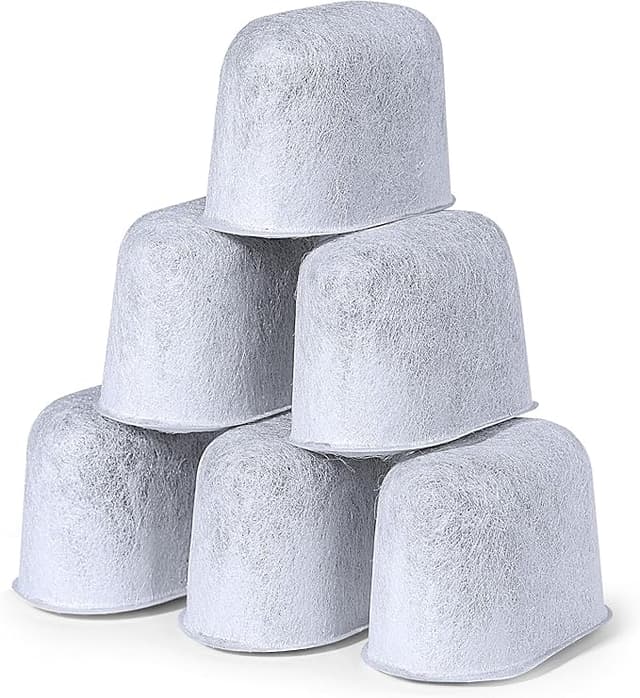
This was my biggest fear and the place a cheap part usually betrays itself. The install on these is genuinely the same ritual as OEM. You soak the new disc in water for about five minutes first — don't skip this, the dry carbon needs to wet through or it floats and the first brews taste flat. Then you press it into the filter holder, and you slide that assembly down into the water tank.
The seat is the moment of truth, and on the compatibles I tested, it clicked into the holder with the same firmness OEM does. No wobble, no gap where water could sneak around the edge. I'll be straight with you about the one fit difference: the plastic on the holder clip felt a hair less precise — slightly more "give" when I pressed it home. It still locked. It just didn't have that tight, expensive-feeling snap. After five months it's never popped loose or shifted, so the looseness is cosmetic, not functional. But I noticed it, and if you're the type who notices that kind of thing, you'll notice it too.
How the coffee actually tastes
I have hard-ish water at my place, the kind that leaves a chalky film, so a charcoal filter earns its keep here by knocking down the chlorine taste and the mineral edge. Side by side — and I did literally brew two cups, one week apart, one on a fresh OEM disc and one on a fresh compatible — I could not tell them apart in the cup. Same clean taste, no off-flavor, no carbon grit in the bottom of the mug.
Where I'll give OEM a slight nod: longevity at the very tail end of the cycle. Around week seven or eight, the compatible disc seemed to lose a touch of its bite a little sooner than the brand one did — the water started tasting a hair more "tap" before the two-month mark was up. It's subtle. Honestly, the fix is just swapping on schedule instead of stretching it, which you should be doing anyway. But if you're someone who pushes filters way past their interval, the OEM gives you a little more grace before it quits.
The downsides I'm not going to hide from you
First, the smell. The first day or two out of the package, a couple of the discs had a faint plastic-and-carbon odor — that fresh-charcoal smell. The five-minute soak knocks most of it down, and I ran one throwaway brew (water only, no pod) through after the first install just to flush the system. After that, gone. But yeah, day one is not pristine.
Second, the packaging is cheap. The OEM discs come individually wrapped in a tidier way; these came loose-ish in a thin bag, and one of the six had a slightly squished edge on the mesh. It still worked fine once seated — the squish was on the outer rim, not the carbon — but it didn't inspire confidence at first glance. If you want a part that feels premium before you've even installed it, this isn't that.
Third, and this is the real one: quality consistency across the pack. Five of my six were dead identical. One felt marginally lighter, like it had a touch less carbon packed in. Did it brew worse? Not that I could tell. But with the brand pack I never once wondered about that. With a budget multipack, you accept that one out of six might be the runt. For me, at half the price, that's a trade I'll take. For you it might not be.
Why bothering with the filter at all matters
Quick reality check, because it's tempting to just skip the filter entirely and run bare water. Don't. A charcoal disc that's past its life — or no filter at all — lets scale and mineral buildup march straight into your machine, and scale is the single most common way a Keurig dies. It clogs the internal lines and the heater, and once that happens you're not buying a $13 filter pack, you're buying a $130 machine. The filter is the cheap insurance. Whether it's OEM or compatible matters far less than whether you actually have a working one in there and swap it every two months.
So who should buy which
Buy the OEM discs if you routinely stretch your filters well past the two-month mark and want that extra tail-end longevity, or if a slightly squished edge on one disc out of six is going to live in your head rent-free. That's a real personality type and there's no shame in it.
For everyone else — for me — the compatible charcoal filter does the same job, seats the same way, and tastes identical in the cup, for roughly half the annual cost. The looser clip and the runt-of-the-litter disc are real, and I told you about them on purpose, because a review with zero complaints is a review you shouldn't trust. But after five months and a few swap cycles, my honest verdict is the boring one: it's fine. It's genuinely fine. I'd buy it again at $13 a pack — and I already have.