Troubleshooting & Analysis
The day my coffee tasted like a swimming pool
I knew something was off before I even took a sip. The water in my Keurig's tank had that faint, flat smell — not bad exactly, just lifeless. I'd been lazy. The little charcoal cartridge in the reservoir had been sitting there for, honestly, closer to five months than two. And that morning the coffee came out tasting faintly of pool water, a little metallic on the back end, with this chalky cloudiness I'd never seen before. I pulled the filter holder out and the cartridge was the color of a wet cigarette butt. Slimy. There was a thin gray film coating the inside of the tank where it had been sitting.
That's the thing nobody warns you about. A spent water filter doesn't just stop helping — it starts working against you. Mine had gone from cleaning the water to feeding it. So I did what I should've done weeks earlier and went to buy replacements. And that's where the little argument with myself started.
The price gap that made me hesitate
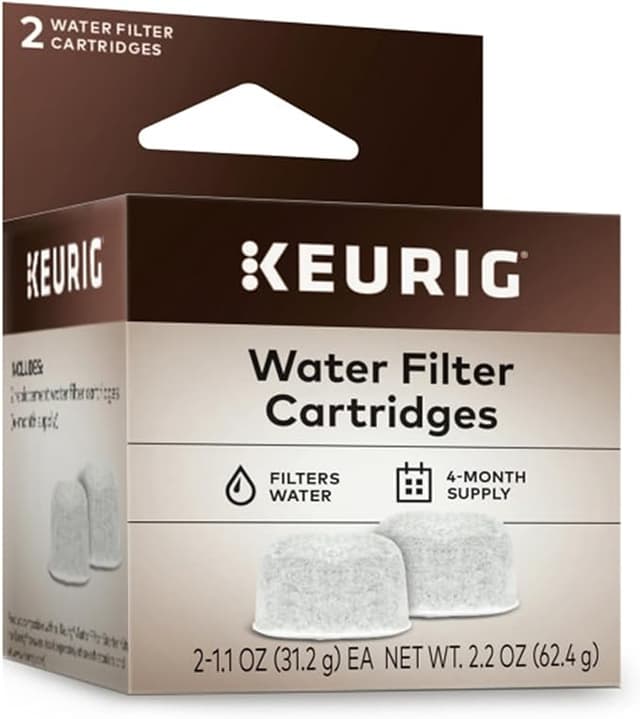
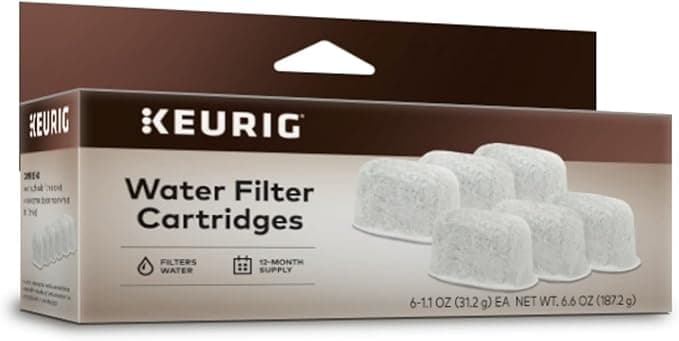
Keurig's own branded charcoal cartridges run somewhere around $15 to $18 for a six-pack, depending on where you grab them. Call it roughly $3 a cartridge once you do the math. You swap every two months, so that's about six a year — eighteen-ish dollars annually just to keep your water clean. Not bank-breaking, but it adds up, and there's something about paying brand-name money for what is, at the end of the day, a thumb-sized puck of activated charcoal wrapped in mesh.
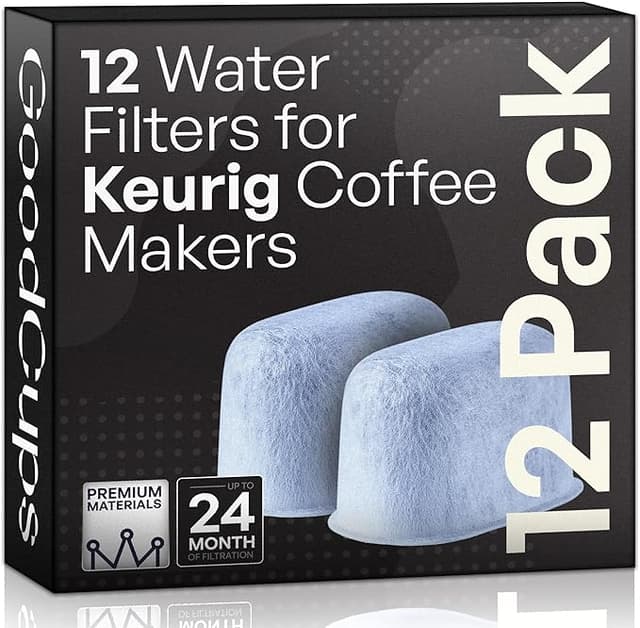
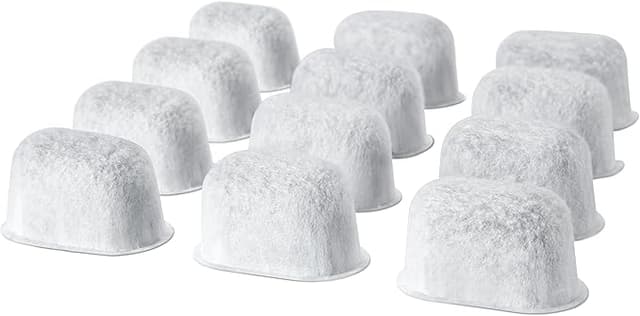
The compatible packs sit right next to them. I found a twelve-pack of third-party charcoal cartridges for about $13 — so a hair over a dollar each, and a full two years of swaps for less than what one OEM six-pack costs. That's the gap that made me pause in the aisle. Two years of clean water for thirteen bucks, or one year for closer to thirty if I stayed loyal to the brand. I'd already ruined a pot of coffee being cheap with my time. Was I about to ruin my machine being cheap with my money?
Short answer, after running them since: no. But let me walk you through it honestly, because it's not a perfect swap.
Do they actually fit?
This was my first worry. The Keurig filter holder is a specific little two-piece basket — a mesh cage that snaps over the cartridge and clips onto the bottom of the reservoir. If the compatible puck is even slightly the wrong diameter, it rattles or won't seat. I've had aftermarket parts for other appliances that were "compatible" in the loosest possible sense.
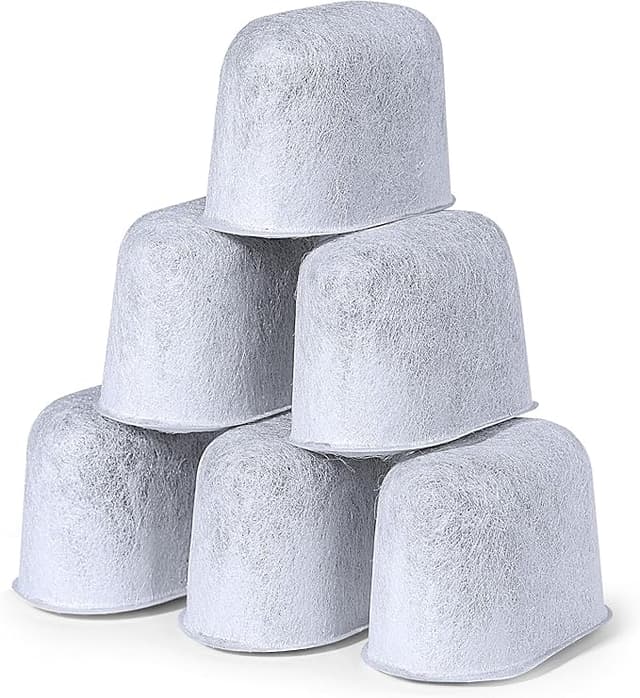
These dropped right in. The routine is the same as OEM: I soaked the new cartridge in a cup of water for about five minutes first — you'll see a stream of tiny bubbles come off it as the charcoal wets through, which is normal and weirdly satisfying. Then it pops into the holder, the holder clips into the tank, and you set the little dial to your replacement month so you don't repeat my mistake. The click when the basket seats felt identical to the original. No wobble, no gap, no forcing it.
One real note on fit, though: a couple of the cartridges in my pack were a touch tighter going into the mesh cage than the Keurig ones were. Not stuck — just needed a firmer push to seat fully. If you don't press it all the way home, it can sit proud and the cage won't clip shut. So seat it deliberately. That's the entirety of the "fiddling," and it took an extra three seconds.
How they actually perform
Here's the part that matters. The whole job of this filter is to knock down chlorine taste and catch the scale-forming junk before it hits your machine's heating element. Scale buildup is the number one killer of these brewers — it furs up the internals until the pump strains and the temperature drops, and once that starts you're looking at descaling marathons or a dead unit. So the filter isn't really about luxury. It's about keeping mineral gunk out of a $100-plus machine.
On chlorine and taste, the compatible cartridges did exactly what the OEM ones did. The pool-water flavor was gone the very next morning. Coffee came out clean, the bitterness I'd been blaming on my beans turned out to be partly the water, and after a week I genuinely couldn't tell a blind difference between these and the branded pucks I'd used for two years prior.
Where they're a touch behind: longevity, maybe. I get the sense the cheaper charcoal saturates a week or two sooner than Keurig's does if you have hard water. I run mine on the two-month interval and they hold up fine to the swap date, but if you've got genuinely hard tap water and you like to stretch filters to their absolute limit, you might notice these tapping out a little early. The fix is just — don't stretch them. At a dollar a cartridge, who cares.
The honest downsides
Two of them, and I'll be straight about both.
First, the smell on day one. Fresh out of the bag, the cartridge has a faint plasticky charcoal odor — not chemical exactly, but noticeable if you sniff it. That five-minute soak knocks most of it out, and I'd suggest running one throwaway brew of plain water through the machine before you make actual coffee. By the second day it's completely gone. OEM does this too, frankly, just a little less.
Second, the packaging is cheap and a little wasteful. The cartridges come loose in a plastic sleeve rather than individually sealed, so they're not as pristine, and a couple had a bit of loose charcoal dust on the outside mesh. Rinse that off in the soak step. It's cosmetic, not a defect, but if you're someone who wants everything to feel premium out of the box, the brand version feels nicer in the hand. You're paying for that feeling.
Who should skip these — and who shouldn't
If your tap water is extremely hard and you tend to ignore replacement reminders (guilty), buy the brand cartridges, because the slightly longer life buys you a margin of error. And if the few-dollars-a-year difference genuinely doesn't register for you, there's no shame in staying OEM — they work.
But for most people, with normal city water, who'll actually swap on schedule? I grab the compatible twelve-pack every time now. Same clean taste, same scale protection for my machine, same easy fit — for roughly a tenth of the per-cartridge cost. I've bought them twice. My coffee hasn't tasted like a swimming pool since, and the inside of my tank stays clean. For thirteen dollars buying me two years, I'd do it again without thinking twice.