Troubleshooting & Analysis
The first one I dropped in smelled faintly of charcoal dust, and I almost sent it back
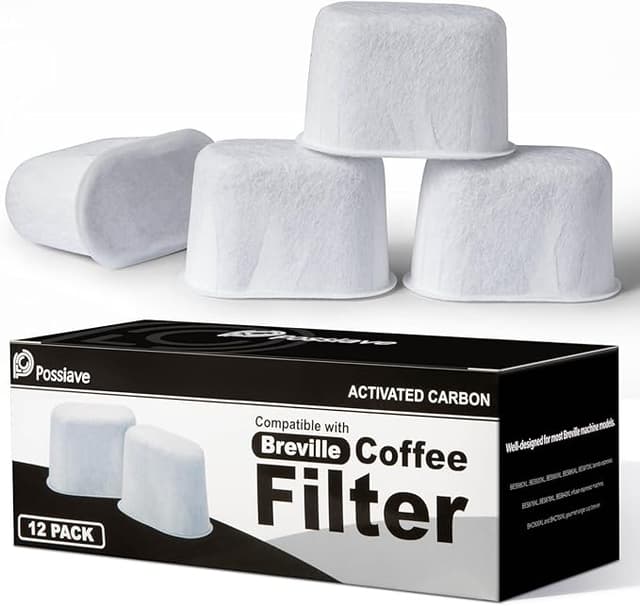
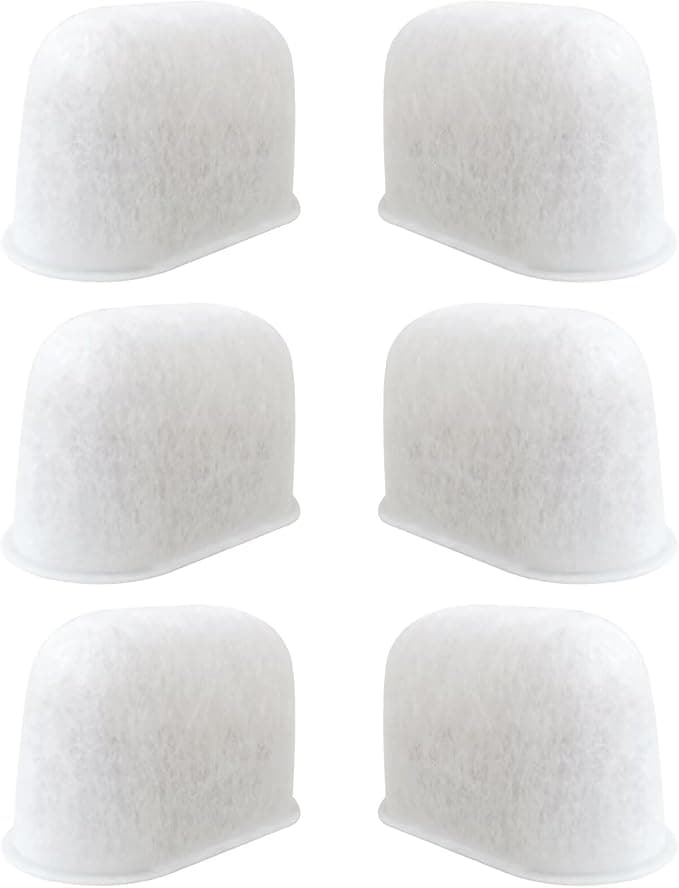
That was my gut reaction, anyway. I'd soaked the thing for its five minutes like the instructions said, shook it off, and when I held it up to my nose there was this dry, gray, just-opened-a-bag-of-charcoal smell. My OEM Breville filters never did that. For about ten seconds I stood at the kitchen counter thinking I'd wasted my money on a knockoff for my Barista Express.
Then I seated it in the holder. And here's the thing that actually won me over before I'd brewed a single shot — it clicked. Same little positive snap into the BWF100 holder that the genuine one makes. Pushed it into the bottom of the water tank, the tank dropped back onto the machine flush, no gap, no wiggle. So whatever that charcoal smell was, the fit was dead-on. I'll come back to the smell, because it does matter.
The price gap is the whole reason you're reading this
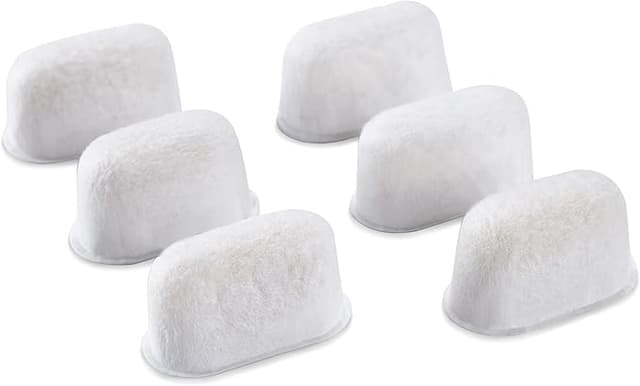
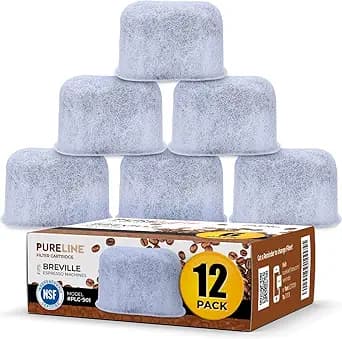
Let me give you the real numbers, because that's what settled it for me. Genuine Breville BWF100 filters run me about $16 for a six-pack when they're in stock, sometimes closer to $19 if I'm buying off the machine's own brand page. The compatible six-pack I've been running cost $11. So roughly $2.70 per filter versus $1.80.
Doesn't sound like a fortune until you do the year math. You're supposed to swap these every two months — six filters a year, basically one pack. The genuine route is about $16 a year per machine. The compatible route is $11. Call it a five-dollar difference annually, which, fine, isn't life-changing on one machine. But I run two Brevilles (one at home, one my wife keeps at her studio), and over the four-ish years these machines last, that adds up to forty-odd bucks I'd rather keep. And I've never been able to taste the difference in the cup. More on that.
Install is genuinely foolproof — but don't skip the soak
Soak it in a glass of water for five minutes first. I know everybody ignores this step. Don't. The first time I got impatient and dropped a dry one straight in, the first half-tank of water came through with tiny black flecks — harmless carbon fines, but it looked alarming in a clear glass. The five-minute soak flushes those out. After that: press it into the holder until it clicks, push the holder into the base of the tank, reseat the tank. Thirty seconds. The compatible holder mates with the factory clip exactly, no shimming, no forcing.
What it does as well as the genuine one — and where it's a hair behind
The job of this filter is scale. I'm on hard water — my kettle scales up in a month — and that mineral buildup is the number one thing that kills these machines. A clogged, gunked-up boiler is an expensive paperweight. So the real test isn't taste on day one, it's what the inside of the machine looks like at the two-month mark.
I pulled my group head and checked the screen after two months on the compatible filter. Clean. The water coming through tasted flat and neutral the way filtered water should — none of that chlorine bite my tap has. Honestly, in a blind sip test between a shot pulled on the genuine filter and one on this, I couldn't call it. Neither could my wife, who is pickier than I am about coffee.
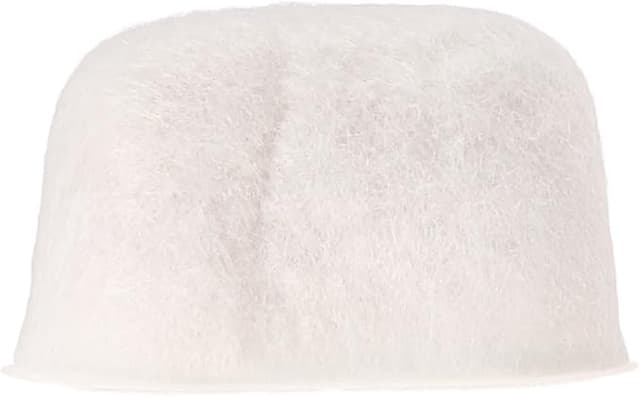
Where it's slightly behind: the genuine Breville filter feels denser when you handle it, and I think — can't prove this with a lab, just a hunch from feel — the compatible carbon load is a touch lighter. I treat that as a reason to actually obey the two-month schedule instead of stretching it to three like I used to do with OEM. Swap it on time and it keeps up fine.
The real downside, since a review with none is a lie
Two of them, actually. First, that opening smell — the first brew or two off a fresh compatible filter carries the faintest charcoal note if you've got a sensitive nose. It blows off by the third pull and I've stopped noticing it, but the genuine filters don't do this and I'd be lying if I said they're identical out of the wrapper. Second, the packaging is cheap. Thin plastic sleeve, no individual wrapping, and on one six-pack the printing on the date-dial was smudged enough that I couldn't read the month I'd set. Minor. But it's the kind of corner-cutting that tells you where the eleven dollars went.
So who should skip this?
If you stretch your filters to four or five months because you forget — buy genuine. The denser carbon gives you more margin for your own laziness, and a saturated filter that's stopped pulling minerals is worse than no filter, because you trust it while it does nothing. And if you're the type who'll send back anything that smells off out of the box, this'll annoy you on day one.
But for me? Same click, same fit, same clean group screen at two months, same neutral water in the cup — for a third less money. I soak it, I click it in, I set a phone reminder for sixty days, and I don't think about it again. I'm on my third pack now. I'd buy it again, and I have.