Troubleshooting & Analysis
The first one I dropped in didn't click — and that told me something
You know the little seat at the bottom of the water tank on the Breville BES840XL — the Infuser — where the filter holder twists down? The OEM filter drops in and gives you this small, definite click. Solid. The first compatible one I tried, a couple years back, didn't do that. It sort of... settled. No click. I fished it back out, eyeballed the collar, and yeah — the plastic ring was a hair undersized. So I get the nervousness. I had it too.
This one's different, and I want to walk you through why, because I've now run third-party filters in my Infuser for the better part of two years and I've got opinions.
The money, plainly
Breville's own water filters for the Infuser come in a pack — you're looking at roughly $19 to $24 for a set of two or three, depending on where you grab them and whether they're on one of Breville's rotating sales. The compatible packs I buy run about $10 to $13 for the same count. Call it 40 to 55 percent off. Doesn't sound like much on one purchase. But here's the math nobody does: Breville tells you to swap the filter every three months, or about every 40 tanks. That's four filters a year, minimum, if you're a daily-shot person like me. Over the life of the machine — say five or six years before something else gives out — the OEM route quietly costs you $60, $70 in little plastic discs. The compatible route is more like $25 to $30. It's not life-changing money. It's "why am I paying the brand tax on a consumable" money.
And that's really the whole question with this machine, isn't it. The BES840XL is a great mid-tier espresso maker. The filter is a softening cartridge. It is not a precision instrument.
Does it actually seat?
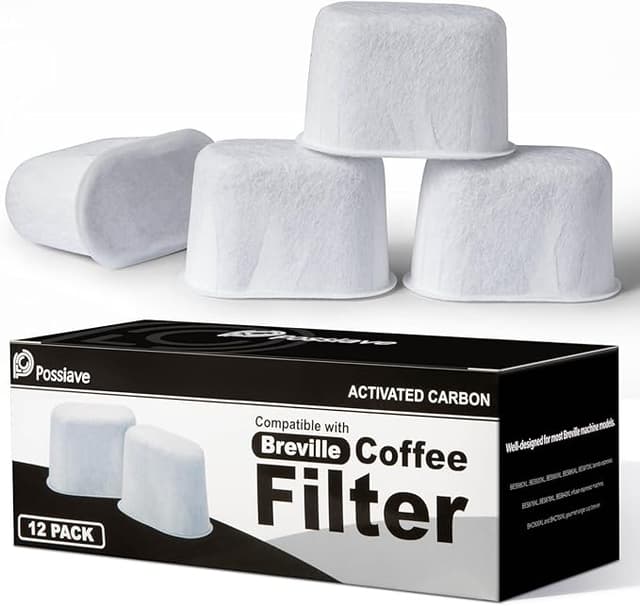
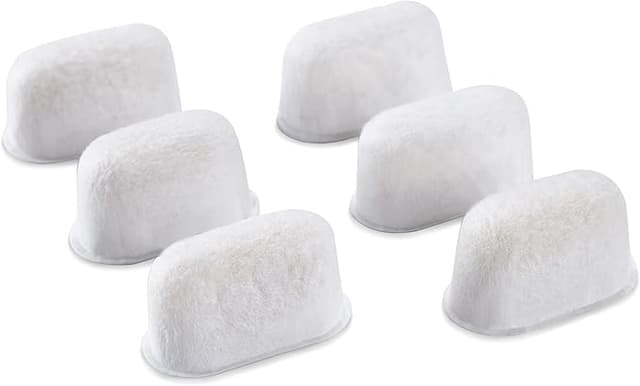
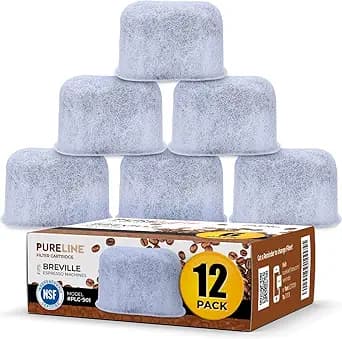
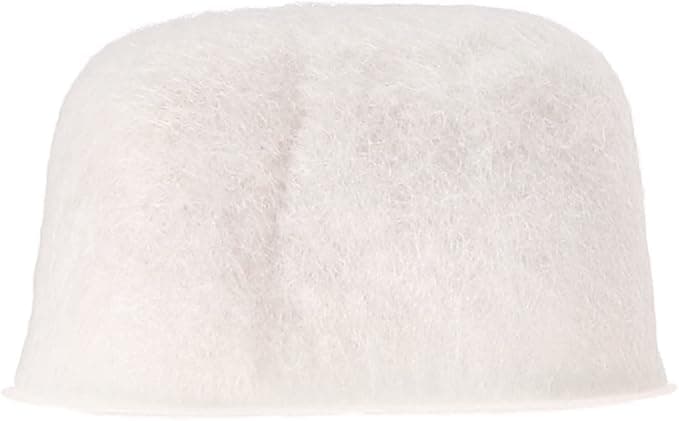
This is the part I obsess over because of that first bad experience. The good compatible packs — the ones I keep rebuying — seat correctly. Power the machine off and pull the plug first; I know it seems paranoid for a water tank swap, but you're reaching near the pump and I'd rather not. Lift the tank out, twist the old holder loose, note which way the cartridge faces (the mesh-looking end points down, into the water), and press the new one in the same orientation. You get the click. Reassemble, drop the tank back on its rails, run a full tank through with no coffee in the basket to flush it. That flush matters — skip it and your first two or three shots taste faintly of, honestly, wet cardboard.
Fit's been dead-on for me across the last several packs. No shimming, no forcing. If yours doesn't click, that's your sign it's a bad batch — send it back, don't run it.
Where it's as good — and where it isn't
On the thing that matters, scale prevention, I genuinely can't tell the difference. I'm in a hard-water area; before I filtered, I was descaling this machine constantly and the steam wand would crust up. With the compatible cartridge swapped on schedule, my descale light behaves the same as it did on OEM. The water tastes clean out of it. My shots pull the same.
Here's the real downside, and I promised myself I'd say it: the compatible cartridges feel a touch lighter, and I think they hold slightly less softening media. On OEM I could stretch a cartridge to maybe three and a half months before the water started tasting a little flat. On these, I swap right at the three-month mark — push them to four and you'll notice the descale indicator creeping back sooner. So you don't quite get to be lazy with them. If you're the kind of person who forgets and runs a filter for half a year, the OEM's slightly bigger margin might genuinely suit you better. For me, swapping on time was already the deal, so it's a non-issue. But it's real, and you should know it.
The packaging's also cheap — thin plastic sleeve, no fancy moisture wrap like Breville's. Doesn't affect the cartridge, just feels less premium when it lands on your doorstep. I don't care. You might.
Why I don't let it slide anymore
A spent water filter doesn't just stop softening — it starts becoming a little reservoir of whatever it caught. Run it long past due and you're pushing harder water through the boiler and the solenoid, which on the BES840XL are exactly the parts that get expensive when scale builds up. A new cartridge is ten bucks. A boiler issue on this machine is a service bill or a new machine. That's the trade you're actually making when you "save" a filter for an extra month. I learned that the slightly hard way on an earlier espresso maker, so now I'm religious about it — and the cheap filters made me more religious, because swapping costs me almost nothing.
So who buys what
If you're a set-it-and-forget-it person who will genuinely run a cartridge past its date, buy the OEM — that little extra margin is forgiveness money, and it's worth it for you. If your water is brutally hard and your machine is your livelihood, OEM peace there too, fine.
Everybody else — anyone who swaps roughly on schedule and would rather not pay a brand tax on a softening puck — I grab the compatible pack every time now. It clicks in, it keeps my descale light quiet, it costs less than half. The cartridge runs a hair shorter and the packaging's flimsy, and I'll still buy it again. I just did, two weeks ago.