Troubleshooting & Analysis
$25 versus the box of three Breville wants $44 for
I do the math on this stuff because nobody else will. A genuine Breville water filter for the BES870XL Barista Express runs you about $14 a pop when you buy them solo, and the official three-pack hovers around $40 to $44. You're supposed to swap them every two to three months. So call it four to six filters a year. That's somewhere between $55 and $85 annually to keep mineral gunk out of a machine you already paid six hundred bucks for.
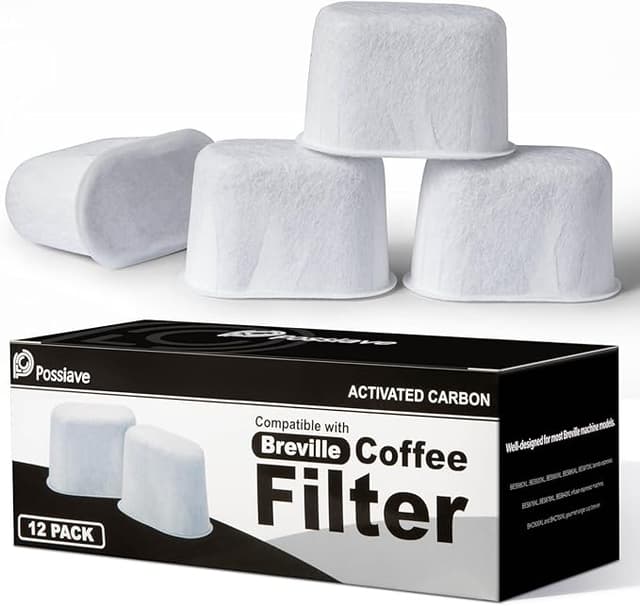
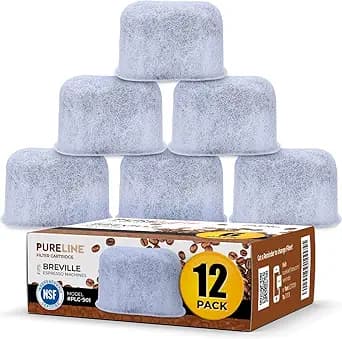
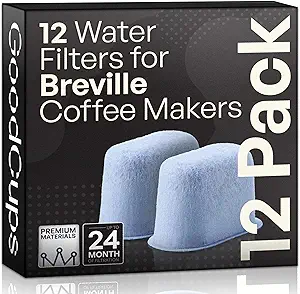
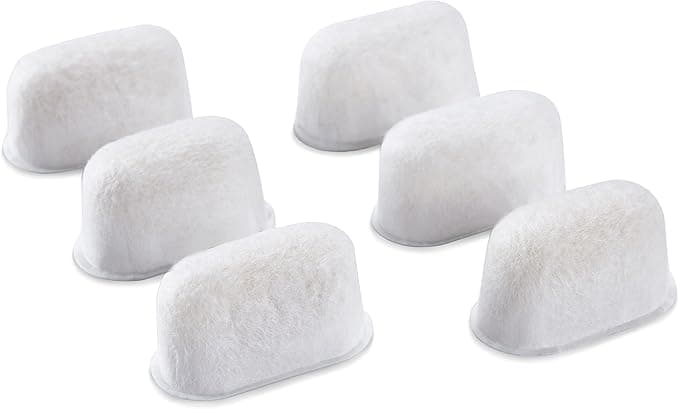
The compatible ones I've been running cost me $25 for a six-pack. Six. That's roughly four bucks each against Breville's fourteen. Same year of filtering, and I'm out maybe $20 instead of $70-something. I sat there with both boxes on my counter genuinely annoyed that I'd been paying the brand tax for two years.
So I swapped one in and waited for it to go wrong
Here's the honest part. I didn't trust it. A $4 filter going into the thing that makes my morning coffee — my gut said you get what you pay for. I was half-expecting cloudy water, a weird taste, or the little holder cap to not click into the tank float.
It clicked. First try. The disc sits in the same plastic holder that came with the machine — you pull the spent one out, push the new one in, soak it the way you're supposed to, and drop it back in the reservoir. On the BES870XL that means powering the machine off, lifting the water tank out, and seating the filter on its little bracket so the float arm reads the level right. The fit was dead-on. Not "close enough," dead-on. I've had two of the six in rotation now and neither one fought me going in.
What it actually does to the water
The whole job of this filter is carbon and ion-exchange resin pulling chlorine and scale-forming minerals out before they hit the thermocoil. And that's the part people skip past — this isn't really about taste, it's about limescale. Hard water is what kills these machines. The boiler crusts up, the pressure drops, and eventually you're running descale cycles every other week or paying for a repair that costs more than the machine.
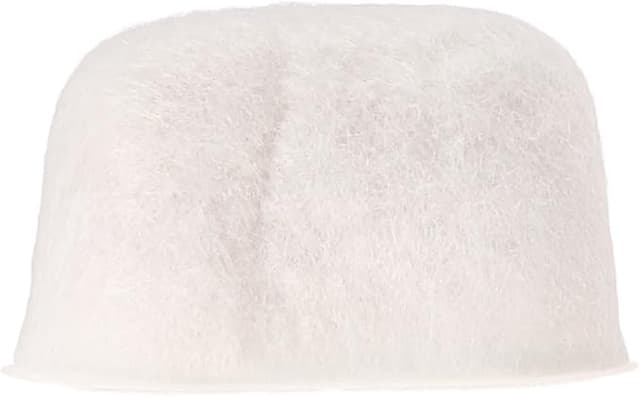
The compatible disc handles the chlorine taste exactly as well as the Breville one did. I do a blind-ish thing where I pull a shot, then pull one after a few days on the new filter, and honestly I can't tell them apart in the cup. My water comes out clean, the crema's the same, no off-flavors. After a couple months I pulled the old compatible filter and cut it open — the carbon was loaded up and doing its job, same as a genuine one would look.
The stuff I'd flag before you buy
It's not flawless. Two real things.
- The first day, the water had a faint just-out-of-the-bag taste — that fresh-resin thing. You're supposed to pre-soak the disc for a few minutes and run a tank through before you pull shots, and if you skip that step you'll notice it. Do the soak. It's gone by day two.
- The packaging is cheap and there's no fancy date dial on the holder like some premium replacements include. You're tracking the swap yourself. I write the install date on a sticky note inside my cabinet, low-tech but it works.
And look — these aren't NSF-stamped the way a whole-house cartridge might be. For a coffee machine pulling municipal water that's already treated, I'm comfortable with that. If you're on well water with serious contamination concerns, that's a different conversation and you'd want lab-tested filtration regardless of brand.
Don't let the filter die in there
One thing I'll be blunt about because I learned it the annoying way on an older machine: a saturated filter is worse than no filter doing nothing. Once the carbon's exhausted it stops grabbing minerals, and now you've got false confidence — you think you're protected so you stop descaling, and the scale builds anyway. The machine starts straining a heating element and pump that were never meant to fight limescale on their own. A $4 disc you forgot to change can turn into a $200 service ticket. Change it on schedule. That's the entire point of buying a cheap multi-pack — there's no excuse to stretch one to six months.
The verdict
Who should buy the genuine Breville filter instead? If you're still inside your warranty period and you're the type who reads the fine print, Breville won't blink at OEM filters and some people just sleep better that way. Fair enough.
Everybody else — me included — I grab the compatible six-pack. It seats perfectly in the BES870XL, it pulls chlorine and scale as well as the one that costs three-and-a-half times more, and the only downside is a one-day break-in taste you fix with a five-minute soak. I've now gone through more than one of these and reordered the same pack. For fifty-plus bucks saved a year, doing the identical job in my own machine every morning, that's not a hard call. The brand premium on a consumable disc was never buying me better coffee. It was just buying the logo.