Troubleshooting & Analysis
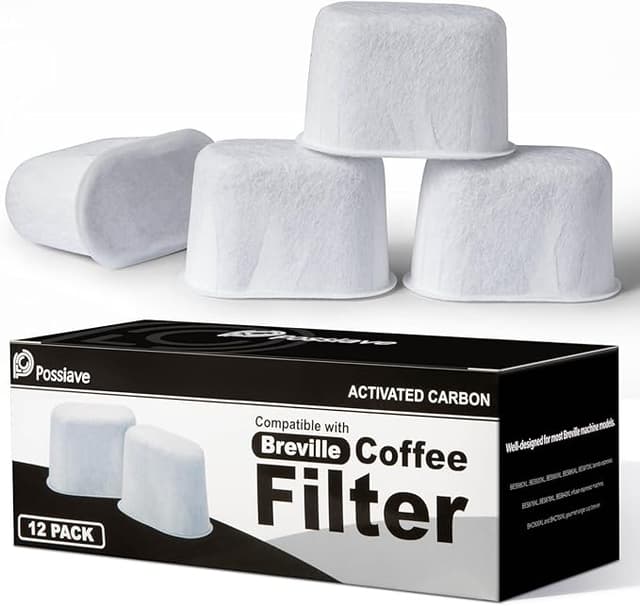
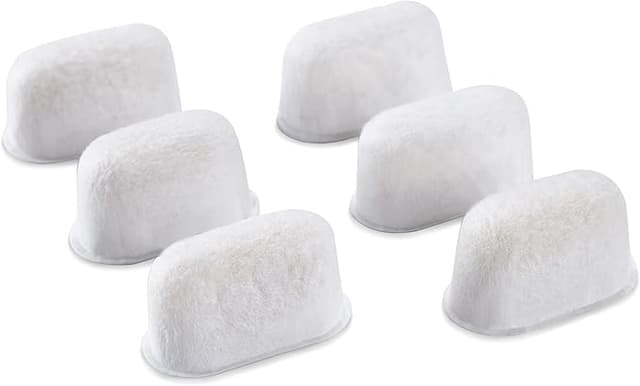
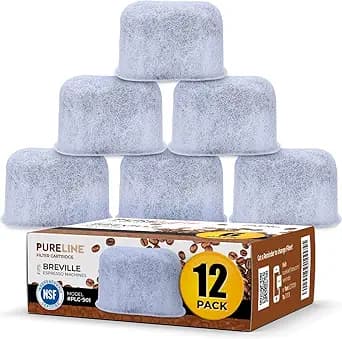
Sixteen dollars for two little water filters. That's what genuine Breville wanted for a BWF100 two-pack the day I went to reorder — eight bucks a puck, and my Barista Express eats one every two months. Do the math out loud and it stings: that's about $48 a year in water filters for a machine I already paid four hundred for. I stood there in the kitchen with the empty filter holder in my hand and thought, no. There has to be a cheaper version of this exact disc of charcoal, and there is. The compatible six-packs run around $13. That's roughly $2.20 a filter against Breville's $8. Same job. Same slot.
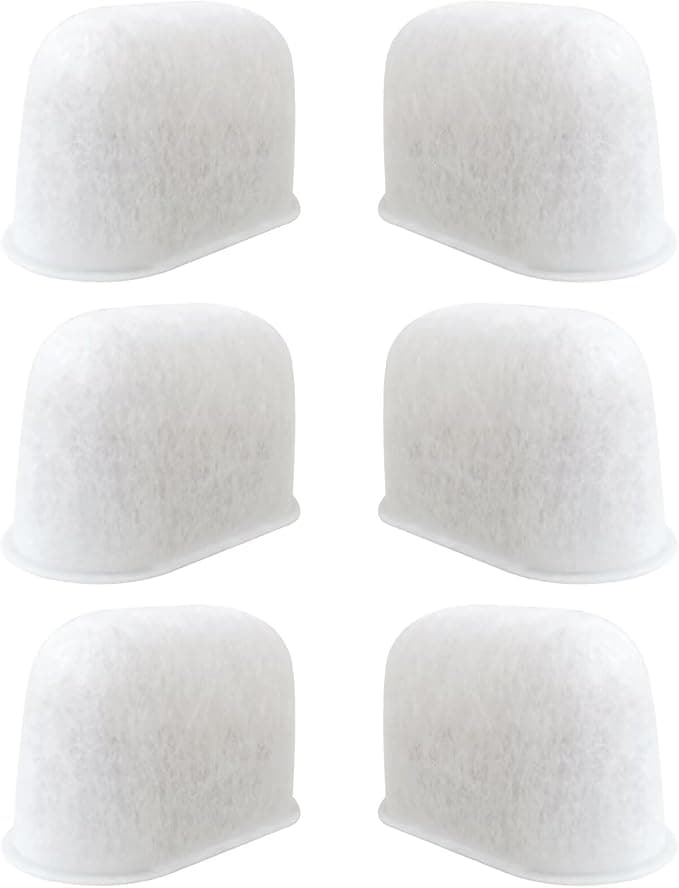
I'd been burned before on "compatible" stuff, so I didn't trust it. I figured the cheap ones would be a millimeter off and rattle around, or the carbon would be packed loose and do nothing. I bought a six-pack anyway, mostly to prove myself right. I was wrong, and I'm a little annoyed about how long I paid full price.
The annual math is the whole argument
Here's the part nobody at Breville wants on the box. You swap this filter every two months — six a year. Genuine: six filters at about $8 each is roughly $48 a year. Compatible: that $13 six-pack is exactly one year of filters for thirteen bucks. So you're looking at $48 versus $13, and the thing inside the plastic shell is a charcoal disc. Over the three or four years a Barista Express tends to last, that gap is well over a hundred dollars you're handing over for branding on a part you soak and forget.
And it's not optional, which is the trap. Skip filters to save money and you're not saving anything — you're trading $48 a year for scale on the heating element, and scale is the number one way these machines die. So the real choice was never "filter or no filter." It was "whose charcoal disc."
Does it actually seat right?
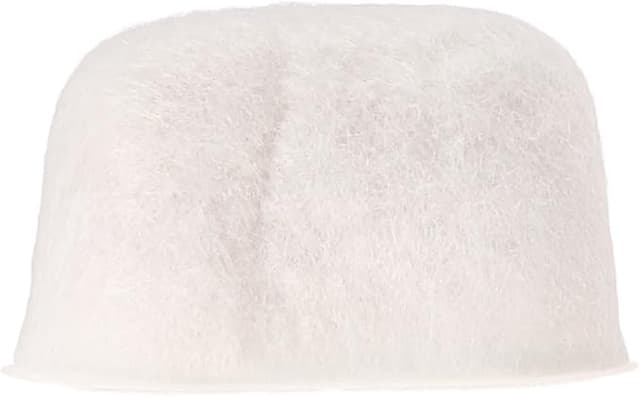
This was my whole worry, and it's the fair worry. The fit is good but it is not identical to OEM — I'll be straight with you. You soak the new filter in a cup of water for five minutes first (don't skip this; dry carbon floats and traps air, and you'll get a weird first brew). Then it presses into the little filter holder cage, and the holder clips into the base of the water tank. On the Breville-branded one, that press into the cage has a clean, slightly firm snap. On the compatibles I bought, the disc went in with a hair less resistance — a touch looser in the cage. Not loose enough to float free, not loose enough to bypass, but I noticed it. Once the holder is clipped into the tank and the tank's back on the machine, it doesn't matter at all. It's held in place by the tank geometry, not by the snap. Four months in and nothing has shifted.
The honest downside
Two things, and I'd want a friend to tell me both. First: the molded plastic shell on the compatibles is visibly cheaper. The seam isn't as clean and the plastic feels thinner in your fingers. It does not touch your water — the water runs through the carbon, not the shell — but if you like things to feel premium in hand, the OEM feels nicer for the half-second you handle it.
Second, and this is the real one: the very first tank after a fresh compatible filter, I got a faint carbon taste. Slightly flat, a little "wet cardboard" on the back of the tongue. It spooked me. But it's just carbon dust that didn't rinse out in the five-minute soak. I ran one full tank through without coffee — just water cycled through — dumped it, refilled, and it was gone. Every filter since, I do a quick double-soak and an empty tank flush, and there's no off taste at all. With the genuine Breville I don't remember needing that flush, so call it one extra step. One.
How it pours next to OEM
For what it's supposed to do — pull chlorine and the off-smells out of tap water so they don't ride into your espresso, and cut the mineral load that scales up the boiler — I genuinely can't taste a difference in the cup. I ran a compatible in my Barista Express for four months and pulled the same shots I always do. Crema looked the same. The water out of the tank smelled clean. No chlorine bite, which is the thing I actually care about because my city water is heavy on it.
Where it's a touch behind: I suspect, though I can't prove with a lab, that the carbon capacity is a little under the genuine disc's. So I treat the two-month interval as a hard ceiling with these, not a suggestion. With OEM I've stretched to ten weeks when I forgot. With the compatibles I swap at eight weeks and don't push it. At $2.20 a filter, swapping a little eagerly costs nothing — that's the nice part of cheap consumables.
Who should buy the real one
If you're on a machine still under warranty and you're the type who'd lose sleep that an off-brand filter could be used against you in a claim, buy the genuine BWF100 and don't think about it. Same if your water is already soft and filtered at the house — you're barely taxing the filter either way, so the savings are smaller and the peace isn't worth the math to you.
For everyone else? I run the compatibles. I've reordered them twice now. The fit is a hair looser, the plastic is cheaper, and you'll want one extra flush on the first tank — those are real and I'm not hiding them. But it's the same charcoal doing the same job for about a quarter of the price, and the part of my brain that hated paying $48 a year for branded carbon is finally quiet. For thirteen bucks a year, protecting a four-hundred-dollar machine, I'd buy them again. I have.