Troubleshooting & Analysis
The smell that told me my filter was dead
I noticed it in the cup before I noticed it anywhere else. My morning espresso from the Barista Express started tasting faintly… swampy. Not burnt, not stale — sort of flat and a little metallic, like the water had given up. I blamed the beans. Bought fresh ones. Same off note. Then I pulled the water tank, popped out the BWF100 filter I'd had in there for — honestly, way too long, probably four or five months — and it had gone gray-green at the edges. There was a film on it. That was the moment I stopped pretending I had a bean problem.
So here's the thing nobody tells you when you drop $600+ on a Breville: the little charcoal puck floating in your tank is doing real work, and when it quits, the machine doesn't beep. Your coffee just slowly turns sad. And scale starts building inside the boiler where you can't see it. That's the part that actually scared me — descaling a neglected Breville is a whole afternoon, and a boiler that's caked up is how these machines die early.
OEM math vs. the compatible puck
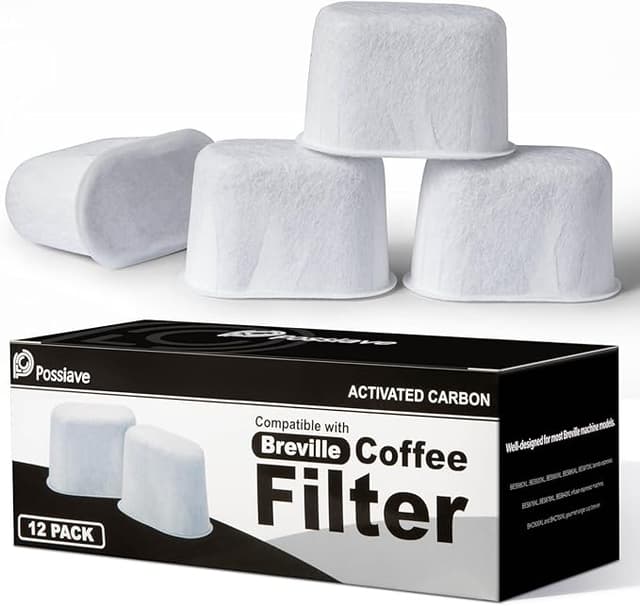
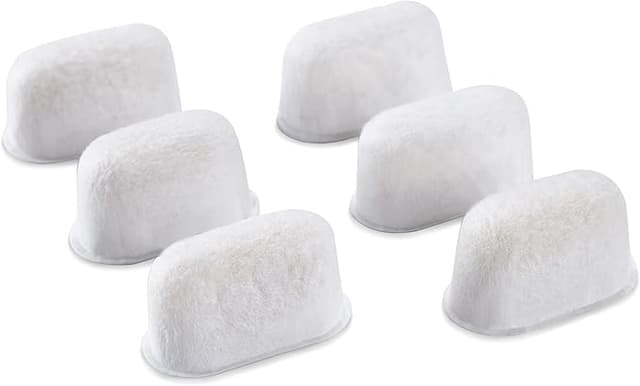
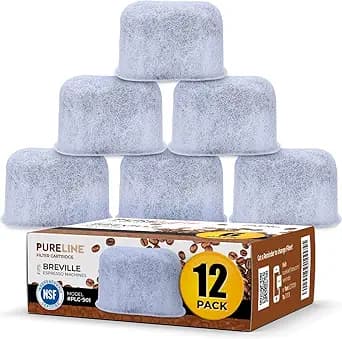
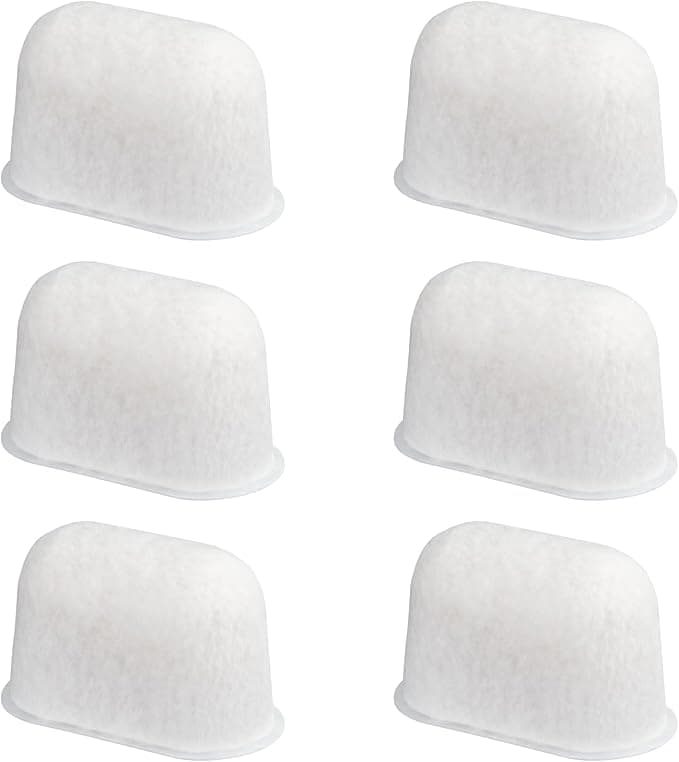
Breville's own replacement filters are fine. They're also priced like they're made of something rare. You're meant to swap these every two months — that's six a year. At the OEM rate, you're feeding your coffee maker a steady little subscription you forgot you signed up for. The compatible BWF100-fit charcoal filters I switched to ran me a fraction of that for a multi-pack, and they do the one job the puck exists to do: pull chlorine, odors, and the junk that causes scale out of your tank water before it hits the boiler.
Do the annual math and it's not close. Six OEM filters a year versus a bag of compatibles that lasts me most of a year for less than the cost of two of Breville's. I'm not a coupon person. This was just obvious.
Does it actually fit the holder?
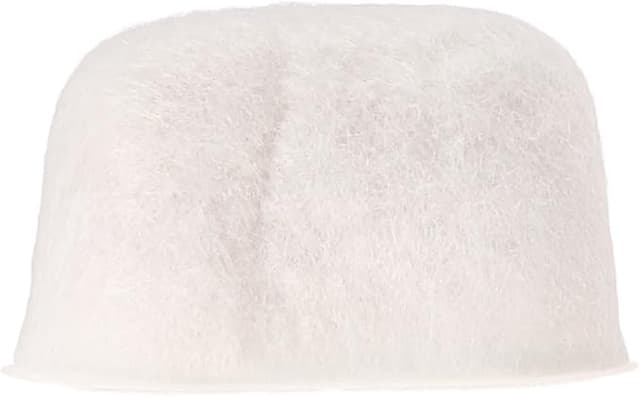
This was my worry going in — a filter that's a hair off seats wrong, water sneaks around it, and you've paid for nothing. The compatible BWF100 I bought drops into the Breville filter holder the same way the original does. Same diameter, same little disc shape. You soak it in a cup of water for about five minutes first — and don't skip that, a dry charcoal puck floats and won't draw water through properly the first day. Then it presses into the holder, the holder clicks onto the post inside the tank, and you're done. Took me longer to find the soak cup than to do the swap.
One honest note on fit: mine sat just slightly looser in the holder clip than the genuine Breville did. Not loose enough to rattle free or bypass — it stayed put through tank refills — but I could feel the tolerance wasn't quite as snug. If you're the type who needs a vault-door click, you'll notice. It held water fine for me across the full two-month run.
How the coffee actually tasted
This is what I cared about. First pull after the swap, the metallic flatness was gone. Water tasted clean again, and the crema came back to looking the way it's supposed to. I ran it side by side in my head against the OEM puck I'd used for a year before I got lazy, and I genuinely could not tell the cups apart. Same chlorine knockdown, same neutral water, same shot.
Where it's a touch behind: the OEM charcoal seems to last a hair longer before it starts slipping. Breville says two months and I'd trust the genuine one to hit that comfortably. With the compatible, I'd say it's solid for the full two months but I wouldn't push it to ten weeks the way I sometimes coasted on the original. Set a phone reminder. They're cheap enough now that there's no reason to stretch them.
The real downside
The packaging is cheap — the filters come in a plain bag, not individually sealed the way the branded ones are, and the first puck I pulled had a faint plastic-y smell out of the bag. That spooked me. But it rinsed out completely during the five-minute soak and never showed up in the cup. Still, if you want every filter hermetically wrapped, you're paying OEM prices for that wrapper. And there's no fancy printing or date wheel on them, so you're the one tracking the calendar.
Who should just buy OEM
If your machine's still under warranty and you're the cautious type who doesn't want to give Breville any excuse on a claim, buy the genuine filter and sleep easy — that's a legitimate reason, not a marketing one. Same if two months of dollars genuinely doesn't register for you. No judgment.
The verdict
But for me? I run the compatible BWF100 puck now, I've reordered it twice, and my Barista Express pulls the same clean shot it did on day one. The fit's good, the water's clean, the scale protection is doing its quiet job, and I'm not paying a premium for a printed bag. The looser clip and the plain packaging are real — I told you they were real — but they don't touch the coffee or the machine. For the price gap, doing the same job in the same holder, I'd buy it again. I have. Just don't be the guy I was, running a dead one until the cup goes swampy.