Troubleshooting & Analysis
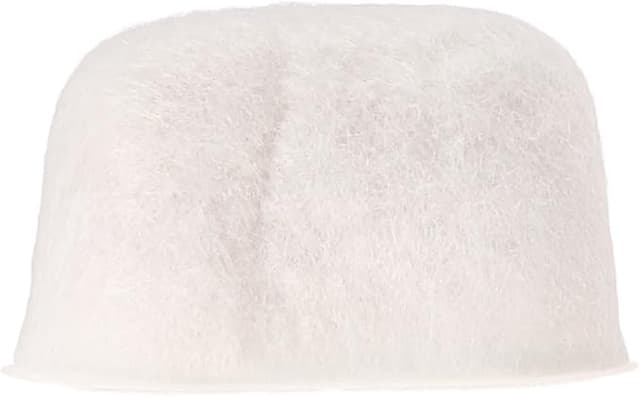
Twelve dollars. That's what Breville quietly charges you, per filter, if you buy their genuine BWF100 charcoal pucks one at a time. A single hockey-puck of carbon, a little over a buck an inch, and you're supposed to swap it every two months — six a year, every year, for as long as you own the machine. Do that math and the "free" filter that came in the box is suddenly a $70-a-year subscription you never signed up for. I ran those numbers the first time my Barista Express flashed at me for a replacement, sat there with the credit card out, and thought: there is no universe where a disk of charcoal costs twelve dollars.
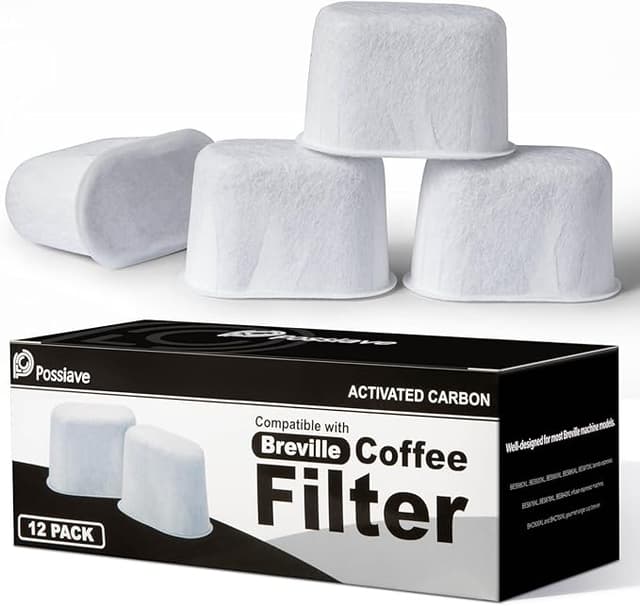
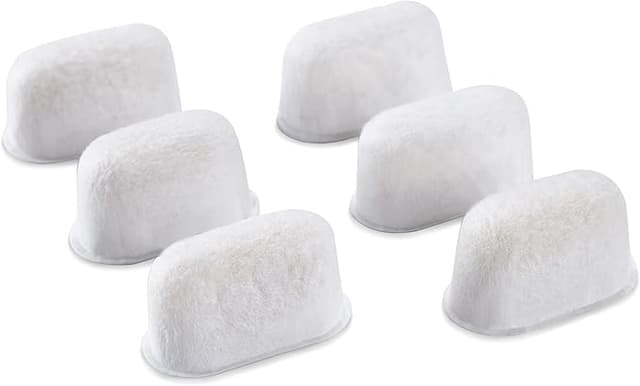
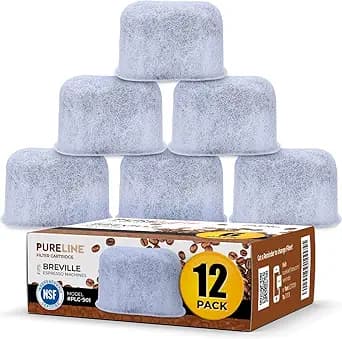
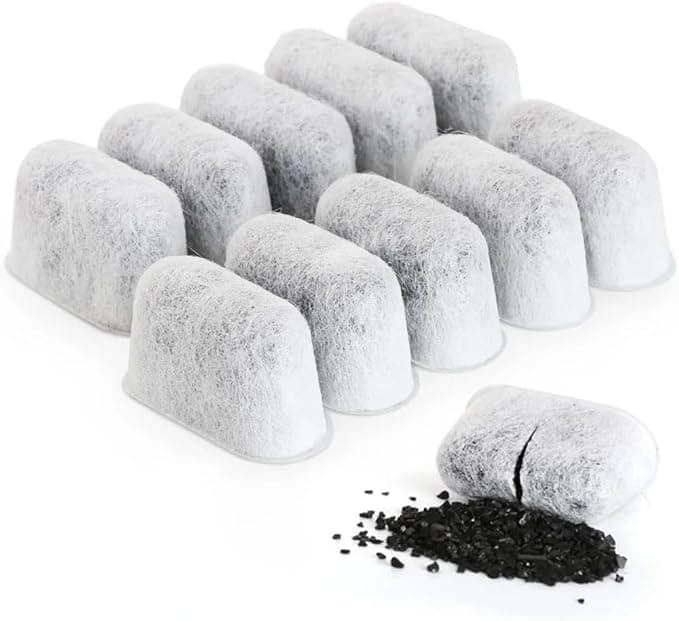
So I did the thing you're probably about to do. I searched for a compatible BWF100 filter, found a six-pack of third-party ones for less than what Breville wants for two, and bought it half-expecting to regret it.
The actual price gap, because that's why you're here
Genuine Breville BWF100 filters run roughly $10–13 each depending on pack size — call it $60–70 a year if you replace on schedule. The compatible six-packs I've been buying land around $10–14 for the whole sleeve. That's somewhere near two dollars a filter against twelve. Over a year you're looking at maybe $12 instead of $70. I've now gone through three of these multi-packs across two machines, and the savings aren't a rounding error — that's a decent bag of actual beans every couple months.
And here's the part that matters: it's the same job. These filters exist to pull chlorine and the funk out of your tap water before it ever hits the boiler, and to slow down the scale that quietly murders Breville machines from the inside. A carbon filter doesn't have a brand-name secret. It's carbon.
Does it actually fit? Yes — with one honest caveat
The install is the same dance as the OEM. You soak the filter in a cup of water for about five minutes first — don't skip this, a dry filter floats and traps air, and you'll get a weak first few brews. Then it presses into the little filter holder, and the holder clips into the bracket inside the water tank. On the compatibles I've used, it seats with the same firm click as the genuine one. No rattling, no gap where water sneaks past.
The caveat: across a six-pack, one or two of mine fit a hair tighter than the Breville original — enough that I had to give it a deliberate push to get it fully home rather than the easy snap I'm used to. Nothing broke, nothing leaked, and once it's in it's in. But if you're the type who panics when a part needs persuading, that first-second of "wait, is this wrong?" is real. It wasn't wrong. It just wasn't gift-wrapped to the same tolerance.
How it actually brews
This is where I expected to catch it falling short, and mostly didn't. My water comes out of a tap that smells faintly of pool in summer, and the compatible filter strips that chlorine taste out exactly as well as the Breville one did — I genuinely can't tell a blind cup apart. The shots pull the same, the steam wand behaves, and two months in, the inside of the tank and the group still look clean.
Where I'll give the OEM a slight edge: longevity feels a touch shorter. Breville says two months on theirs, and honestly with these I treat two months as the ceiling, not a suggestion. On my heavier-use machine I started swapping closer to the seven-week mark because the water just tasted a little flatter past that. At two bucks a filter, swapping a week early costs me nothing. At twelve, I'd be annoyed.
The downside nobody mentions
First brew or two after a fresh filter, there's a faint carbon dust thing — the water can look very slightly cloudy if you really stare at it, and the first espresso tastes a hair off. That five-minute soak knocks most of it out, and I've gotten in the habit of running one tank of plain water through before I brew anything I care about. After that it's clean. The OEM does this too, just a little less. The packaging is also cheap — a plain plastic sleeve, no printing worth mentioning — which bothered me for exactly zero seconds once the coffee tasted right.
Why you can't just skip the filter
Tempting, I know. But this is the one place I'll get a little serious: scale buildup is the number-one killer of these machines. Hard water leaves mineral crust on the heating element and in the lines, the machine works harder, brews cooler, and eventually throws an error or just dies out of warranty. A working filter slows that down dramatically. A dead, saturated filter past its date is almost worse than none — it stops doing anything and just sits there. So whatever you buy, OEM or compatible, the cardinal sin is leaving the same puck in for six months. Cheap filters you'll actually replace beat an expensive one you stretch to death.
Who should buy which
If your machine's still under warranty and you're the nervous type who wants zero variables in case you ever need service, buy the genuine BWF100 and sleep easy — it's the same filter I just spent 900 words comparing, and it does fit perfectly the first time.
But for everyone past warranty, or anyone who looked at twelve dollars for a charcoal disk and felt their eye twitch: the compatible BWF100 is the easy call. It fits, it strips the chlorine, it protects the machine, and it costs a sixth as much. Swap it a touch early, run a rinse tank after a fresh one, and you'll never know the difference in the cup. I've bought it three times now — that's the most honest endorsement I've got.