Troubleshooting & Analysis
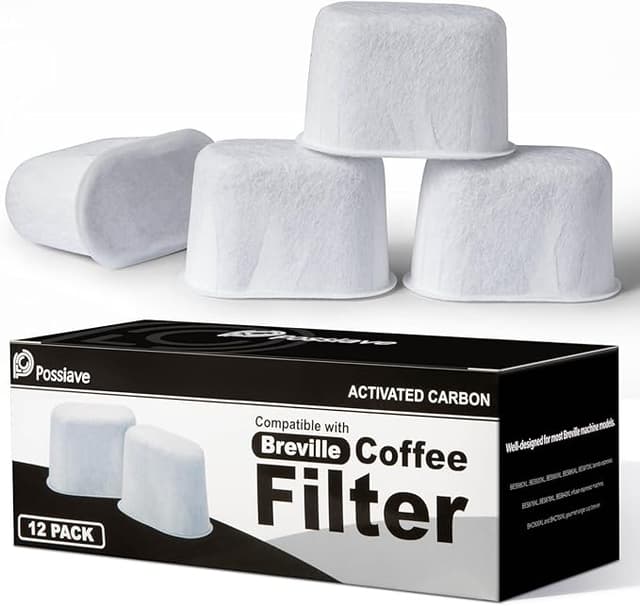
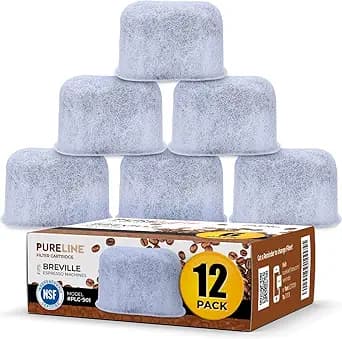
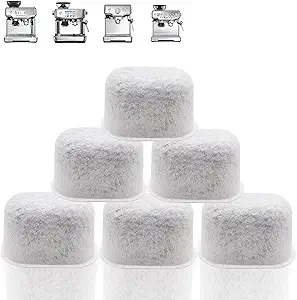
I didn't believe it either. A $20 box of compatible filters for my Breville, sitting right next to the official BWF100 pack, and my first thought was probably the same one you're having: cheap charcoal pellets in a plastic shell — no way that protects a machine I paid a few hundred bucks for. I almost put it back. Bought it anyway, mostly out of spite for what Breville charges for the originals, and then I ran it for the better part of a year before I'd say a word. So here's what actually happened.
The math that made me try it at all
The real Breville filters add up fast once you do the yearly accounting. You're swapping the filter every two months — six a year if you stay honest about it, which almost nobody does. At the OEM per-filter price that's a recurring tax on a machine you already own. The compatible pack I grabbed came out to less than half that over a year. Not "a little cheaper." Roughly fifty bucks a year cheaper, for me, doing the exact same job: a charcoal core that strips chlorine and the funk out of tap water before it ever reaches the boiler.
And that's the part people wave off. The filter isn't a luxury add-on — it's scale defense. Hard water leaves mineral crust inside the machine, and that limescale is the number one thing that kills Breville espresso machines. Not the pump, not the electronics. The scale. A working charcoal cartridge slows that down and keeps your water from tasting like a swimming pool. A dead one does nothing — and a lot of people are running dead ones right now because they balked at the OEM refill price. Which is exactly why the cheap filter mattered to me. I'd rather run a $3 compatible cartridge on schedule than stretch a $7 OEM one to four months because I'm cheap.
Does it actually fit? The thing I worried about most
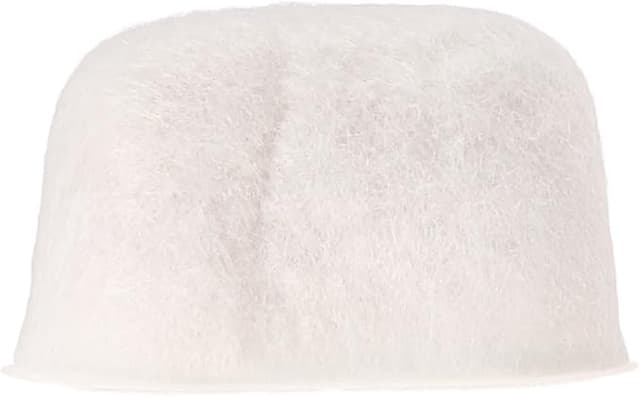
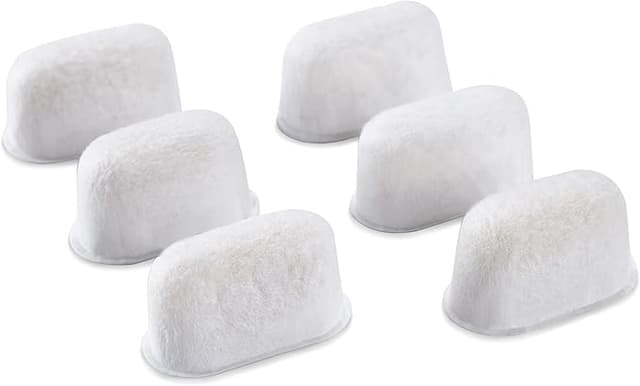
This was my whole hesitation. A water filter that's a hair off doesn't seat right, and then it either rattles loose in the tank or it bypasses and filters nothing. I soaked the first one in a cup of water for five minutes like you're supposed to — and that part isn't optional, the carbon needs to wet all the way through. You'll see little bubbles lift off it. That's just trapped air leaving, totally normal. Dropped it into the holder, clicked the holder into the tank mount. It seated. First try. Same satisfying little snap as the original.
Honestly the fit was a non-issue across the whole pack. I'll give you my one nitpick: on a couple of the cartridges the plastic seam where the holder grabs felt very slightly less crisp than the genuine part — you can feel it's molded to a looser tolerance if you're hunting for it. But it never touched the seal or the seat. It's the kind of thing you only notice because you're looking for a reason to be suspicious. Which I was.
How it brewed — and where it's a step behind
The water tasted clean. That's the headline. I'm sensitive to chlorine in coffee — it flattens the whole cup, makes a good single-origin taste like wet cardboard — and this filter knocked it down just like the OEM did. Side by side, fresh original versus fresh compatible in those first few weeks, I genuinely couldn't tell my espresso apart. Crema, clarity, all of it. My descaling light also held off about as long as it always had, which tells me the scale protection is real and not just words on a label.
Where it's a touch behind: the tail end of its life. By the back half of that two-month window, the compatible filter felt a little more "done" than I remember the OEM feeling. The last week or so, the water didn't taste quite as bright. The original seemed to hold its edge a few days longer. So I just don't push these past two months — and frankly you shouldn't push the OEM past it either. Swap every two months, set a phone reminder, and that gap basically vanishes.
The downsides, straight
The packaging is cheap. Thin bag, a sticker label, none of the Breville presentation — which I could not care less about, but if that stuff reads as quality to you, fair warning. There's also a faint carbon smell when you first open the pack, a little dusty. It rinses out in the soak and I never once tasted it in the cup, but it's there on day one. And the lifespan thing I mentioned is real: these are good for two months, not three. Don't try to stretch them to squeeze out more savings. That's how scale sneaks back in and undoes the whole point.
So who should buy which
If your Breville is brand new, still under warranty, and you're the type who'd lie awake wondering whether a third-party part could ever get blamed for something — buy the OEM BWF100 and don't think about it again. That certainty is worth real money to some people, and I won't argue. Same goes if you're on genuinely brutal hard water and want every last day of filter life you can wring out.
Everyone else? I run the compatible one. I've now gone more than a year on them in my own machine, on schedule, and the coffee's been clean, the descale light's behaved, and nothing about the machine is worse for it. For about fifty bucks a year back in my pocket — doing the job I actually care about — I'd buy them again. I have. Twice. That's the most honest thing I can tell you: I'm still spending my own money on these.