Troubleshooting & Analysis
I bought the cheap one half-expecting to throw it away
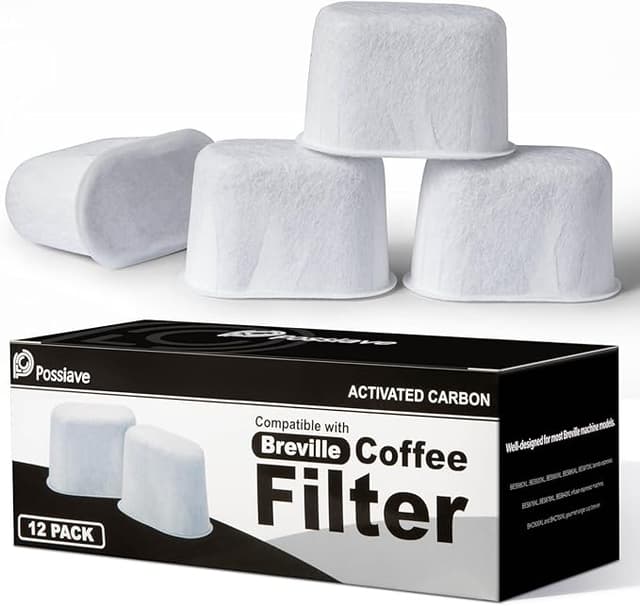
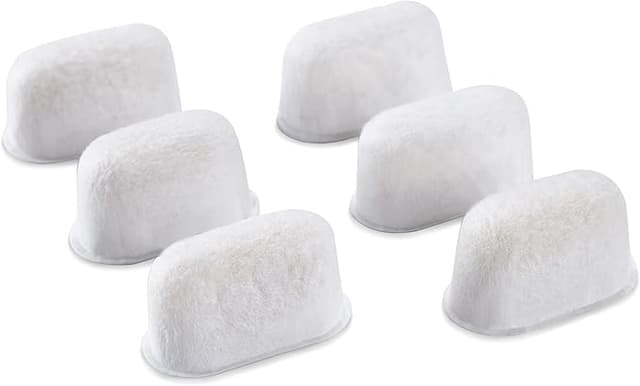
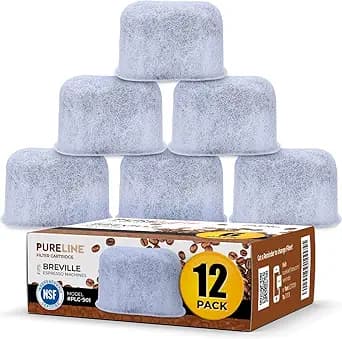
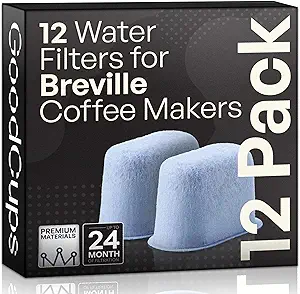
I'll be straight with you: I didn't believe a $20 filter could be fine either. The BWF100 that Breville sells is a small puck of charcoal and resin that drops into your water tank, and the official ones run you about double what a compatible pack costs. My gut said the off-brand version would either not seat right, leak fines into my coffee, or just do nothing. So when I ordered a six-pack of compatibles for my espresso machine, I honestly bought them as a test — fully prepared to eat the money and go crawling back to the brand.
That was almost a year ago. I'm still running them. Let me tell you what actually happened.
The price math that made me try at all
Here's the thing about a water filter in a coffee machine — you're supposed to swap it every two to three months, or every ~40 liters, whichever comes first. I'm a two-or-three-shots-a-day person, so I'm on the roughly-every-two-months schedule. That's six filters a year.
At Breville's OEM price, six of those puts a real dent in your year — it's the kind of recurring cost that quietly adds up to more than a decent bag of beans every single month. The compatible BWF100 replacements I'm using land at roughly 40 to 60 percent less. Do the annual math and it's not a rounding error — it's the difference between "ugh, another consumable" and "fine, I'll keep it stocked." When the cheaper option is what makes you actually replace the filter on time instead of stretching it to four months, the cheaper option is also the one protecting your machine. More on that in a second.
Does it actually fit? (the part I was most worried about)
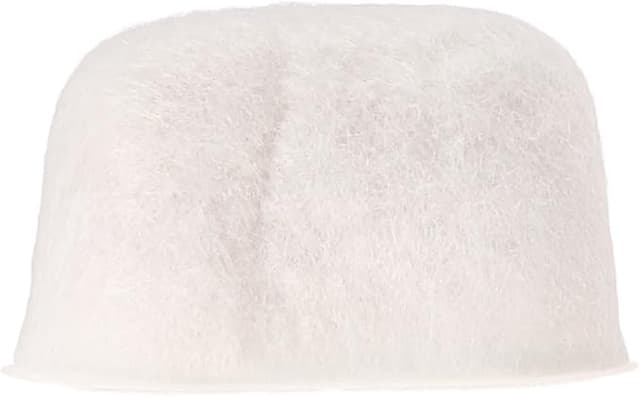
This was my real fear. A filter that's a hair too big won't seat, and one that's too small rattles around and bypasses water past it — which means you're filtering nothing. I pulled the genuine one out, held the compatible next to it, and they were dimensionally the same to my eye. Same puck diameter, same height, same little keyed base that drops into the holder in the tank.
Install is genuinely a two-minute job. You power the machine off and pull the water tank. Most of these filters want a quick prep first — I soak the new puck in a cup of cold water for five minutes and give it a gentle shake to clear the loose carbon dust, same as I always did with the OEM. Then it presses into the holder in the base of the tank. You feel it bottom out. Refill, drop the tank back in, and if your model tracks filter life, reset the indicator so it starts counting fresh. That's it.
The seat is good. Not "marginally acceptable" — good. If I'm nitpicking, the plastic on the compatible base feels a touch less substantial than Breville's, a little more flex when you squeeze it. But it locks into the holder with the same positive stop, and I've never had one pop loose or float.
The honest downsides
I told you I'd give you the real ones, so here they are.
First: the break-in. The first cup or two after a fresh swap — OEM or compatible, to be fair — can taste faintly flat or carbon-y while the new media settles. With these compatibles I ran the tank through one full flush cycle before pulling a real shot, and that knocked it out. If you skip the pre-soak, that first-day taste is more noticeable. Don't skip the pre-soak.
Second: the packaging is cheap. The OEM ones come in individually sealed sleeves that feel deliberate; the compatible six-pack showed up in thinner film, a couple of pucks loose together. Cosmetic, but if a filter's been rattling around bare in a box, I rinse it a little longer before use.
Third — and this is the fair one — batch consistency. Across a six-pack the pucks were 95 percent identical, but one had a slightly rougher molded edge than the rest. It still seated and worked fine. With the brand version you're paying partly for that last sliver of QC uniformity. Whether that's worth double is exactly the question you're standing there asking.
Why I won't let it ride past the interval anymore
A coffee water filter isn't really about taste, even though that's what you notice. It's about scale. The whole job of the BWF100 is pulling minerals and chlorine out before they hit your boiler and group. Let a saturated filter sit in there for six months and you're not filtering — you're just running hard water straight through a machine whose boiler and valves were never meant to cope with the buildup. Descaling a clogged espresso machine, or replacing a scaled-up boiler, costs many times what a year of filters does. The consumable is the cheap insurance. That's the actual reason the affordable option matters: a filter you'll actually replace on schedule beats a premium one you stretch to save money.
So who should still buy the Breville one?
If you're under warranty and you're the type who worries a third-party part could give the manufacturer an excuse to deny a claim, buy OEM and sleep easy — it's a small premium for that specific peace. Same if you simply prefer the brand's tighter packaging and don't want to think about it.
But for me? I went in a skeptic, ready to throw a $20 gamble in the trash. Instead I've run compatible BWF100 filters through a full year of daily shots, the water tastes clean, the machine's still smooth, and I'm paying roughly half. I've reordered twice without hesitating. That's the most honest endorsement I can give something — I kept spending my own money on it.